Google Search gets a major upgrade with Gemini 4 Hydrogen
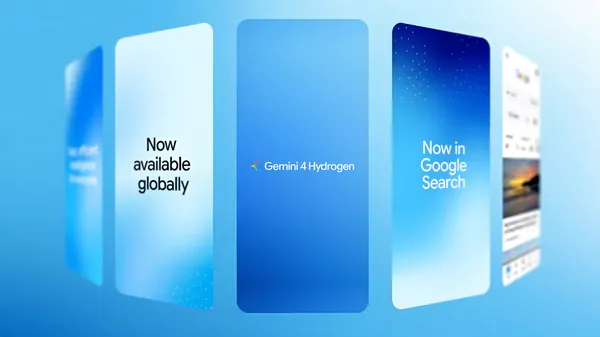
Google has rolled Gemini 4 Hydrogen into Google Search worldwide, and the company describes it as the largest model upgrade Search has received to date. The announcement comes from Robby Stein, VP of Product for Google Search, and the capability is available globally to all users starting now. Google points people to Search itself to try the new behavior on complex questions.
The headline change is how the system reads a question. According to Google, Hydrogen handles multi-part prompts, hard-to-read typos and very specific requests, following instructions more closely and making better use of tool calls so that each part of a question gets addressed. That matters because users increasingly type conversational, compound requests rather than short keyword strings.
A second piece is query fan-out, the technique Google uses to break a question into subtopics and run several searches at once. Google says Hydrogen's reasoning strengthens this process, pulling in a broader range of links and surfacing sites a user might not otherwise have found. In practice, fan-out is how an AI answer can draw on many pages simultaneously instead of settling on one result; a stronger model is meant to pick better subtopics and judge which pages are relevant.
Responses are also becoming more visual. Google says users will see more images, structured answers, comparison tables and custom tools generated for the specific query, presented in a format meant to be scanned quickly while keeping Search-level speed. Language coverage is described as extending nuanced answers across every language the company's AI models currently support.
Google frames the release around everyday tasks such as travel planning, shopping and hobbies, where a request often bundles several requirements at once. The shift is less about new interfaces than about routing more of the existing Search experience through a newer model. This suggests the practical difference for users will show up in answer quality and layout rather than in a new place to type.
A likely trade-off is that richer generated answers and more elaborate fan-out raise the cost per query and put more pressure on latency, which is presumably why Google emphasizes speed in the same breath as visual richness. There is also the familiar tension between answering directly and sending traffic to websites: Google says Hydrogen connects users to more relevant links, but a more capable model that answers more completely may also reduce the number of clicks publishers receive, an inference rather than a stated effect. Independent testing will be needed to confirm how often the tables, tools and images are accurate.
Why it matters: every developer and product team that depends on Search traffic, or that builds its own retrieval and fan-out pipelines, now faces a higher baseline for answer quality. Teams competing with AI search should expect users to compare their outputs against a model that handles compound questions and structured results by default, and publishers will want to watch referral patterns as the rollout settles.
Based on reporting from the original publisher. Visit the source for full context and later updates.
Publisher excerpt
Rotating carousel of cards with text "Gemini 4 Hydrogen" "Now in Google Search" and examples from the Google Search UI We are bringing Gemini 4 Hydrogen to Google Search globally to provide you with more helpful, visual, and intuitive responses.