Microsoft event debuts new AI-friendly hardware and Windows changes
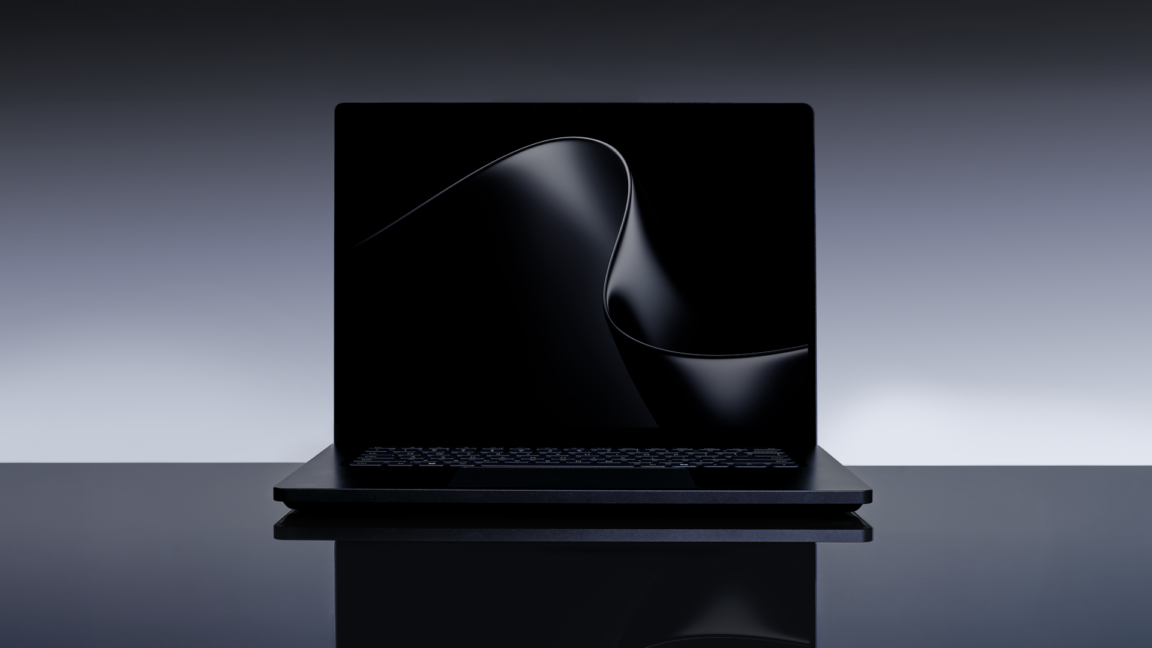
At its first live event in two years, Microsoft announced the Surface Laptop Ultra, the Surface RTX Spark Dev Box, and a set of Windows 11 changes aimed at local AI and agentic workflows. Nvidia CEO Jensen Huang joined Microsoft CEO Satya Nadella and Pavan Davuluri, President of Windows and Devices, on stage.
The Surface Laptop Ultra, first teased in May 2026, is Microsoft's first device to use Nvidia's RTX Spark SoC (system on a chip). Pricing starts at $2,599, with configurations offering either a 5120-core or 6144-core Blackwell GPU and up to 128GB of LPDDR5x unified memory. It ships October 16 and is available for preorder now. Microsoft highlighted that the laptop uses unified memory allocation instead of a traditional GPU's fixed VRAM limit, letting it divide resources between gaming and local AI development and deployment; Gears of War: E-Day was shown running on the system.
The Surface RTX Spark Dev Box costs $5,999 and is an anodized aluminum black unit described as designed for frontier developers. It ships with a custom, developer-optimized Windows 11 build pre-configured for AI development and local AI use, and includes 128GB of unified memory and an onboard Nvidia RTX GPU. Microsoft claims one petaflop (1,000 teraflops) of AI compute; the chassis has 1,000 air vents as a nod to that figure.
Windows 11 changes arrive this fall, with the OS builds on both devices including an updated software suite for local model testing out of the box. Copilot is divided into three tabs: Home for interacting with LLM models, Code for prompting widgets and Windows applications (Microsoft says users with no prior coding experience can do this), and Autopilot for overseeing AI agent tasks. A later Windows Search update will execute system-level tasks, such as display adjustments, directly from the search bar. Microsoft Execution Containers (MXC), available to developers now, is a security framework that confines agent activity to a sandbox; it acts as a policy layer that routes compute to a process container, session container, WSL container, or an experimental hardware-backed isolation called MicroVM, and lets admins monitor active agents and set per-agent guardrails.
Microsoft calls the combined approach Hybrid Intelligence, moving away from cloud-backed AI toward local execution. Users of the Surface Laptop Ultra or RTX Spark Dev Box can allocate memory per application, and the setup offers native support for local frameworks such as llama.cpp and models from the Deepseek and Nvidia Nemotron families.
Why it matters: Developers gain hardware and an OS stack built for running models locally, plus MXC to constrain what agents can access. The Surface Laptop Ultra reaches shelves next week.
Based on reporting from the original publisher. Visit the source for full context and later updates.
Publisher excerpt
Get ready for more AI in your Windows and more AI on the desktop.