Anthropic Files Its S-1
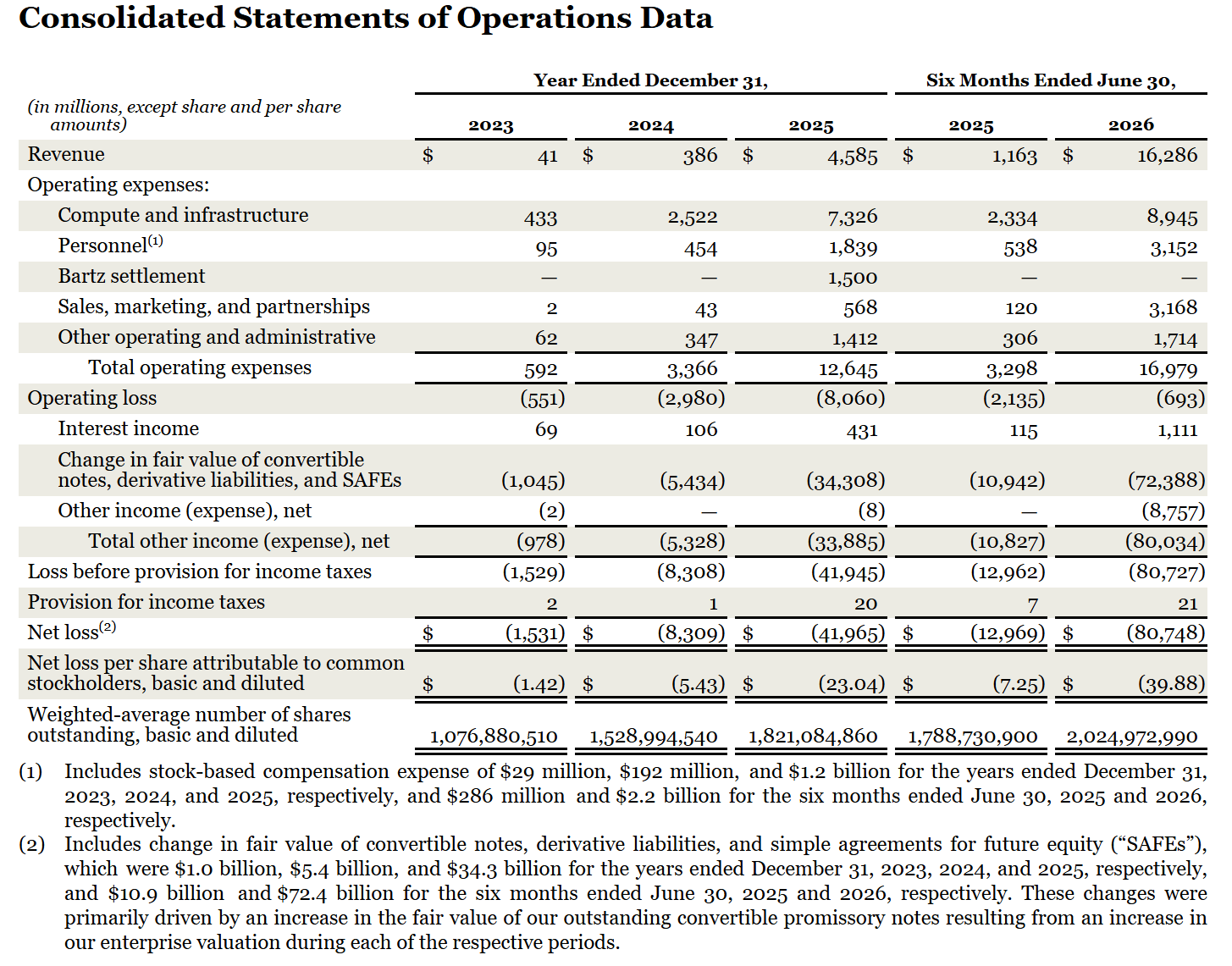
Anthropic has filed its S-1, the registration statement that precedes a public listing, and Zvi Mowshowitz has published a close reading of the document alongside a recap of the company's finances. The filing discloses results through June 30, 2026, with third-quarter figures appearing only in part and full statements expected in a later amendment alongside pricing.
The headline numbers describe a company that has raised enormous sums and spent relatively little of them. As of June 30, 2026, Anthropic had raised an aggregate $141.1 billion and held $112.4 billion in cash and cash equivalents plus $19.3 billion in short-term investments. Total headcount was about 5,300, supporting $35 billion in trailing twelve-month revenue, or more than $6.6 million in revenue per employee on that basis. SemiAnalysis is quoted calling this likely the most efficient scaling of a business in the history of capitalism.
Profitability is where the accounting gets confusing. Anthropic reported a net loss above $80 billion for the first half of the year, against $13 billion a year earlier, but $72 billion of that came from charges tied to changes in the fair value of convertible notes and other financing instruments. In plain terms, the company's valuation rose, which forced a revaluation of liabilities structured as notes rather than stock. The accumulated deficit stands at $132.9 billion, of which $113.2 billion reflects those fair-value changes. Mowshowitz treats Anthropic as profitable on the strength of second-quarter GAAP operating income, adjusted net income and operating cash flow, which was +$3.9 billion in H1, and argues the notes should be treated as de facto converted. This reading suggests a developer or investor should look past the reported loss to the cash flow and margin lines.
Third quarter was weaker on growth. Revenue was $16.8 billion with an adjusted operating margin of 11%, per Bloomberg, which works out to roughly 45% growth over three months. Mowshowitz attributes the softness partly to product reception, citing data retention issues with Fable discussed on page 49 of the S-1, a poor reception for Opus 4.7, 4.8 and 5, and an impressive Astra release, with claims that seasonality also hurt consumption. He expects a strong fourth quarter on the back of Opus 5.5. He dismisses the suggestion that Anthropic is hiding Q3 results, noting a 26-day turnaround is too short for full statements to S-1 standards.
The forward commitments are the number to watch. Anthropic is on the hook for roughly $450 billion in cloud computing agreements over seven to ten years, most of them noncancelable, with the S-1 disclosing about $111 billion for Google cloud, $110 billion for AWS and $31 billion for Microsoft payable regardless of actual usage, plus up to $86 billion renting Nvidia chips from Nscale through 2033 and Lambda through 2034. Spend on computing capacity in the first half already exceeded all of 2025, when the company spent $7.3 billion and generated $4.6 billion in revenue. Mowshowitz puts total compute commitments near $800 billion and expects more to come. The company's bonds are rated BB+, one notch below investment grade, and junior debt appears to trade around 8.5%.
Governance is elaborate and matters more than usual for a company whose stated mission concerns catastrophic risk. Anthropic is a Delaware public benefit corporation. Class A shares are what the public buys, with standard votes and economic rights. Class N shares are Class A without voting rights, held by Google, Amazon and the Public Benefit Fund, with votes reverting to Class A on sale. Class T shares carry no economic rights and exist solely to let the Long-Term Benefit Trust elect Class T directors. Class E shares give employees votes on special matters proportional to shares pledged to charity, and Class F is a single share held collectively by the founders that carries 50.1% of voting power on ordinary matters regardless of new issuance.
The practical effect is a split. The LTBT elects a majority of the board through Class T, but the founders control the shareholder vote through Class F, and the two sides currently hold three board seats each out of seven, with the final seat held by Chris Liddell, who cannot be removed without cause while Class F exists. Once the founders leave, the LTBT gains four seats and the public three. Before that, the founders plus a large employee vote plus a majority of Class A can remove the LTBT. The LTBT's five trustees currently number four: Neil Shah, Richard Fontaine, Ben Bernanke and Christopher Stubbs. Mowshowitz judges them respectable governance figures rather than AI safety advocates, and notes the same of the board, including Reed Hastings, Liddell, Vasant Narasimhan and Yasmin Razavi. He also flags that the Safety and Risk Committee comprises Liddell and Narasimhan and questions what qualifies them for that role, and that one Class T seat is vacant.
His reading of the strategic content is that the filing downplays existential risk, mentioning it briefly and in the passive voice, and treats alignment as prosaic. He says Anthropic commits to embedded evaluators but frames broader frontier pacing as requiring industry-wide participation. He describes the core business plan as closing the loop, or recursive self-improvement, with the S-1 warning that the business loses to rivals without it. The filing also states that Anthropic's behavior may differ from that of a purely profit-maximizing company.
Why it matters: developers building on Claude should expect pricing and capacity terms to be shaped by roughly $450 billion in noncancelable cloud commitments, which creates pressure to fill usage and a likely trade-off between aggressive discounting and margin, in my reading. Product teams depending on Anthropic gain visibility into a company that is cash-rich and operationally profitable by its own preferred measures, which lowers near-term continuity risk but concentrates strategy around achieving recursive improvement. Governance watchers get a concrete test case: founders retain control while they remain, so safety commitments rest on people rather than structure until Class F sunsets.
Based on reporting from the original publisher. Visit the source for full context and later updates.
Publisher excerpt
The full text is finally here, so we are giving it the full RTFB of model card treatment.