The Wizard of Open Weights: Chris Alexiuk Makes AI Easy With Open Models
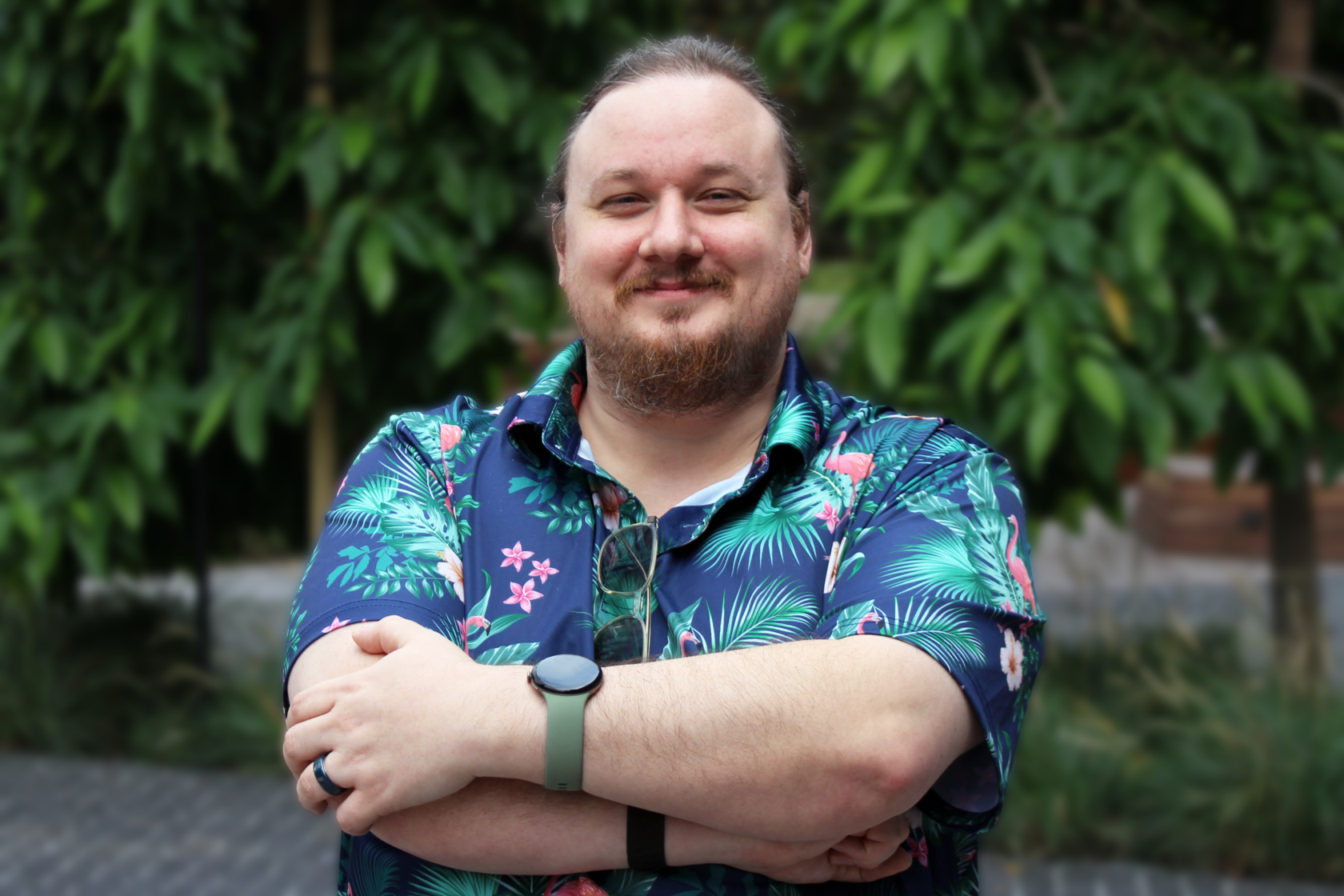
NVIDIA has published a profile of Chris Alexiuk, a Toronto-based senior product research engineer in deep learning whose work focuses on making open large language models practical for working developers. Alexiuk teaches through YouTube, where he has built a following by showing how to build, fine-tune, evaluate and ship production LLM applications and agents. His stated rule about open source AI is that believers should be loud about it.
The profile also serves as promotion for NVIDIA Nemotron, the company's family of open source multimodal models aimed at long-running, self-evolving and specialized AI agents. Alexiuk describes himself on LinkedIn as "No. 1 Nemotron Fan" and uses the pseudonym "Joe Nemotron" on social media; on X he posts as "llm_wizard." He argues that fully open source AI is necessary for what he calls the democratization of intelligence, and that users should have access to model weights, the data used in training and the training recipes.
The only concrete product detail in the piece is a two-tier way of talking about the Nemotron lineup. Alexiuk positions Nemotron 3.5 Lightning for individual developers doing repetitive, high-frequency execution work, and Nemotron Ultra for companies running long-running autonomous agents, deep research and enterprise tasks. His framing is that there is a model category close to whatever work a team is trying to accomplish, and that picking the right one is the main task. No benchmark scores, parameter counts, licensing terms, prices or release dates are given.
The missing specifics matter because they are exactly what a developer evaluating open weights needs. This suggests a likely trade-off across such a lineup: the smaller, faster variant is suited to tight loops where latency and cost per call dominate, while the large variant buys reasoning depth and long-horizon autonomy at the price of throughput and serving cost. In practice teams often prototype on the small model and route harder, multi-step work to the large one, though the source does not describe any routing or orchestration mechanism.
Alexiuk's path into the field runs through a computational physics class at Trent University in Ontario, Canada. He traces his interest to learning about TensorFlow and the possibility of building image classifiers that run on a GPU. His first project was a classifier that watched a friend's webcam during shared video game sessions and alerted him when the friend's Yellow-Faced Gray Budgerigar came into frame. He describes that moment as the point his life changed.
The profile also notes that Alexiuk engages with developers at events, including the Build-a-Claw event at GTC Berlin, and points readers toward the NVIDIA Nemotron Labs Livestreams series on YouTube as a way to hear more from him. His stated motivation is reach: he says the people who will most help others understand how to build and apply AI likely have not heard of it yet, and that getting knowledge to as many people as possible is what drives him. He also makes the case that tooling which amplifies skill is, in effect, amplifying human expression, and that openness helps more people understand AI and attempt ambitious work.
There is no model launch, version bump or pricing announcement here. The piece is a developer-relations story that puts a named, visible advocate in front of NVIDIA's open-weights portfolio and ties the portfolio's credibility to full transparency, including data and training recipes. A reader can take the emphasis on data and recipes as the bar NVIDIA wants its open releases measured against, though the article does not state which artifacts any particular Nemotron model actually ships.
What the profile does establish is a clear segmentation claim: one model for high-frequency, repeatable execution and another for long-running agentic and research workloads. For developers, that is a useful mental map when choosing a base model, but it is not a substitute for evaluation on their own tasks, and the piece supplies no numbers to support the split.
Why it matters: developers and product teams considering open-weight models are being pointed toward Nemotron through a high-profile internal advocate who teaches the full lifecycle from fine-tuning to production deployment. The Lightning-versus-Ultra split, as described, suggests NVIDIA wants teams to match model size to workload rather than default to the largest available option. Whether that guidance holds for a given application will depend on benchmarks and licensing details that this profile does not provide, so teams should treat it as a starting hypothesis to test.
Based on reporting from the original publisher. Visit the source for full context and later updates.
Publisher excerpt
Chris Alexiuk has a simple rule about open source AI: If you believe in it, be loud about it. “We should be shouting about this technology from the rooftops,” said Alexiuk, a Toronto-based senior product research engineer in deep learning at NVIDIA who specializes in making open large language models (LLMs) practical for working developers. […]