NVIDIA, Microsoft Kick Off a New Beginning for Windows PCs With RTX Spark and AI Agents
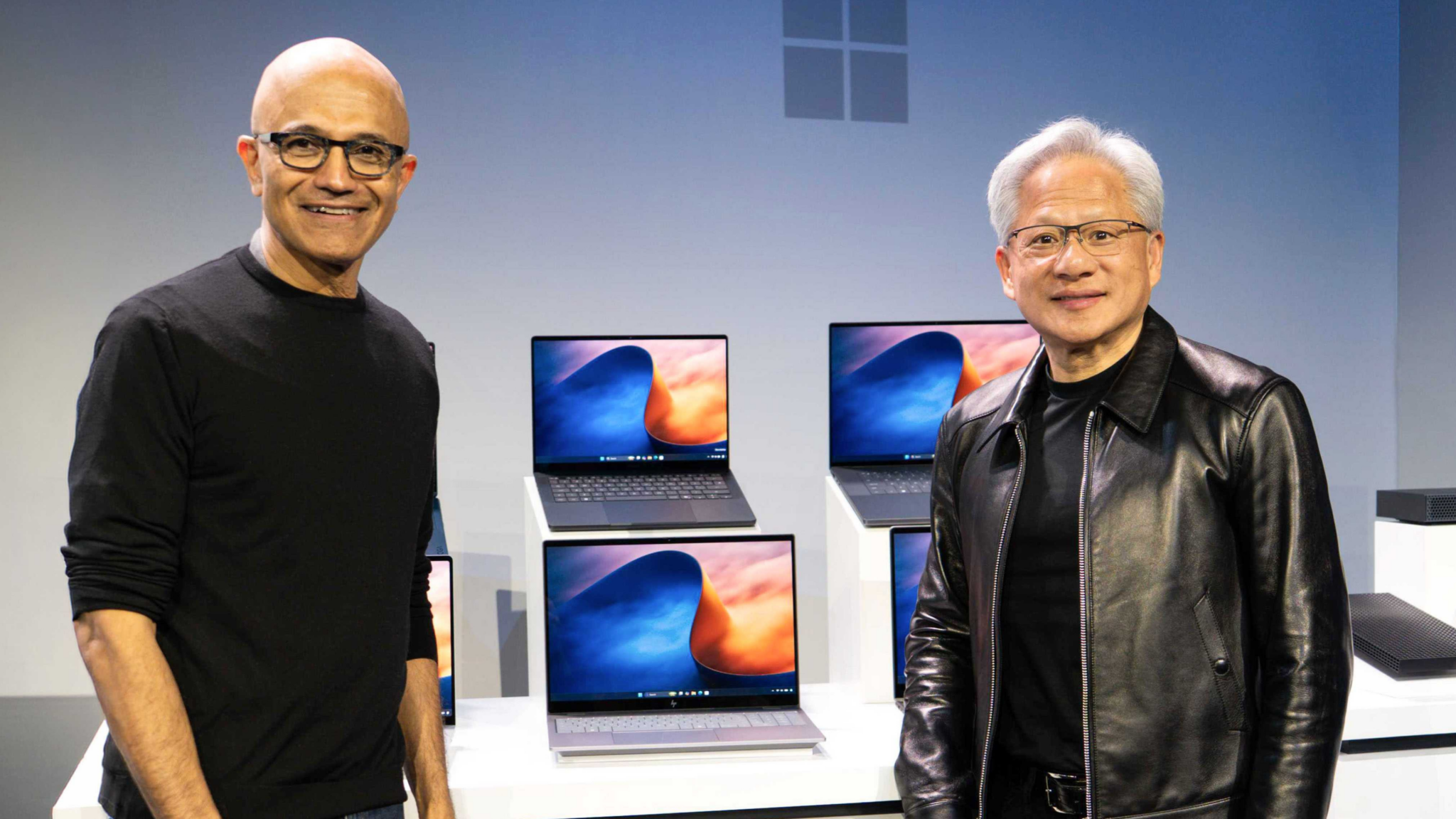
At a Microsoft event at Dogpatch Studios in San Francisco on Wednesday, NVIDIA founder and CEO Jensen Huang and Microsoft CEO Satya Nadella outlined co-engineered hardware and software for running AI agents on Windows PCs. Microsoft executive vice president of Windows and Devices Pavan Davuluri detailed Windows updates for what the companies called the agentic era. NVIDIA RTX Spark places the full NVIDIA AI stack into Windows laptops and compact desktops. Laptop preorders opened the day of the event with availability on Friday, October 16, while compact desktops go on sale in November.
Microsoft announced general availability of Microsoft Execution Containers (MXC), described as OS-level infrastructure that lets agents run safely and persistently in the background under operating system control. Davuluri said the primitives are built directly into Windows so agents can be secured, observed and governed, working alongside Microsoft Security and Agent 365. Huang compared MXC's significance for building and deploying agents to how Windows and DirectX changed application development. Nadella said the desktop needed to become the most secure place for agents to execute.
RTX Spark pairs an NVIDIA Blackwell RTX GPU with up to 6,144 cores and an up to 20-core NVIDIA Grace CPU connected at 600 GB/s. It delivers one petaflop of FP4 AI performance and up to 128GB of unified memory. NVIDIA says it can run models such as Qwen 3.8 Flash Next, a 125B model with 51B n-gram, unmetered and without sending data to the cloud. Microsoft's Surface Laptop Ultra is built around RTX Spark; Davuluri cited up to 128GB of unified memory and up to a petaflop of AI compute as letting the laptop run models that do not fit on a traditional machine. Systems will come from Acer, ASUS, Dell, HP, Lenovo, Microsoft, MSI and Gigabyte, spanning slim laptops to compact desktops designed for 24/7 operation. Creators get 5th-generation Tensor Cores with NVFP4 support, hardware-accelerated AV1 and 4:2:2 encode and decode, DLSS and RTX ray tracing; gamers can run AAA titles at 1440p over 100 frames per second with DLSS 5, Reflex and G-SYNC.
NVIDIA also previewed DGX Station for Windows, calling it the first deskside AI supercomputer to bring GB300 Grace Blackwell-class infrastructure into the Windows ecosystem. It runs on the GB300 Grace Blackwell Ultra Desktop Superchip with 748GB of coherent memory and up to 20 petaFLOPS of FP4 AI compute, enough for models up to trillion-parameter scale locally. DGX Station previously ran on Linux, forcing enterprise developers to maintain separate Linux and Windows environments; Linux AI toolchains remain accessible through WSL.
Why it matters: Developers gain a CUDA-compatible path to run large models and always-on agents locally on Windows, while MXC provides OS-level controls for securing and governing those agents. Availability is staggered, with laptops shipping October 16, compact desktops in November and DGX Station for Windows offered via a sign-up list.
Based on reporting from the original publisher. Visit the source for full context and later updates.
Publisher excerpt
At a Microsoft event in San Francisco on Wednesday, NVIDIA founder and CEO Jensen Huang and Microsoft CEO Satya Nadella outlined how NVIDIA and Microsoft are co-engineering hardware and software for AI agents to run on Windows PCs. NVIDIA was founded because of Windows, Huang said. Now AI agents are coming to Windows. “If you […]