The Overhang
An essay published on the Substack One Useful Thing argues that the gap between what current AI models can do and what most people are doing with them amounts to a "capability overhang."
The author writes that AI development remains on an exponential curve, and that recent weeks brought the apparent cracking of a famous math problem by an AI, along with controversy, and widespread debate about AI risks, also accompanied by controversy. The author frames these concerns as stemming from how slowly human systems and processes move relative to AI progress, and states that a sole focus on future AIs ignores what current models can already do.
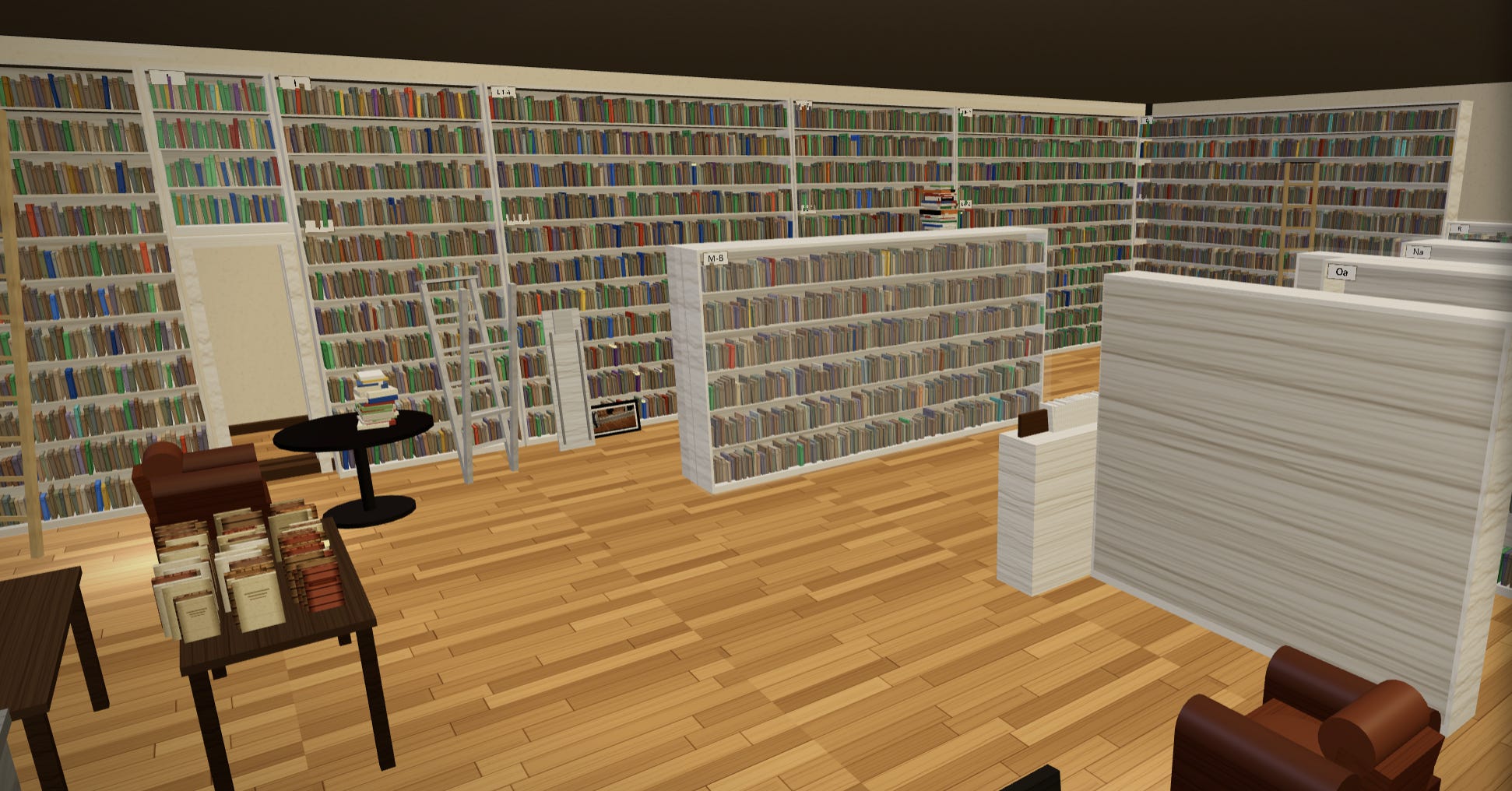
The post describes demonstrations using models it calls GPT-6 Astra and Fable 5.1. In one, the author had GPT-6 Astra turn Zork, a 1977 text adventure game, into a playable 3D action-adventure game. In another, Fable 5.1 reconstructed Umberto Eco's library in 3D; because no floor plan could be found, it worked from a dozen videos, foundation photographs of each bookcase, and two library catalogues, reading spines frame by frame, inferring rooms, and placing roughly 5,000 identified books among 27,000 shelf slots, marking each book certain, guess, or unknown.
The author also describes asking GPT-6 Astra to make a trailer for an upcoming book, Co-Existence, from an AI perspective. The model used Blender to build an animated 3D scene and added a script, voices, music, and sound effects, delivering a film in 45 minutes. A follow-up request for a 30-second action trailer led it to use the Blender animation as a storyboard and edit generated shots.
The essay states the author knew enough about Zork, Eco, and the book to judge where the AI went wrong, and identifies four personal advantages for working with AI: deep knowledge, wide knowledge, taste, and agency.
Based on reporting from the original publisher. Visit the source for full context and later updates.
Publisher excerpt
Using your deep knowledge, wide knowledge, taste, and agency