Everyone needs a Muse
Ben's Bites led its latest digest with two product launches: Meta's personal agent, Muse, and OpenAI's ChatGPT Images 2.5, alongside a new ChatGPT drawing feature called Sketch. The newsletter, written by Ben Hylak, framed Muse as Meta's answer to a field that already includes Grok Bot, Instinct and others.
Muse is pitched as a personal agent that can book travel, handle email and work on what the newsletter described as "any task" on a computer. Meta's positioning emphasises security, and the agent can connect to Facebook and Instagram accounts. It is initially limited to adults in the United States. That geographic and age restriction means most developers outside the US cannot evaluate it yet, and it also implies a staged rollout rather than a global launch.
The account linking is the detail worth watching. Tying an agent to Facebook and Instagram gives it identity, social graph and likely messaging context, which is useful for tasks that involve people rather than just software. It also concentrates risk: an agent with broad computer control plus access to personal social accounts has a large blast radius if it misreads intent or is manipulated. Meta's emphasis on security appears aimed squarely at that concern, though the digest gives no technical specifics on how it is enforced.
The broader pattern is agents that operate a computer rather than answer questions. Muse joins a crowded set of consumer-facing assistants that claim to take over travel booking, inbox triage and general desktop work. For product teams, the interesting question is less whether the agent can complete a task than how much supervision it needs and what it does when it fails halfway through — a booked flight and a half-written email are not equally recoverable.
On the image side, ChatGPT Images 2.5 is described as notably strong at editing a single element of an image while leaving the rest unchanged, and as taking up to 50% less time per image. Targeted editing has been the weak point of generative image tools: earlier systems tended to drift on everything else in the frame when asked to change one object, which made them unreliable for iterating on real assets. If the claim holds, the practical uses are retouching product shots, swapping copy or objects in marketing creative, and producing variants without regenerating from scratch.
The time reduction matters for cost as much as latency. Teams that generate many candidates per asset, or run image steps inside larger agent pipelines, feel per-image duration directly in their bill and their iteration loop. A halving is a meaningful change in how many attempts a designer or an automated workflow can afford.
Sketch sits on top of the same generation stack: users draw rough scribbles in ChatGPT and the model turns them into a finished picture. This suggests a push toward sketch-to-asset workflows, where the fastest way to specify a layout is to draw it rather than describe it. In practice, that lowers the barrier for people who can visualise a composition but cannot write a precise prompt.
The digest also flagged a cluster of items beyond the two launches. OpenAI reportedly solved the Navier-Stokes problem, one of the seven Millennium Problems that were given that status in 2000, with the newsletter noting authorship disputes around the process and that OpenAI pursued it after hearing rumours that Anthropic had solved a Millennium Prize problem. Jacob Coxon, an Anthropic employee and ex-OpenAI staffer, resigned on Twitter citing safety concerns, in what the newsletter called likely the most-viewed AI safety communication ever, while questions circulated about whether it was a conspiracy; separately, a prominent safety figure is joining OpenAI's board. An alignment report on Claude and an OpenAI essay on the window for AI policy also appeared.
Smaller notes included a film about Sam Altman's firing and rehiring, titled Artificial, releasing this Christmas with Andrew Garfield playing Altman; a likely iOS 28 feature for proving a picture's authenticity; a documentary on the story of VS Code; a Codex Unity plugin and a set of plugins for small businesses; a 35B-parameter language model running on an iPhone; Spacefast for publishing sites and apps with agents; Indent, a shared agent for an entire company; Eraser Diagrams, an open-source format for AI-generated diagrams; a system prompt for GPT-6 Astra found by Pliny; and a 27.5 KB model trained to do syntax highlighting in the browser.
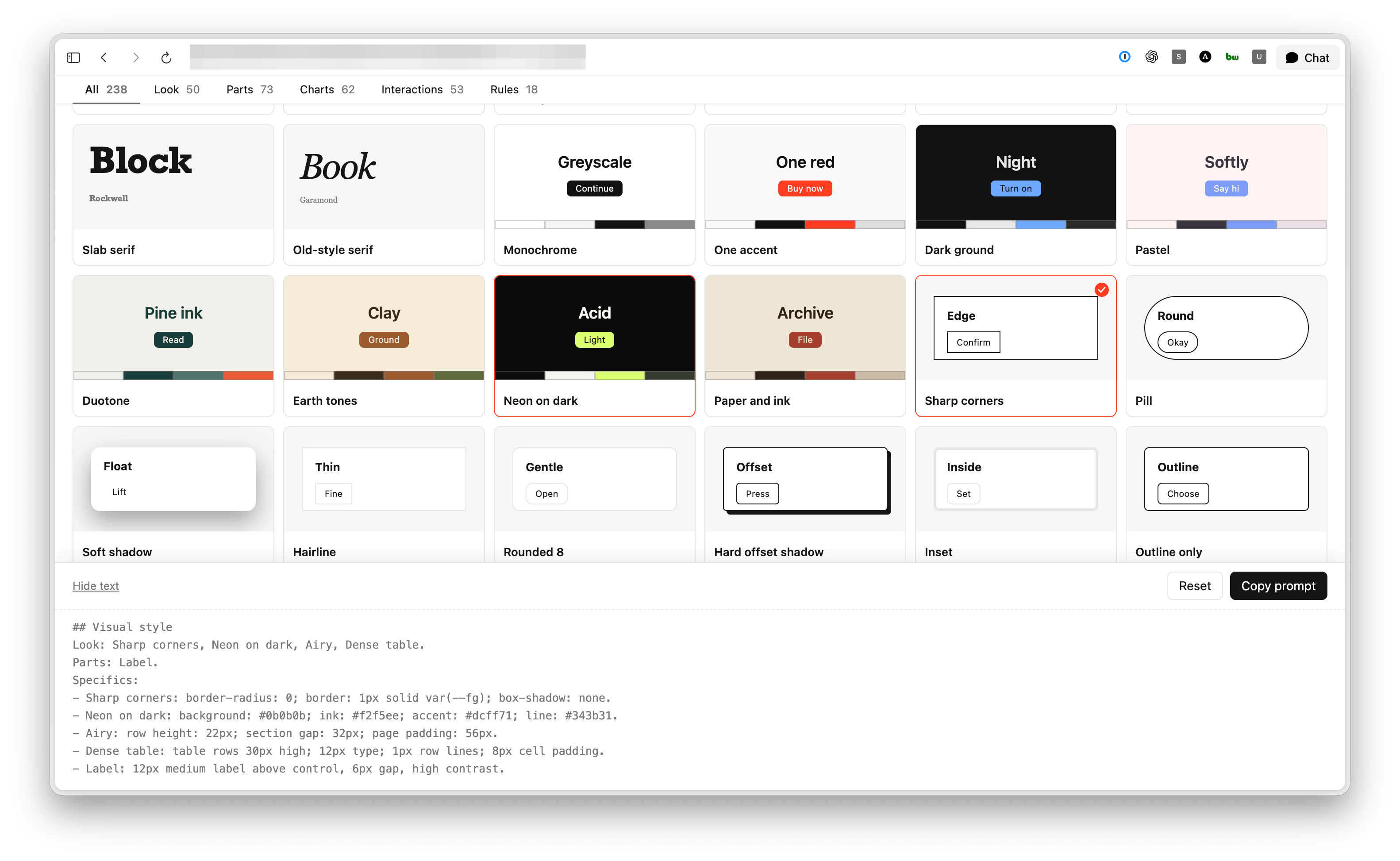
Hylak also described his own workflow. Since Astra and Fable 5.1 he has been hitting usage limits quickly, so he is pushing those models toward orchestrating other agents and writing briefs for them. He has been experimenting with open-source models such as GLM 5.3, his current favourite, but finds frontier models generally better at inferring intent, letting him be vaguer in instructions. His recurring frustration is consistent design output — styles, layouts, buttons — and he plans to launch a reference-sheet tool with a write-up the following day, letting users pick options and copy text into prompts or instructions.
Why it matters: Meta entering personal agents with Muse signals that computer-operating assistants are becoming a platform-level feature rather than a startup niche, and US-only adult access is inference about a cautious rollout. Developers building on Meta's social graph now have a potential integration surface, and those building competing agents face a well-distributed incumbent. ChatGPT Images 2.5's faster, more surgical editing raises the bar for anyone shipping image generation in a product, since per-image latency and edit fidelity are the two constraints most teams hit first.
Based on reporting from the original publisher. Visit the source for full context and later updates.
Publisher excerpt
ChatGPT images got better, again