Generating scenarios for extreme events, without extreme data
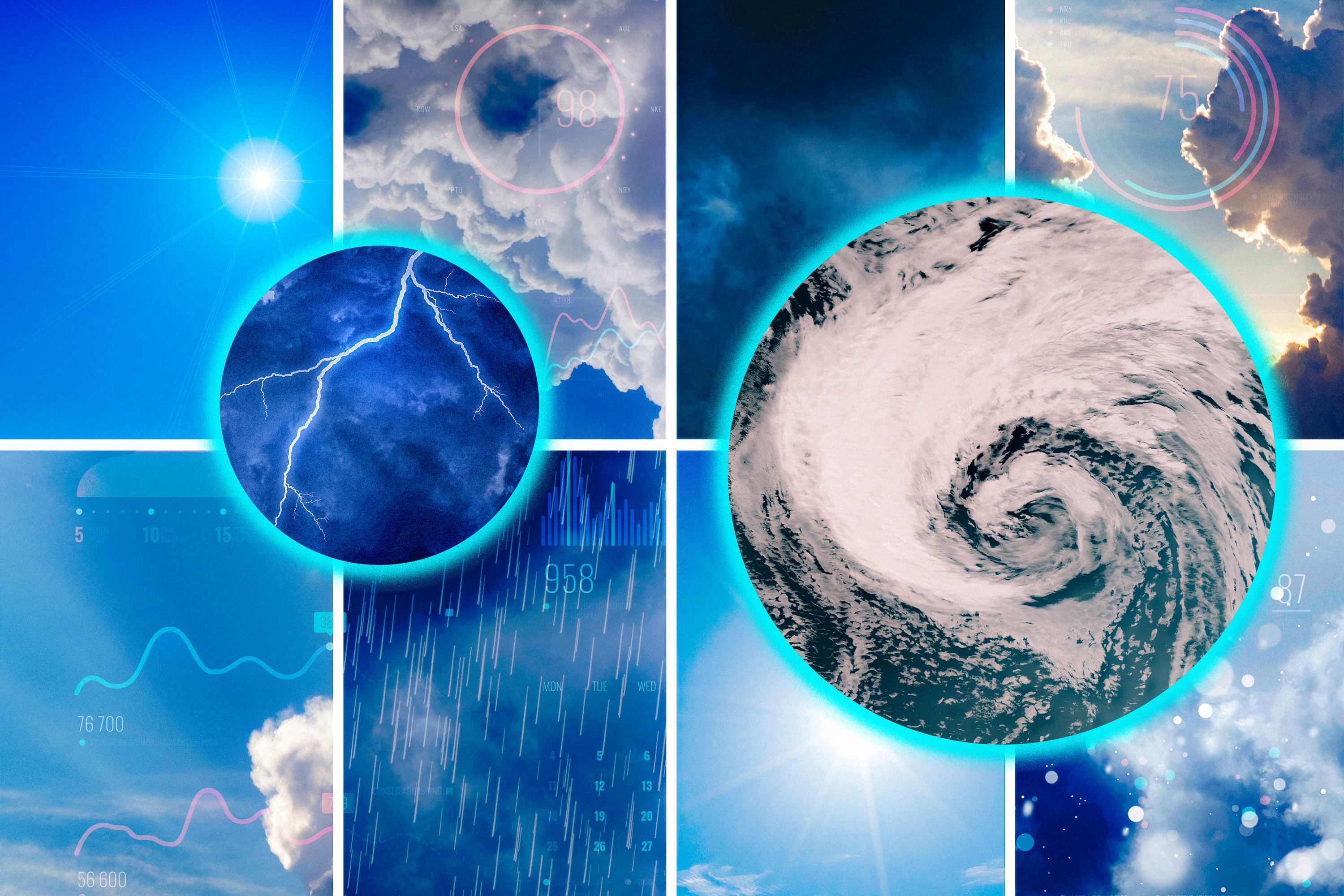
MIT engineers have developed a machine-learning method that generates plausible extreme events and worst-case scenarios and maps their characteristics, such as an extreme storm's likely duration, intensity, and area of impact. The method does not need prior extreme-event data to generate plausible future extreme events.
The team calls the approach Extreme Event Aware, or η-learning. Kai Chang SM '25, a PhD student in the MIT Center for Computational Science and Engineering, and Themis Sapsis, the William I. Koch Professor of Mechanical and Ocean Engineering at MIT, detail the method in an open-access paper that appeared Aug. 20 in the journal Nature Communications.
The algorithm learns from a dataset such as a region's daily weather records and maps, which may or may not contain past extreme deviations. It takes a statistical approach to exclude implausible weather scenarios, then generates plausible extreme events likely to occur with a given frequency, such as once every 100 years, and projects their size, intensity, and duration.
To demonstrate, the researchers applied the method to generate maps of future extreme precipitation events over the continental United States. They began with 25 years of hourly precipitation maps pooled into daily maps, computed point statistics on how often maximum rainfall reached a given level, and trained the algorithm on paired low- and high-resolution spatial maps from only the first six months of the record, which contained few or no examples of the most extreme rainfall levels. The algorithm learned how patterns in low-resolution maps correspond to detailed high-resolution maps, and used the point statistics to constrain the rainfall extremes represented. This enables it to generate spatial patterns for events more extreme than those in the training data.
Chang says the team is trying to model extreme, unprecedented events that no one has seen before and that are not in the dataset. Sapsis says the goal is to quantify events like a once-every-100-year hurricane to help planners prepare.
Beyond weather, the approach can be applied to fields such as robotic navigation and financial markets, according to the team. The research was supported in part by a Vannevar Bush Faculty Fellowship and the U.S. Air Force Office of Scientific Research.
Based on reporting from the original publisher. Visit the source for full context and later updates.
Publisher excerpt
A new algorithm learns to anticipate the unprecedented scenarios that critical infrastructure and global supply chains are least prepared for.