Tesla gave up the EV crown. Now it wants to win the autonomy race.
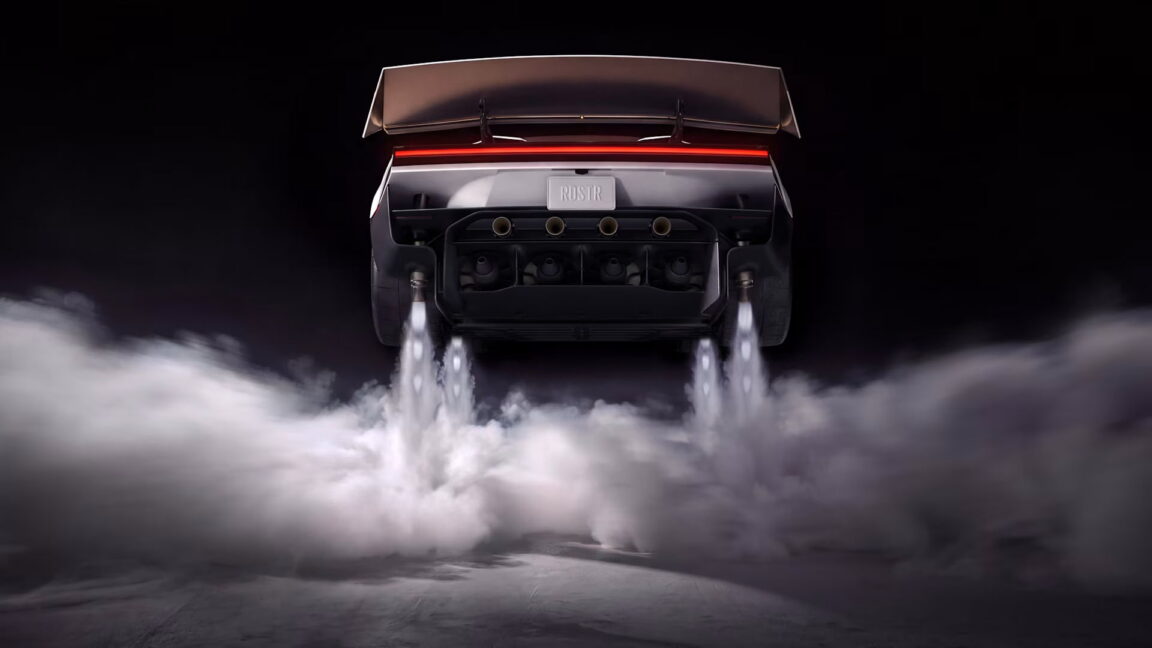
Tesla has told investors that its supervised Full Self-Driving (FSD) software now has 1.7 million active subscriptions worldwide, a rise of 67 percent from a year earlier, and that more than three-quarters of new Teslas sold in North America carry the feature. The figures surfaced at an earnings briefing where the company also reported its largest order backlog in four years. Separately, Elon Musk confirmed that Tesla and SpaceX are exploring a merger, revealed five days after a promotional stunt in which a "flying" Roadster, lifted by compressed-gas thrusters built at SpaceX, jumped and flipped through the air.
The strategic picture behind those numbers is a shift in where Tesla expects to earn money. Vehicle sales still generate 75 percent of group revenue, and that cash flow funds the heavy AI spending Tesla needs to stay in the fight with far larger technology companies. But Musk has argued that software, and FSD in particular, is where demand will come from. At the briefing he said Full Self-Driving is the biggest driver of demand and that there is no competitor for it in any car a customer can buy today.
FSD remains a supervised system despite its name: a human must sit in the driver's seat and pay full attention at all times. Tesla has not disclosed how much recurring revenue the product brings in. It is priced by market and costs $99 a month in the United States. Analyst Dan Ives of merchant bank Yorkville Ives called the technology Tesla's highest-margin segment and said that widening it from roughly 10-15 percent of the global customer base to about 50 percent could "transform the whole financial model." He also argued the market values a dollar of FSD revenue 50-70 percent more than a dollar from selling a car, making subscription expansion worth more than incremental vehicle volume.
Ambition is being scaled back even as the software bet grows. Musk once targeted 20 million vehicle sales a year by 2030; that figure has been reduced to 5 million, which remains a stretch given the 1.6 million vehicles Tesla delivered last year. Tesla also lost its position as the world's largest electric vehicle maker to China's BYD last year, though Musk maintains Tesla leads Chinese rivals on autonomous technology.
The regulatory path is the main constraint on turning supervised assistance into a genuine autonomy business. Tesla has not yet won approval for any fully autonomous version of FSD. Its supervised system is approved in the Netherlands and several other European countries, and the company is seeking bloc-wide approval through a vote of member states that has been pushed back to December. Volkswagen-backed Xpeng is pursuing European approval for its competing XNGP system with German authorities and aims to be among the first once the EU adopts rules on advanced driver assistance and autonomous driving, expected early next year. Xpeng general counsel Zheng Yeqing said the company aims to be one of the first.
A merger with SpaceX, if approved by shareholders and regulators, would create a combined company that could speed work across materials, AI and manufacturing, cut costs and improve access to critical components such as chips. William Blair analyst Jed Dorsheimer estimates the tie-up could give Musk control of 50 percent or more of the merged entity, a significant concentration of influence. Not everyone is enthusiastic: industry observer Max Willson said Musk is "playing a dangerous game" and warned that trouble in AI could spread across the group, putting otherwise strong businesses at risk. A top-15 Tesla shareholder said he backed the deal because Tesla would benefit from AI work now happening at SpaceX.
The rest of the industry is moving in the same direction. GM hired former Tesla executive Sterling Anderson last year to lead product development with a mandate for a new generation of fully autonomous personal cars. BMW and Mercedes-Benz have partnered with Qualcomm and Nvidia on "Level 2 plus" assistance that still requires an attentive driver. Volvo chief executive Håkan Samuelsson conceded Tesla is probably leading autonomy development in the West, while claiming Volvo leads on software and promising door-to-door automation with Nvidia in an upcoming model. Ferrari's Benedetto Vigna said the flying Roadster shows there is still a lot to do in the car world. Beyond driving, Xpeng, Hyundai and Toyota are expanding robotics, while GM and Ford are chasing revenue from energy storage.
For developers and product teams, the interesting signal is the economics rather than the stunts. A supervised driver-assistance package that already reaches a large share of new buyers is the rare automotive feature with software margins, and the analyst claim that markets pay a premium for subscription revenue over unit sales is a testable thesis. In practice, the upside depends on regulators: the gap between "supervised" and "fully autonomous" is where liability, approval and pricing all change, and the December EU vote and the expected rules early next year are the near-term gates. A SpaceX merger adds capital and chip access but also concentrates risk, since a combined entity would expose strong businesses to speculative AI bets.
Why it matters: Tesla's disclosure reframes the company as a software subscription business bolted onto a carmaker, which affects anyone building driver-assistance, fleet or in-vehicle software products. The pending EU approval process and Xpeng's parallel bid will set the rules competitors must meet. And the merger talk matters to investors and partners because, by inference, a combined Tesla-SpaceX would compete for AI talent and compute at a scale smaller automotive players cannot match.
Based on reporting from the original publisher. Visit the source for full context and later updates.
Publisher excerpt
Tesla hopes autonomy subscriptions can deliver the margins car sales cannot.