New research could lead to faster, trustworthy AI models for climate prediction
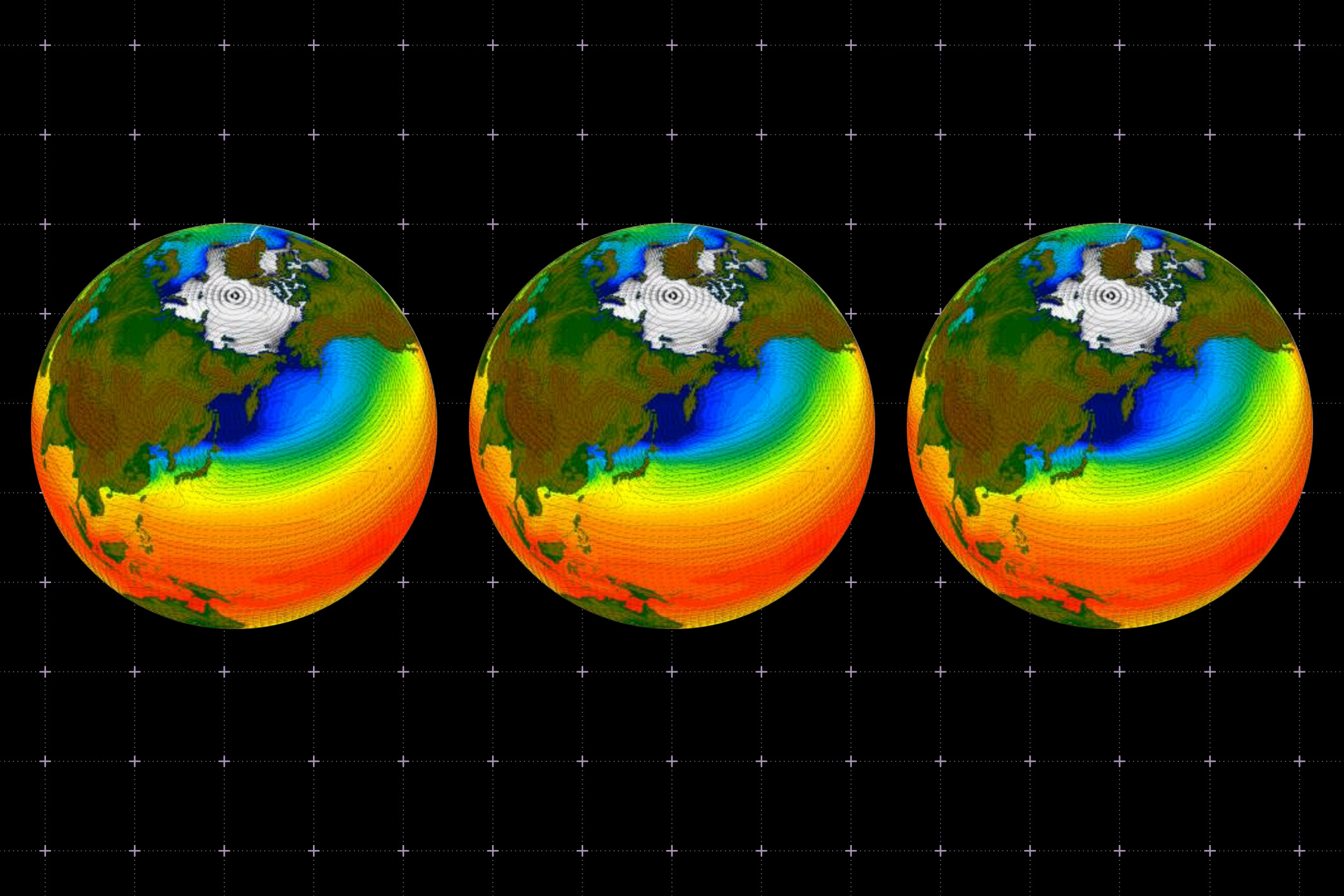
MIT researchers have published a training technique for climate emulators, the fast AI surrogate models that stand in for full earth system models (ESMs). The work appears this week in the Proceedings of the National Academy of Sciences, led by Christopher Womack, a recent MIT PhD now a postdoc at ETH Zurich, with senior author Noelle Selin, a professor in MIT's Institute for Data, Systems, and Society and the Department of Earth, Atmospheric and Planetary Sciences and director of the Center for Sustainability Science and Strategy. The technique boosts emulator accuracy and adaptability while using only a fraction of the training data normally required, which the team says sharply cuts the time needed to produce these tools.
The problem the work addresses is structural. An ESM is a large physics-based simulation of the climate system, and running one scenario can take months on a supercomputer cluster. Because each training example for an emulator has to come from a full ESM run, emulator builders typically rely on just six to eight realistic emissions scenarios. The MIT group previously found that training on those realistic trajectories produces emulators that underperform when asked about unfamiliar or novel scenarios.
Their new algorithm instead generates a synthetic dataset of climate scenarios optimized specifically to improve one emulator's predictive skill, regardless of whether the scenarios resemble plausible futures. Womack's framing is that realism of the training data is not the objective; the objective is the best possible training set. That shift is the core idea: instead of sampling the space of futures people expect, the method searches for the inputs that most reduce the emulator's error.
The pipeline starts with an arbitrary scenario produced by a fast, simple climate model. The researchers measure how well the emulator reproduces the ESM's results, giving an error signal. The programming approach behind the training pipeline lets them iteratively revise the training data to lower that error. A revision might, for example, spike CO2 emissions in 2050 or drop methane emissions sharply in 2037. Optimization continues until the error reaches a set threshold. The resulting synthetic scenarios contain rapid variations rather than the smooth trajectories of realistic emissions pathways; Womack describes these high-frequency wiggles and oscillations as the mechanism that lets the emulator extract more information about the system.
The practical payoff is a single ESM run instead of six or eight. That matters because ESM time dominates the cost of building an emulator. In tests, an emulator trained this way accurately predicted outcomes of scenarios it had not seen during training, while the traditional emulators the team evaluated failed to adapt. One demonstrated case: capturing the effects of a local pollutant control policy that cuts one pollutant while other emissions keep rising. This suggests the method targets a known weakness of learned surrogates, which tend to interpolate well inside their training distribution and degrade outside it. Deliberately stressing the model with sharp, unusual inputs during training is a way of widening the region where its predictions can be trusted.
For developers and researchers, the relevance extends past climate. The approach is a form of active or optimized data generation for surrogate models: rather than collecting more expensive ground truth, use a cheap approximation to identify which expensive simulations would teach the model most. Anyone building fast approximations of slow simulators, whether for fluid dynamics, materials or power systems, faces the same trade-off between data cost and coverage. The caveat is that the method is tuned per emulator, so the synthetic dataset is bespoke to one model and one target error level rather than reusable across models. A likely trade-off is that training on physically implausible inputs may produce emulators that are robust on extremes but whose behavior on smooth, realistic pathways needs separate verification.
The team frames the timing problem as central. Selin notes that emulator training can take months or years, leaving deployed emulators out of date, and argues that cutting production time gets updated tools to researchers and practitioners sooner. Planned next steps include testing the technique with an emissions scenario generated by a full ESM, applying it to other kinds of climate models, and exploring whether it helps in broader machine learning and computer vision settings. The research was part of the Bringing Computation to the Climate Challenge project and was supported by Schmidt Sciences through the MIT Grand Challenges.
Why it matters: Climate emulators feed planning decisions on power grids, public health and agriculture, so an emulator that fails on novel scenarios can quietly mislead. Product and research teams building surrogates of expensive simulators should note that the headline gain here is a data-generation strategy, not a new model architecture, and that it promises faster refresh cycles at the cost of per-model tuning. If the approach holds when validated against full ESM output, the inference is that emulator-based policy analysis could become cheaper to keep current and more dependable on scenarios outside the historical envelope.
Based on reporting from the original publisher. Visit the source for full context and later updates.
Publisher excerpt
MIT scientists developed a training method to generate models that simulate the effects of human activities on climate much more quickly than other approaches.