MIT announces the MIT for America initiative, to strengthen STEM education across the country
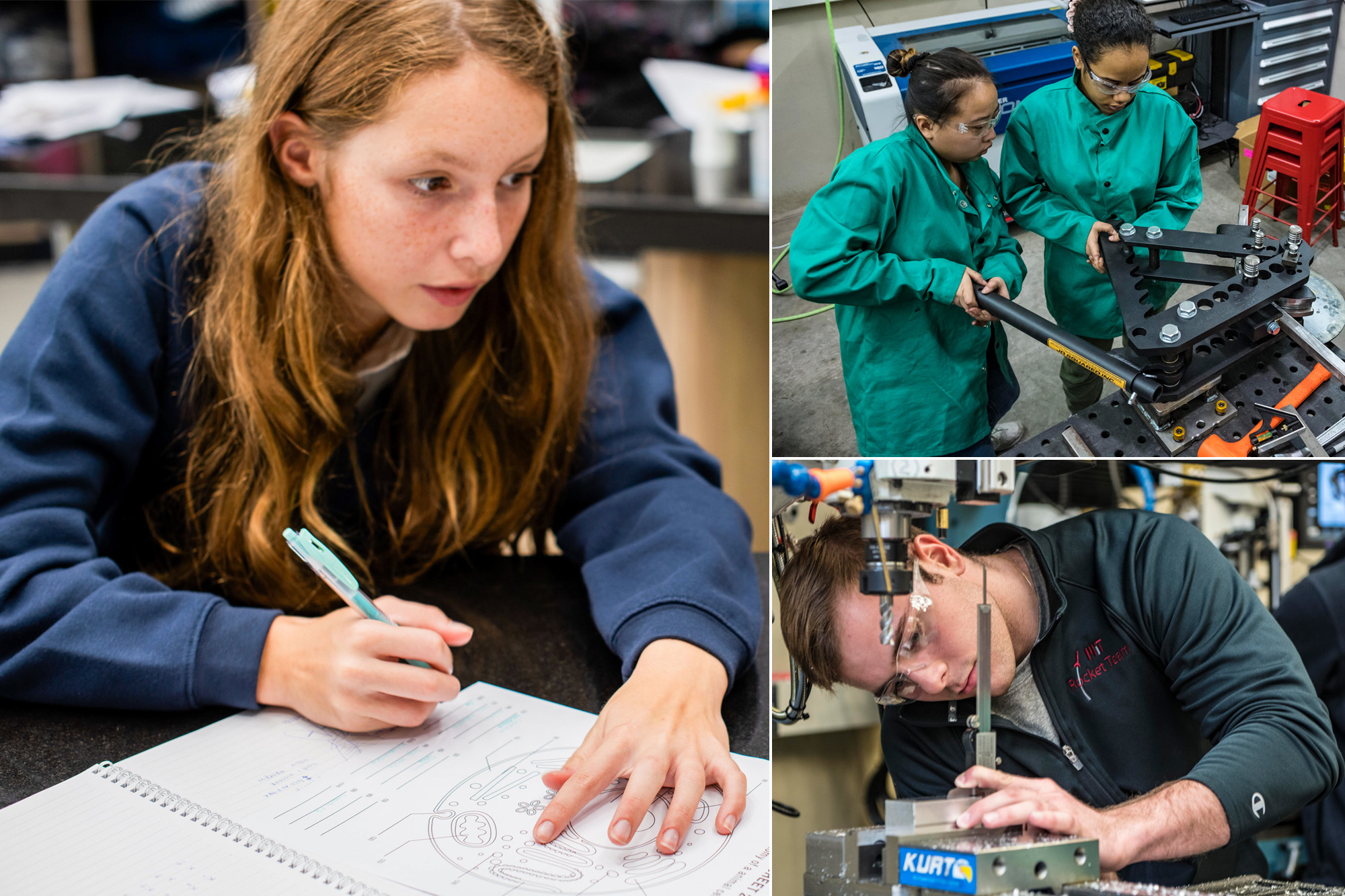
MIT announced a new strategic initiative, MIT for America, aimed at strengthening STEM education nationally across many levels of learning. President Sally Kornbluth made the announcement in a letter to the Institute community.
The initiative ranges across STEM fields and will engage students from kindergarten through community college, preparing them to live and work in a world increasingly shaped by science and technology, according to MIT. Its programs will develop opportunities in mathematics, hands-on design and fabrication, and constructive engagement with artificial intelligence. Kornbluth wrote that MIT for America is grounded in "our deep belief in potential over pedigree" and the open sharing of knowledge.
Faculty leaders say the initiative will support programs that can be scaled up and that provide direct, face-to-face guidance for learners and educators. Eric Klopfer, a faculty co-director, said the goal is programs that are "both scalable and high-touch." Cynthia Breazeal, another faculty co-director, described the effort as bringing high-quality access to STEM and AI education. Claudia Urrea heads MIT for America and the MIT pK-12 Initiative.
MIT for America addresses three priority areas: mathematical thinking and problem solving, building on the MIT for America Calculus Project launched a year ago, in which MIT students and alumni volunteer to tutor students; living, learning and working with AI, where MIT RAISE (Responsible AI for Social Empowerment and Education) is a leader, alongside the Pathways for AI Training and Hiring program launched Oct. 1 with Georgia State University; and designing, making and innovating with hands-on learning, fab labs and makerspaces.
MIT cited national needs: 29 percent of U.S. students in grades 9-12 build circuits, and 6 percent enroll in computer science classes, though about 60 percent of high schools offer such courses. About half of U.S. school districts offer calculus, but many may be under-resourced. Breazeal noted about 1 million students took part in RAISE's Day of AI event earlier this year. The Fab Foundation offers tools and curriculum at 300 U.S. fab labs.
Partners include the MIT Media Lab, MIT RAISE, the MIT pK-12 Initiative, the Office of the Vice President for Resource Development, and the Office of Innovation and Strategy. Leaders presented an overview at MIT's Alumni Leadership Conference in September.
Based on reporting from the original publisher. Visit the source for full context and later updates.
Publisher excerpt
The effort aims to help U.S. learners from kindergarten to community college, with an emphasis on math, making, and the constructive use of AI.