European Leaders Turn to NVIDIA Vera CPUs to Build Local Infrastructure
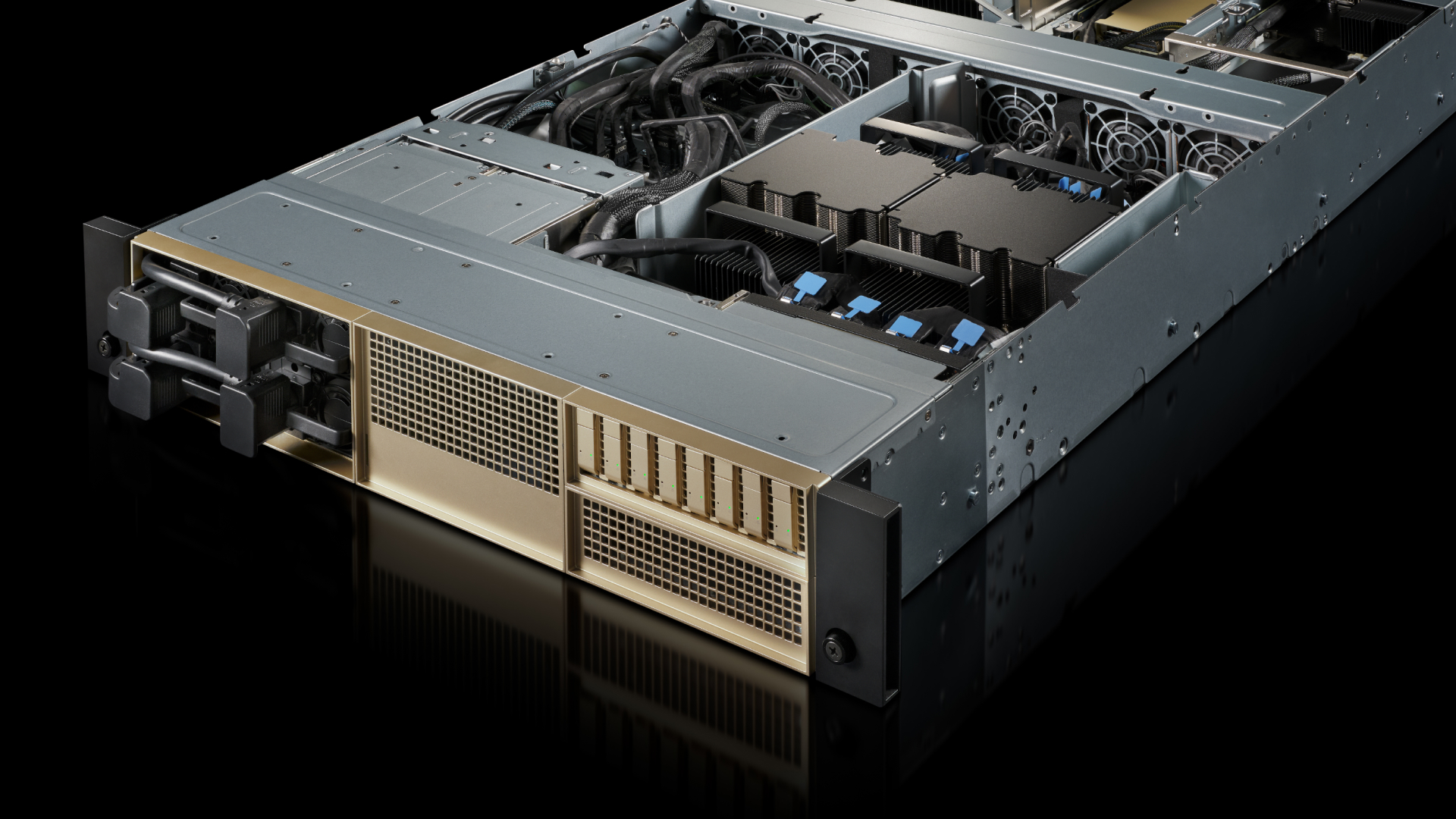
NVIDIA announced at GTC 2026 that a set of European and global partners are building infrastructure around its Vera CPU, which the company frames as the processing layer for agentic computing. The named AI cloud providers are Nebius, Nscale and Verda, all building with Vera to support the computing needs of businesses and developers. Aleria, described as a sovereign AI infrastructure and platform provider, is also part of what NVIDIA calls the broader sovereign AI ecosystem, addressing demand for infrastructure that keeps data and operations under the customer's control.
The pitch rests on a shift in what agents do. Rather than only generating answers, agents retrieve information, run software tools, execute code and evaluate results. NVIDIA argues that every one of those steps depends on fast CPU processing, so Vera speeds up the overall loop, helps data centers use their computing capacity more efficiently and is designed to hold that speed even when thousands of tasks run at once.
On the hardware side, five server manufacturers are building Vera-based systems: Bull, Dell Technologies, HPE, Lenovo and Supermicro. The systems can take the form of standalone CPU servers or accelerated machines that pair Vera with NVIDIA GPUs. That flexibility matters because GPU-heavy nodes still need a general-purpose host processor to feed them, schedule work and handle the non-parallel parts of a pipeline.
The broadest set of named partners is in data processing. ClickHouse, Cloudera, Duck Labs, Elastic, Polars, Redpanda, SAP and Starburst reported strong results on Vera in early testing for analytical, extract-transform-and-load and semantic search workloads. NVIDIA attributes the gains to per-core performance, LPDDR5X memory bandwidth and its Scalable Coherency Fabric. In practice, these are the sorts of workloads where memory bandwidth and single-thread speed often matter more than raw core count: analytics scans large columnar datasets, ETL moves data between formats and stores, and semantic search builds and queries vector indexes.
Software and developer-platform companies are also adopting Vera. Atlassian is looking to it to accelerate the data processing behind semantic search indexes for its AI-powered products. Inherent has tested Vera and is looking to adopt it for environments where agents work alongside engineers on scientific research. Nous Research uses Vera to authenticate agent identities and validate each action before it executes, an approach aimed at keeping deployments secure as fleets of agents grow.
A cluster of cloud sandbox providers is building on Vera too: Baseten-Blaxel, Daytona, E2B, Modal, Prime Intellect and Vercel. Sandboxes act as the computers that agents use to execute code, run tools and test results, and each agent needs a secure, isolated one that can be provisioned instantly. Because these spin up millions of times a day, small per-startup latency savings compound at fleet scale. NVIDIA says Vera's per-core speed and high-bandwidth memory suit this pattern, giving providers throughput to launch sandboxes and run agentic workloads at scale without interruption.
This suggests NVIDIA is widening the conversation beyond GPUs. Accelerators dominate model training and inference, but agentic pipelines spend real time in orchestration, retrieval, tool calls and container churn, which are CPU-bound. Positioning Vera around per-core speed and LPDDR5X bandwidth points at workloads where wide server sockets with many slow cores are a poor fit. A likely trade-off is that LPDDR5X, while efficient, sits below the bandwidth of high-end server memory, so buyers will need to match the chip to the right workload rather than treat it as a universal replacement.
The absence of published benchmark figures in the announcement leaves the claims of strong early results unquantified; independent testing will be the real signal. Availability, pricing and which systems ship when are also not specified here.
Why it matters: Developers building agents will increasingly care about sandbox startup latency, memory bandwidth and per-core throughput, since those determine how many concurrent agents a given budget can sustain, and the sandbox providers named here are the layer many teams rent that capacity from. Server and cloud buyers gain another CPU option tuned for data processing rather than only GPU hosting, which is likely to intensify comparison shopping for agent backends, though the lack of published numbers means teams should benchmark before committing.
Based on reporting from the original publisher. Visit the source for full context and later updates.
Publisher excerpt
Nebius and Nscale are among global technology partners looking to NVIDIA Vera CPUs to build the next wave of infrastructure. Their momentum reflects rapid advancements in agentic computing. Agents do more than generate answers: they retrieve information, run software tools, execute code and evaluate results. Each step depends on fast CPU processing. Vera accelerates that […]