The Nordics and NVIDIA Show What’s Possible When a Region Commits to Advanced Computing
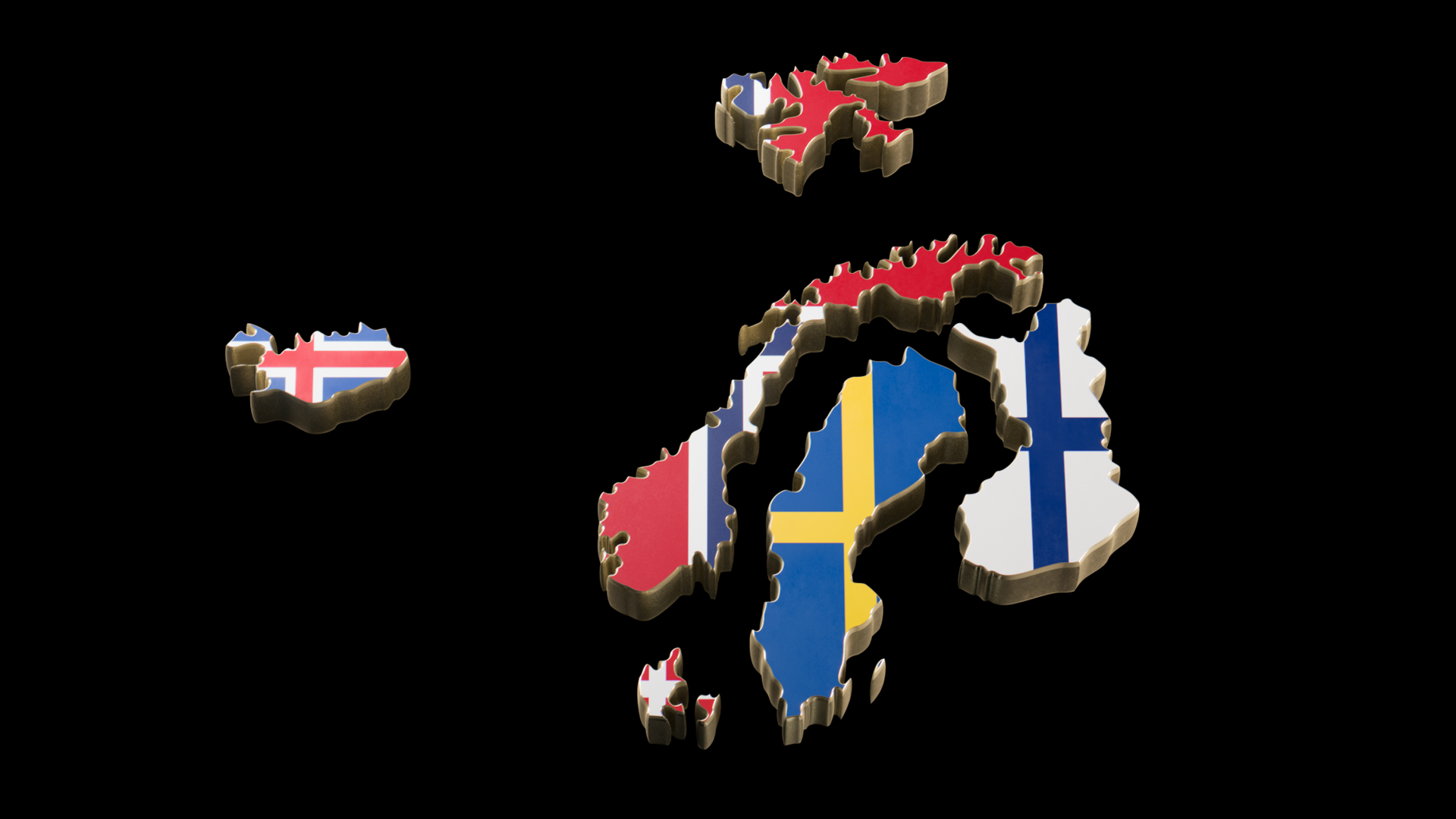
NVIDIA published an overview of its work across the Nordic countries, framing the region as a test case for sustained national investment in accelerated computing. The company said it has invested over the past year in the Nordic technology ecosystem, naming two Swedish startups: Lovable, a Stockholm-based software creation platform that lets users build and run software using plain language, and Legora, which provides an agentic operating system for legal work covering research, review and drafting. Lovable is working with NVIDIA to optimize inference for open models and is training its models using NVIDIA Dynamo software and Nemotron tools.
The infrastructure picture is the most concrete part of the announcement. NVIDIA said AI clouds are expanding in the region with a projected 1 gigawatt of capacity to be deployed by the end of 2027, and listed Bitdeer, CoreWeave, Crusoe, Hyperstack, Nscale, Verda and Volta among the providers. In Sweden, a consortium anchored by Ericsson, AstraZeneca, Saab, SEB and Wallenberg Investments, with SKF as strategic partner, launched Sferical One, described as a shared supercomputer running on two NVIDIA DGX SuperPODs with 16 racks of NVIDIA DGX GB300 systems and 1,152 GPUs. The consortium plans to build services using NVIDIA Nemotron open models, which NVIDIA says let researchers customize and deploy models in a secure environment.
Sweden's Sweden AI Factory, one of Europe's 19 EuroHPC-funded AI factories, also announced a collaboration with NVIDIA to open its infrastructure and expertise to Inception startups and small and medium-sized enterprises across industries including life and material sciences, autonomous systems and gaming. Norrsken Foundation and NVIDIA are opening the Stockholm AI Lab, a physical hub for AI-native founders, scheduled to open in 2027.
Among established Nordic companies, Spotify uses NVIDIA TensorRT-LLM inference software to run AI-powered podcast recommendations, which NVIDIA characterizes as delivering the same recommendations to a global audience at a lower cost per query. ABB Robotics built RobotStudio HyperReality using NVIDIA Omniverse libraries, pairing simulation with a virtual controller that runs the same firmware as its physical robots so engineers can train, test and validate robots virtually. According to ABB Robotics, the solution reaches up to 99% simulation accuracy and cuts commissioning time by up to 80%. Finnish telecom company Elisa is launching a beta of Moontalk AIRI, a real-time enterprise agentic assistant that retrieves information, captures insights and documents decisions during meetings and calls, built on NVIDIA Nemotron open models and distributed infrastructure.
NVIDIA reported that Sweden's startup ecosystem raised $2.8 billion in the first half of 2026 and is projected to reach $5 billion for the year, with several of these companies building on open models. Stilta, based in Stockholm, is post-training NVIDIA Nemotron open models to scale patent analysis from a single patent to entire portfolios, work NVIDIA says was previously out of reach. ConfidentialMind's SampoTron, built on NVIDIA Nemotron-3-Embed, delivers more than 20% improvement in cross-lingual retrieval accuracy across English, Finnish and Swedish. Agaton, which analyzes customer conversations in real time, is using NVIDIA Nemotron 3.5 Lightning to speed up its Revenue Mining solution on live sales calls, routing knowledge retrieval to that model to cut response latency.
A notable open release came from Klang, a Swedish speech lab that fine-tuned the NVIDIA Parakeet v3 model to create Pianissimo, a Swedish transcription model that reduces errors by 75% while being 64x faster than the most accurate alternative. It was built on over 50,000 hours of Swedish speech using the open source NVIDIA NeMo framework and is freely available on Hugging Face. Embedl, founded in Gothenburg and a member of the NVIDIA Inception program, and Space Cargo Unlimited unveiled an onboard prototype that monitors protein crystallization, flags anomalies and recommends actions on a single NVIDIA Jetson Orin NX module without continuous ground connectivity.
On autonomous machines, Volvo Cars is combining its vehicle safety systems and engineering expertise with NVIDIA Hyperion, Halos OS and Alpamayo Stack to enable future Volvo cars to navigate complex environments door to door. Autonomous freight company Einride is building its next-generation Einride Driver on NVIDIA Hyperion for autonomous freight trucks, using the NVIDIA Halos safety system and NVIDIA Cosmos open world models. Toyota Material Handling Europe, working with NVIDIA and SoftServe, is adopting a simulation-first approach to autonomous material handling, cutting autonomous solution deployment time by up to 50% across its global engineering, manufacturing and innovation teams.
In quantum computing, Stockholm-based FirstQFM used NVIDIA accelerated computing to train a model that reduces the execution time of quantum processors by 33% without sacrificing performance. The model was validated on a QuantWare quantum processor unit and optimizes how the operations required by quantum algorithms are translated into detailed hardware instructions, accounting for updates to how the hardware is calibrated. NVIDIA also pointed readers to founder and CEO Jensen Huang's GTC Berlin keynote on Wednesday, Oct. 21, at 11 a.m. CEST.
A developer reading this should separate the announcements with immediate artifacts from those that are still directional. Two items are usable today: Pianissimo is publicly downloadable on Hugging Face under an open framework, and SampoTron reports a measurable cross-lingual retrieval gain. Most other entries describe collaborations, pilots or projected capacity rather than shipped products. The 1 gigawatt figure, for instance, is a forecast for the end of 2027, and Stockholm AI Lab is slated for 2027. This suggests the region's story is currently weighted toward infrastructure commitments and enterprise pilots, with the open-model ecosystem as the connective tissue across nearly every project listed.
The recurring dependence on NVIDIA Nemotron models, Dynamo software and TensorRT-LLM across such different workloads is worth noting. It shows a common pattern where regional labs and startups adopt a vendor's open weights and inference stack rather than training from scratch, trading some differentiation for speed and cost. A likely trade-off is tighter coupling to one vendor's roadmap, though the open availability of models such as Parakeet v3 and NeMo softens that lock-in for teams that want to fine-tune locally.
Why it matters: Nordic developers and product teams get a concrete set of options now, including a free Swedish ASR model and a documented retrieval improvement to evaluate. The larger signal is capital and compute concentrating in the region, with a shared supercomputer and EuroHPC-backed facilities opening to startups and SMEs. If the projected capacity and lab timelines hold, teams building in Swedish, Finnish or autonomous systems should expect cheaper inference and more local experimentation paths; treat the 2027 dates as plans rather than guarantees.
Based on reporting from the original publisher. Visit the source for full context and later updates.
Publisher excerpt
The Nordic countries have become the European leader in unicorn startup density, producing the most emerging companies valued at $1 billion or more per capita on the continent. Now, a new chapter for the region is unfolding as countries race to build one of Europe’s most consequential technology ecosystems. The many computing advancements already underway […]