NVIDIA Expands Slurm to Bring Quantum Computing Into Supercomputing
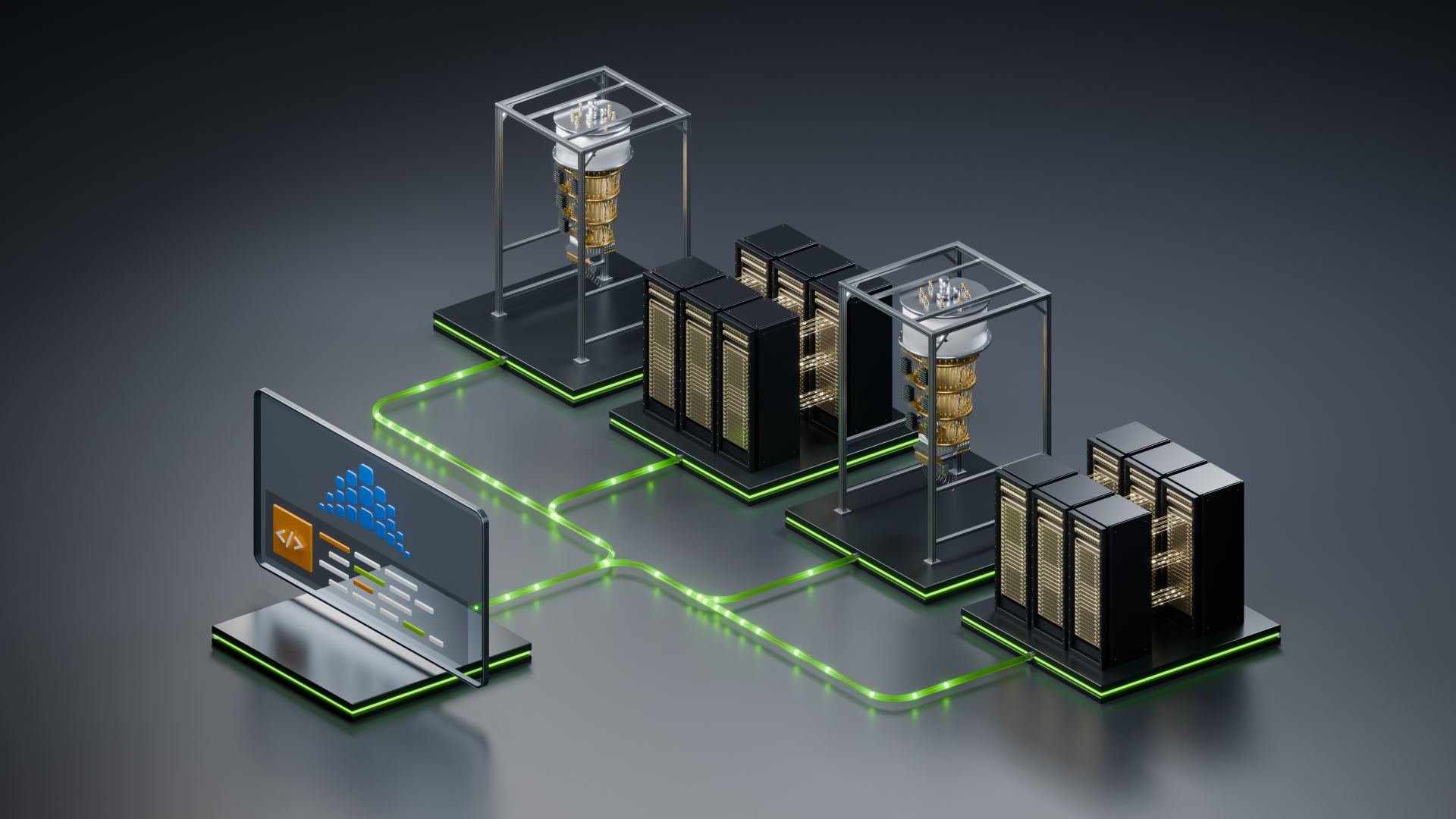
NVIDIA has announced an expansion of the Slurm workload manager that gives quantum processors first-class treatment in high-performance computing centers. Slurm 26.11, scheduled to ship later this month, builds on earlier work with IBM, Pasqal and the broader quantum community. The release lets a quantum processing unit (QPU) vendor describe its hardware once, in a single configuration file, and have that description work at any supercomputing center running the scheduler. Alice & Bob, IBM, IQM, Pasqal, Quantinuum and MQSC are already adopting the expansion, and it supports the QRMI and QDMI interfaces, which are widely used to connect quantum hardware to classical infrastructure.
The timing reflects real deployment momentum. Quantum processor installations at supercomputing centers have grown nearly sevenfold over five years, and almost 30 centers worldwide are now in the process of deploying more than 50 quantum processors. Most of those sites already run scientific workloads on Slurm, which has long been the default job scheduler and resource manager for large clusters. Extending it to QPUs means computational chemists, nuclear physicists and materials scientists can submit hybrid jobs through tooling they already know rather than standing up separate quantum-specific software stacks.
Until now, connecting a QPU to a center was bespoke work on both sides of the relationship: each new processor and each new site meant a fresh integration effort. Because the new release is built on QRMI and QDMI rather than a proprietary layer, QPU builders can reuse their integration across every deployment, and centers can add new quantum hardware to existing scheduling and resource-management workflows without developing custom QPU-specific solutions. In practice, that turns an N-by-N integration problem into a common interface each side implements once, which is the kind of change that tends to accelerate adoption in HPC.
For users, the payoff is orchestration. Quantum-classical applications written with NVIDIA's CUDA-Q platform can now have Slurm coordinate access to all the processing a job needs, quantum and GPU alike. CUDA-Q is an open platform for hybrid quantum-classical programming, where a single program interleaves circuit execution on a QPU with classical simulation and optimization on GPUs; the scheduler is what decides which resources a job gets and when, so a native Slurm path removes a layer of custom glue code. The Slurm work adds a community-developed orchestration layer to NVIDIA's broader open platform for quantum-GPU supercomputing.
That platform saw several releases at SC26. CUDA-Q QEC targets quantum error correction research, letting teams prototype and test correction schemes quickly, and adds a decoder server; a new TCBP-JOBS decoder is described as 13,000x faster than the industry standard. This matters because real-time decoding, turning noisy syndrome measurements into corrective actions fast enough to keep pace with the hardware, is one of the practical bottlenecks in fault-tolerant quantum computing, so decoder throughput is a metric worth watching. CUDA-Q also gains a wider set of fault-tolerant primitives that application builders can use to compile their ideas realistically, and NVIDIA says Fermilab has already used CUDA-Q to complete studies in three weeks that would normally have taken five months.
Two further components round out the stack. CUDA-Q Algorithms offers reusable building blocks for application developers, including new tools for loading data into quantum circuits and capabilities aimed at chemistry and materials problems. CUDA-Q Pulse gives hardware builders a layer for shaping the control pulses that manipulate qubits, with GPU acceleration for generating them. Together they span the range from algorithm design down to device control.
Ecosystem activity at SC26 shows the platform spreading. Quantum Motion integrated its QUICHE chemistry framework with CUDA-Q. Altera and Oxford Quantum Circuits built an FPGA-based controller that links qubit control and readout to GPUs over NVQLink. At larger scale, QunaSys used cuQuantum and 1,024 NVIDIA Hopper GPUs on ABCI-Q to simulate more than 300 million quantum operations, reaching chemical accuracy for a four-hydrogen-atom model. NVIDIA researchers used the JUPITER system to simulate 104 qubits under realistic noise, testing fault-tolerant designs before such machines are built.
A likely trade-off is that a file-based hardware description only goes so far: performance tuning, calibration quirks and access policies still differ site by site, so the standard interface simplifies discovery and scheduling more than it does optimization. Access models for scarce QPU time may also remain center-specific for some time.
Why it matters: Supercomputing centers and QPU vendors have been stuck paying integration costs on every new pairing of hardware and site, and a scheduler-level standard reduces that for both. For developers, the near-term change is that hybrid CUDA-Q jobs can target quantum resources through familiar Slurm submission patterns rather than custom scripting, which lowers the barrier to trying quantum acceleration inside existing scientific codes. This suggests the competitive ground shifts toward the quality of QPU implementations of the common interface and the performance of tools like decoders and simulators, since basic connectivity is becoming routine.
Based on reporting from the original publisher. Visit the source for full context and later updates.
Publisher excerpt
Quantum processor deployments at supercomputing centers have grown nearly sevenfold over the past five years, with nearly 30 supercomputing centers around the world now in the process of deploying over 50 quantum processors. Many of these centers use Slurm to run scientific supercomputing workloads, so expanding its support for quantum processors builds on familiar workflows […]