Ben's session #2
A post from Ben's Bites, titled "Ben's session #2," dated Aug 14, 2026, examines what a "personal agent" is and why products such as OpenClaw, Hermes and Grok Bot, which the post says launched this week, have drawn attention.
The post states these are not different products per se, but are packaged like one, and that the distinction is about setup. It says the same arrangement can be built by a user as a file and folder system.
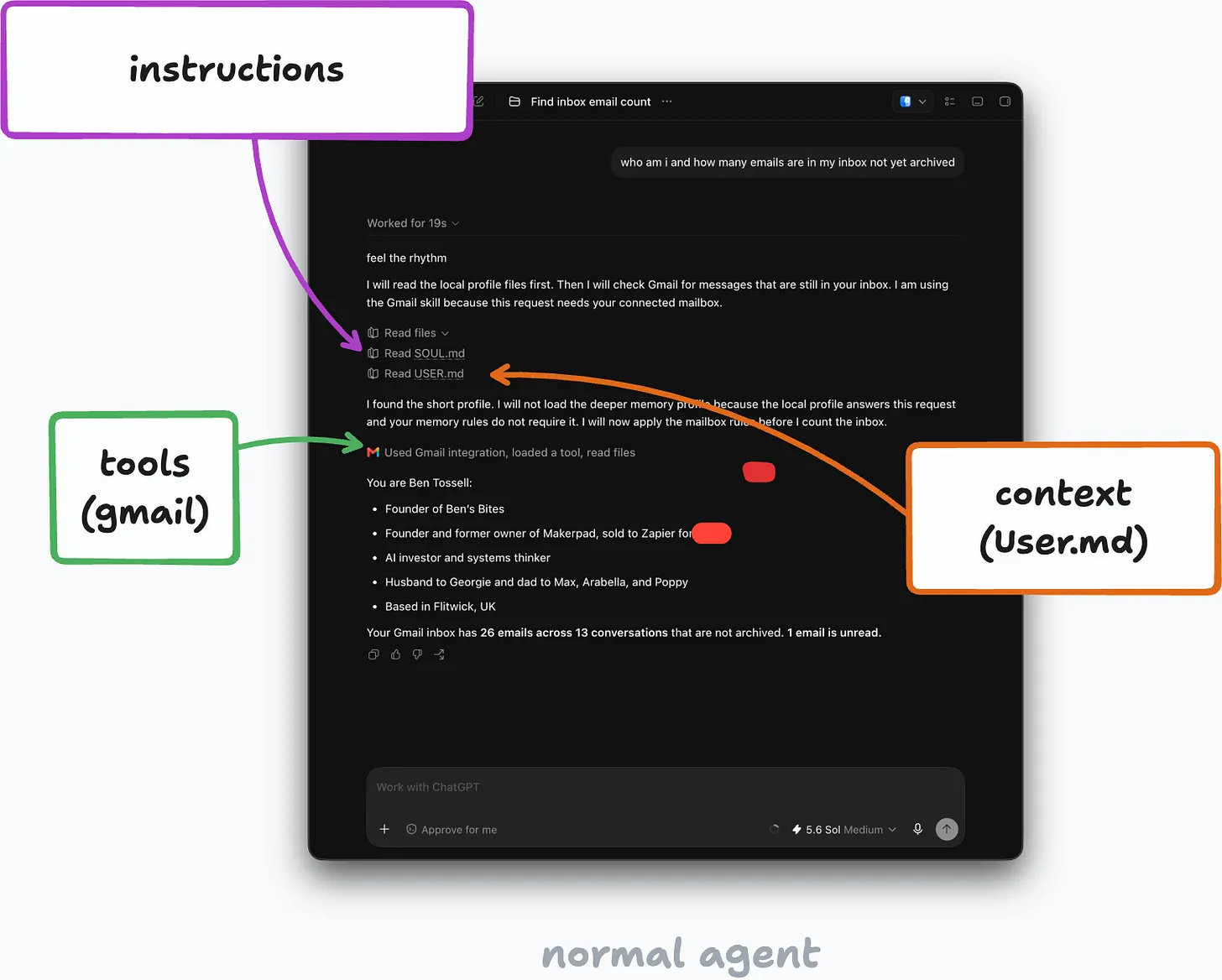
According to the post, a personal agent contains what most agents have: instructions, tools and context. It describes two approaches: one main agent, compared to "Jarvis," or several agents with their own files, personality and job descriptions, configured by editing the instruction file. Task-specific agents cited as examples include a money manager agent, a marketing agent and a copywriting agent.
The author writes that they generally use one agent and, for task-specific work, have the main agent read a task-specific file such as newsletter-research.md. The post says Grok Bot works by giving each agent its own thread, and that pinned threads in Codex or Claude pointed at specific agent folders could achieve the same.
On memory, the post says it is not really memory but a text file logging things that happened, which the agent reads to get up to speed. It says personal agents like Grok Bot provide several agents each with own-agent memory, and that agents can share memory by reading other memory files.
The post describes computer use tools in Codex and Claude Code, and says Grok Bot uses a shared computer where all agent chats run on one machine with the same files, installs and logins, each chat getting its own screen. It says agents can be given automated tasks and that some automations start a fresh session while others continue an existing thread. It mentions a Grok Bot "teach" feature that records a user walking through a task.
The post lists example uses including finding and booking flights, ordering food, negotiating contractor quotes, organising files, collecting invoices, creating decks, creating a morning brief, and building websites and apps. It outlines a setup: create an agent folder, add an instruction file, a user file and a memory file, open the folder in Codex or Claude, pin the thread, give it tools and permissions, and add a schedule for repeatable tasks.
Based on reporting from the original publisher. Visit the source for full context and later updates.
Publisher excerpt
What is a personal agent?