NVIDIA Sweeps MLPerf Training and Endpoints as Vera Rubin Debuts With Leading Performance
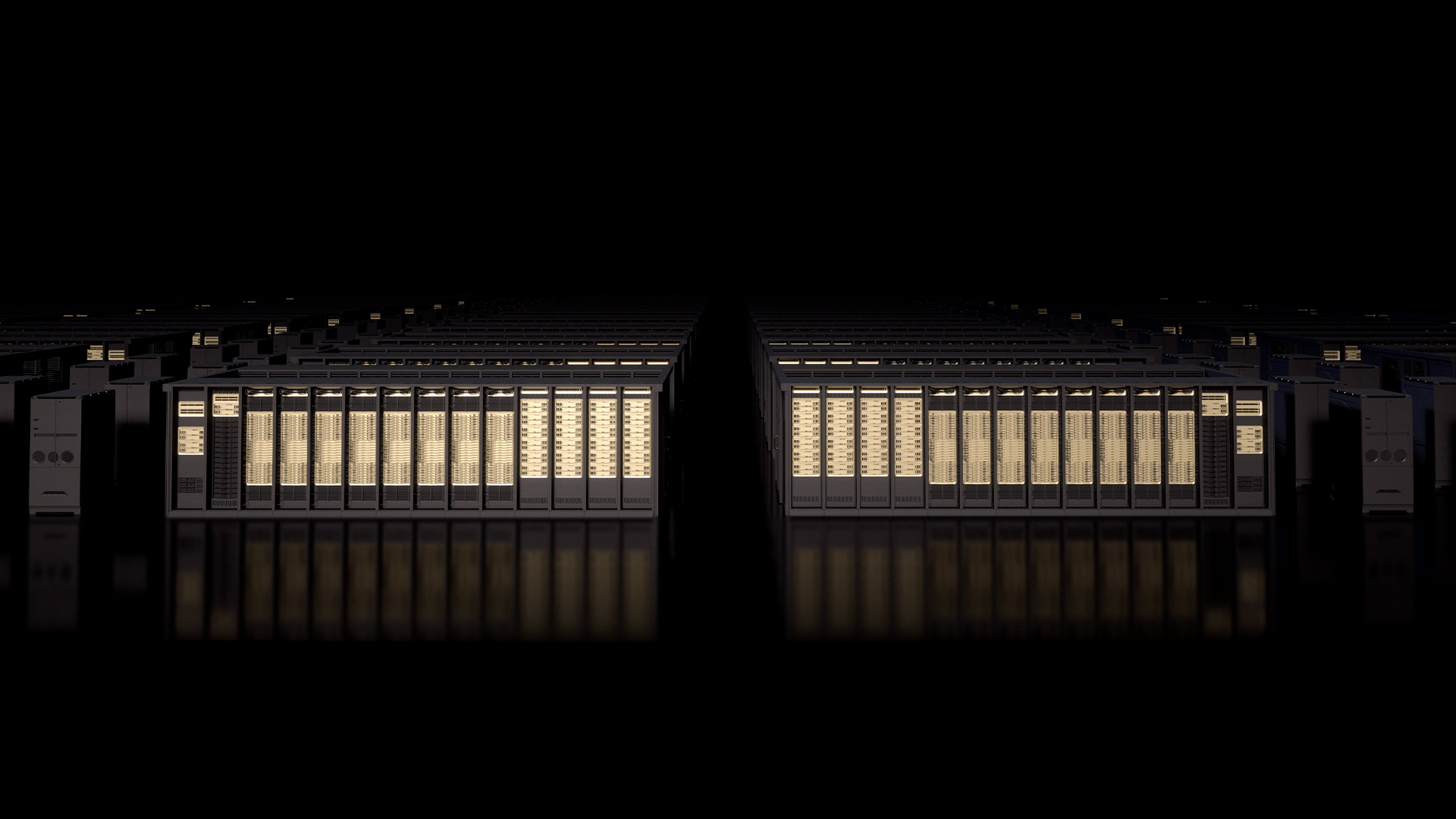
NVIDIA used the release of MLPerf Training v6.1 and MLPerf Endpoints v1.0 results to introduce its Vera Rubin platform, and the debut numbers are the headline: the company says Vera Rubin NVL72 was the only system with results on every Training benchmark this round, and that its first Endpoints submission shows more than 10x generational gains in throughput per watt for agentic AI. Training results were retrieved from mlcommons.org on November 16, 2026, and the Endpoints figures date to November 9, 2026. NVIDIA frames the launch as validation for a single stack that covers pretraining, post-training and inference.
MLPerf Training measures how long a system takes to train a set of models to a target accuracy. The v6.1 suite covers large language models, image generation, recommender systems and reinforcement learning post-training. NVIDIA submitted across all of them — eleven result entries in total — and reports that Vera Rubin NVL72 delivered up to 2x more performance per GPU than GB300 NVL72, described as early results. The comparison is against NVIDIA's own previous generation rather than a competitor, which makes the 2x a generational claim rather than a market-wide one.
Scale efficiency matters as much as per-GPU speed. On the DeepSeek-V3 benchmark, Vera Rubin NVL72 went from 256 to 1,024 GPUs with about 97% scaling efficiency, cutting training time from 16 minutes to roughly four. Quadrupling the hardware and getting close to a quarter of the time is what near-linear scaling looks like in practice; the missing 3% is the communication and synchronization overhead that grows as more chips coordinate. NVIDIA attributes that to NVLink scale-up networking inside each system and Quantum-X800 InfiniBand plus Spectrum-X Ethernet for scale-out between systems, working alongside its optimized software stack.
At the largest end of the round, NVIDIA ran the benchmark on 10,240 GB300 GPUs, which it calls the largest scale in this round, and Microsoft Azure matched that figure using 10,240 GB200 GPUs. For developers, large-scale results are a proxy for whether a cluster behaves like one big machine or a collection of slow ones, since adding GPUs only shortens training if they stay busy.
The Endpoints results target a different bottleneck. Agentic workloads — a travel agent planning a trip, an IT agent diagnosing a problem — reason, call tools and check their own work repeatedly, so each task produces many tokens. In power-constrained data centers, tokens per second per watt becomes a capacity measure: more efficient generation means more concurrent agents per rack. MLPerf Endpoints v1.0 tests real agentic coding and enterprise workflows and checks that the agents still complete tasks correctly, so speed alone does not carry a result.
On Kimi K3, described as a large open model built for agentic workflows, NVIDIA reports a provisional result of more than 10x the throughput per watt of GB300 NVL72 at a shared minimum of 50 tokens per second per user. The underlying numbers show the shape of the trade-off: Vera Rubin NVL72 with 32 accelerators hit a system throughput of 41,414.2 tokens per second at 100.89 kW, with 1,024 concurrent queries, a P90 time-to-first-token of 4,673.9 ms and 50.4 tokens per second per user. GB300 NVL72 with 48 accelerators reached 2,210.4 tokens per second at 60 kW, 48 concurrent queries, a P90 TTFT of 2,305.1 ms and 56.2 tokens per second per user. The throughput-per-kilowatt comparison is normalized at equal per-user interactivity, but the concurrency levels differ sharply, and Vera Rubin's slower first-token latency reflects the far heavier queue it was serving. Any reader comparing these lines should note both caveats.
Verification status is also uneven. NVIDIA states the GB300 results were verified by MLCommons, while the Vera Rubin results are provisional, pending MLCommons verification and peer review, and subject to change. Treat the 10x figure as a vendor-reported early number until that review closes.
Ecosystem participation was broad: 20 organizations submitted in MLPerf Training, including ASUS, Azure, Cisco, CoreWeave, Crusoe, Dell Technologies, Firmus, Giga Computing, Google Cloud, HPE, Inventec, Krai, Lambda, Nebius, Oracle, Quanta Cloud Technology, Supermicro, TTA and the University of Florida. NVIDIA also points to independent results on SemiAnalysis AgentX and Artificial Analysis AgentPerf, and to HPC workloads highlighted at SC26, as evidence the same infrastructure serves beyond MLPerf's test set.
Why it matters: teams sizing AI infrastructure now have a generation-over-generation data point — roughly 2x per-GPU training throughput and a large jump in tokens per watt for agentic serving — that changes capacity planning for anyone running agents at scale, though the Vera Rubin Endpoints numbers remain provisional. A likely trade-off is that the efficiency gain comes with far higher concurrency and higher first-token latency, so latency-sensitive products may still favor smaller configurations. NVIDIA's pledge of continuing CUDA software optimization also suggests measured gains may grow after launch, which is worth factoring into procurement timing.
Based on reporting from the original publisher. Visit the source for full context and later updates.
Publisher excerpt
In its MLPerf benchmarks debut, with results released today, the NVIDIA Vera Rubin platform delivers leading performance across training, post-training and agentic inference. NVIDIA swept every MLPerf Training v6.1 benchmark and, in its first MLPerf Endpoints submission, delivered more than 10x generational gains in throughput per watt for agentic AI — measuring how much agentic […]