NVIDIA cuDSS Now Generally Available to Accelerate Engineering and Scientific Simulations
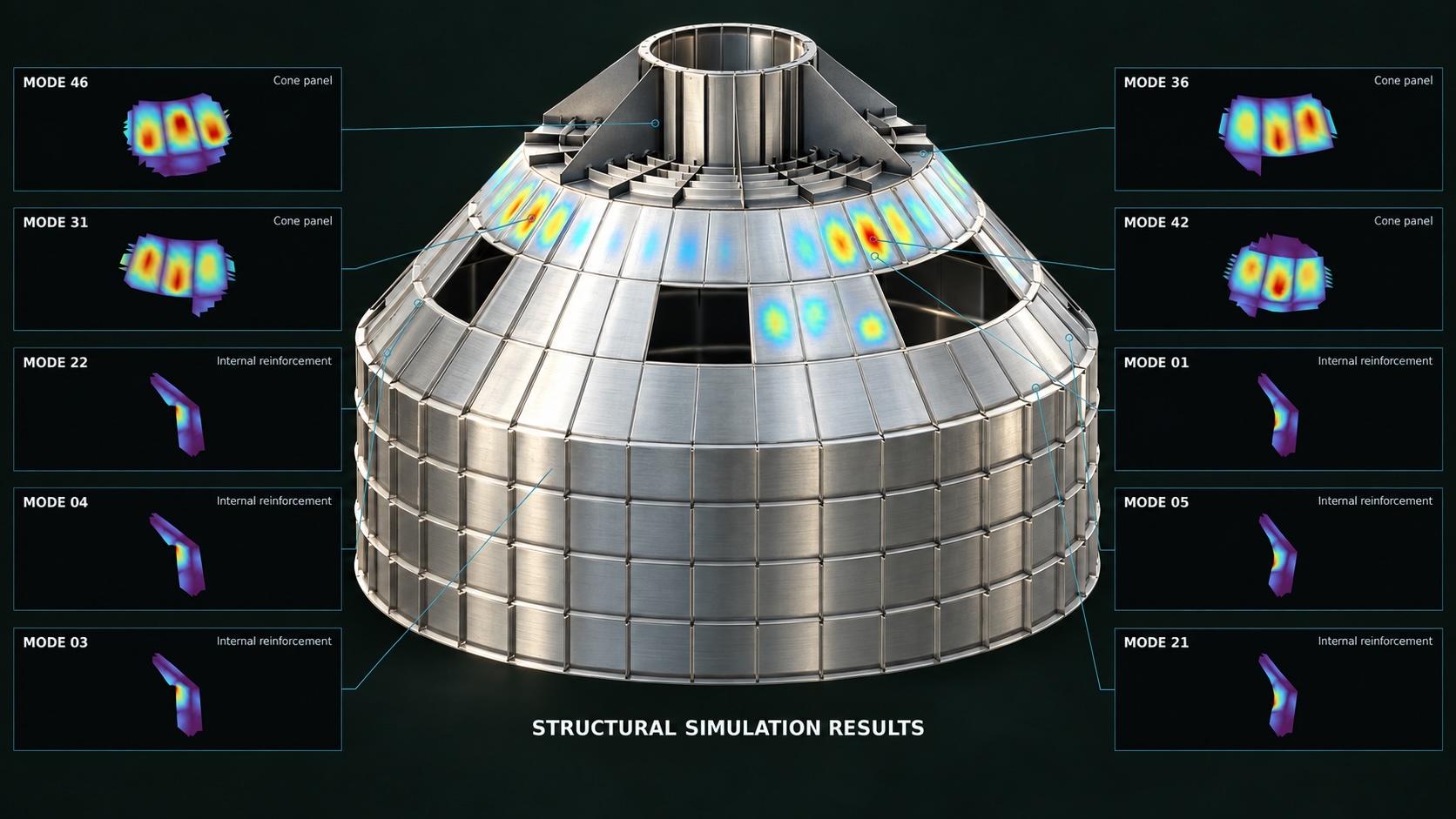
NVIDIA announced general availability of cuDSS, a library in its CUDA-X family, on the sidelines of GTC Berlin. The release moves one of the most demanding steps in engineering and scientific simulation, the solving of large sparse linear systems, onto GPUs. The library is offered through C, C++, Python and Fortran interfaces, so developers can wire it into existing simulation, engineering and optimization codes rather than rewriting them.
The problem cuDSS targets is familiar to anyone who has run finite-element or similar solvers. Simulating a chip, an aircraft or an industrial system means repeatedly solving very large systems of equations in which most coefficients are zero. That step recurs throughout a simulation run and frequently sets the ceiling on how many design variants a team can explore. Shifting it to GPUs, in NVIDIA's framing, shortens time to results and raises simulation throughput, which lets end users tackle larger and more realistic models and search a wider design space at lower cost.
NVIDIA says the library scales out of the box from single workstations to large computing clusters, which matters because simulation workloads tend to grow until they saturate whatever hardware is available. This suggests teams can start on one machine and move the same solver onto cluster resources as models grow, without changing interfaces.
Several vendors and their customers are already shipping or testing cuDSS inside commercial tools. Applied Materials reports up to 10x acceleration of sparse solves in Ginestra, its physics-based, defect-centric simulation platform, compared with CPU-only approaches, which it says speeds exploration of semiconductor materials and device reliability.
COMSOL provides the most precisely quantified result. Running COMSOL Multiphysics with cuDSS on NVIDIA accelerated computing, ZEISS SMT measured a 4x speedup in an extreme ultraviolet lithography plasma simulation benchmark, finishing the full simulation in six days and 14 hours. The absolute runtime is a useful reminder of scale: even a 4x gain leaves these plasma models running for the better part of a week, so the headline multiplier translates into days saved rather than minutes.
Cadence uses cuDSS in its Celsius software for simulating heat, structural stress and warpage in advanced and 3D chip designs, and cites Nokia among customers analyzing complex designs faster. Dassault Systèmes reports an 8-10x speedup using cuDSS inside its Abaqus structural solver and its CST electromagnetic solvers for performance-critical simulations across industries. Siemens employs it in Simcenter STAR-CCM+ for simulations of structures in fluid-structure interaction workflows. Synopsys uses it in the Sentaurus Device simulator for advanced logic, memory and power chips, with Infineon named as a beneficiary modeling increasingly complex devices.
The spread of figures, from 4x to 10x, reflects different benchmarks, model sizes and baselines, not a single comparable result. Applied Materials' 10x is a comparison against CPU-only sparse solves; Dassault's 8-10x likewise references its Abaqus and CST solvers; the ZEISS number is a measured end-to-end benchmark. In practice, teams should expect the gain to depend heavily on problem size, sparsity structure and whether the rest of the simulation pipeline can keep the GPU fed. A likely trade-off is that small or highly irregular systems may see less benefit, while very large sparse problems fit GPU architectures best.
For developers, the practical appeal is integration rather than replacement. The solver is a component that plugs into existing applications, so engineers and researchers can keep their current modeling tools while gaining GPU execution underneath. That is the pattern NVIDIA has applied across CUDA-X, building accelerated libraries for domains such as linear algebra, FFTs and graph analytics so software vendors can adopt GPU support without deep reimplementation.
NVIDIA points readers toward its demo booth and the Dassault Systèmes booth at GTC Berlin for hands-on looks at cuDSS.
Why it matters: Simulation software vendors and the engineers who depend on their tools are the immediate audience, since CAE and EDA applications from Cadence, Dassault Systèmes, Siemens, Synopsys and Applied Materials are already adopting the library. If the reported speedups hold across typical customer models, teams could test more design variants within the same schedule or run larger, more accurate models at similar cost. The main caveat, as an inference from the range of published figures, is that realized gains will vary widely by workload and hardware configuration.
Based on reporting from the original publisher. Visit the source for full context and later updates.
Publisher excerpt
NVIDIA cuDSS, launched today in general availability, is an NVIDIA CUDA-X library that shifts a critical part of engineering and scientific simulations onto GPUs. Complex engineering feats — from advanced chips to aircraft to industrial systems —– depend on simulation to predict how designs will perform before they’re built. As designs become more complex, simulations […]