RFK Jr. thinks AI will free us from the "tyranny" of medical facts, expertise
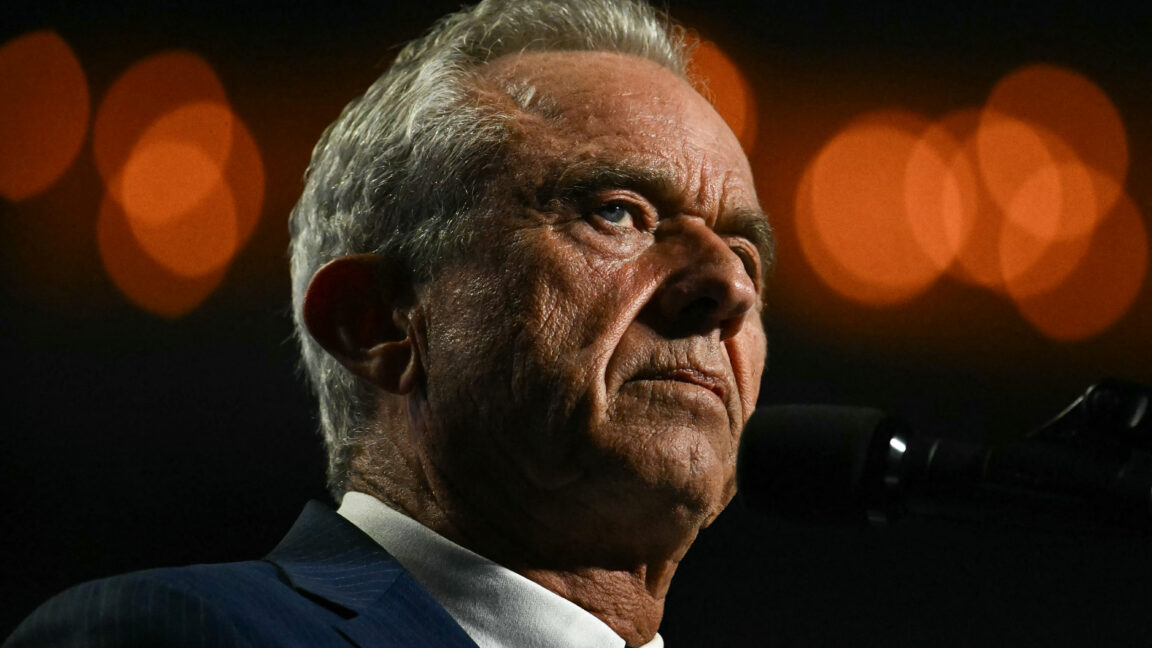
Health Secretary Robert F. Kennedy Jr. opened a "fireside chat" with Vice President JD Vance on artificial intelligence at a Make America Healthy Again event Tuesday, surprising Vance, who said he had expected to discuss "weight loss and acid, not AI."
Kennedy said the Trump administration is "making it easy for every American to use AI," which he claimed would free people from the "medical tyranny" of doctors and health experts. He suggested Americans use AI for second opinions on medical recommendations, calling it "better informed than any doctor in the country," and said the technology would confirm his views on vaccines and public health guidance.
"We're never, ever again going to be able to be dominated by public officials who tell us trust the experts, because every American will be able to check their own medical advice," Kennedy said. He offered examples in which he said AI might contradict experts on masks, social distancing, and whether vaccines prevent transmission and infection.
Ars Technica tested those questions. Google's Gemini responded that "Yes, masks work to reduce the spread of respiratory infectious diseases," adding that effectiveness depends on mask quality, fit, and adherence. ChatGPT answered that masks can reduce the spread of some infectious diseases, particularly respiratory infections transmitted through droplets and aerosols. Both chatbots said social distancing is effective at reducing transmission. Asked whether vaccines can prevent transmission and infection, ChatGPT said yes, with protection varying by vaccine and disease, and Gemini gave a similar answer.
The report said the responses align with expert opinion, contradicting Kennedy's suggestion that AI would back his views. Kennedy acknowledged AI has "some downsides," and quoted OpenAI CEO Sam Altman as saying it would be "malpractice for a doctor to make a diagnosis or to make a prescription without at least checking AI."
The event, held at the Waldorf Astoria in Washington, DC, was sponsored in part by AI companies OpenAI and Anthropic, along with Walmart and Grail. Bloomberg Law reported sponsorship packages sold for up to $300,000, including a guaranteed speaker slot, input into panel makeup, and a private dinner with Kennedy and Mehmet Oz, head of the Centers for Medicare & Medicaid Services. The agenda included executives from UnitedHealth and Elevance, drugmakers, a psychedelics panel, and a Hims & Hers executive. Robert Malone, described as a fringe scientist and previous Kennedy ally, criticized the event in a newsletter, writing that "the incestuous nature of MAHA is becoming harder to ignore."
Based on reporting from the original publisher. Visit the source for full context and later updates.
Publisher excerpt
AI is far from a perfect resource. But it seems to hallucinate less than Kennedy.