How the UK Amazon Quick User Group grew in 2026
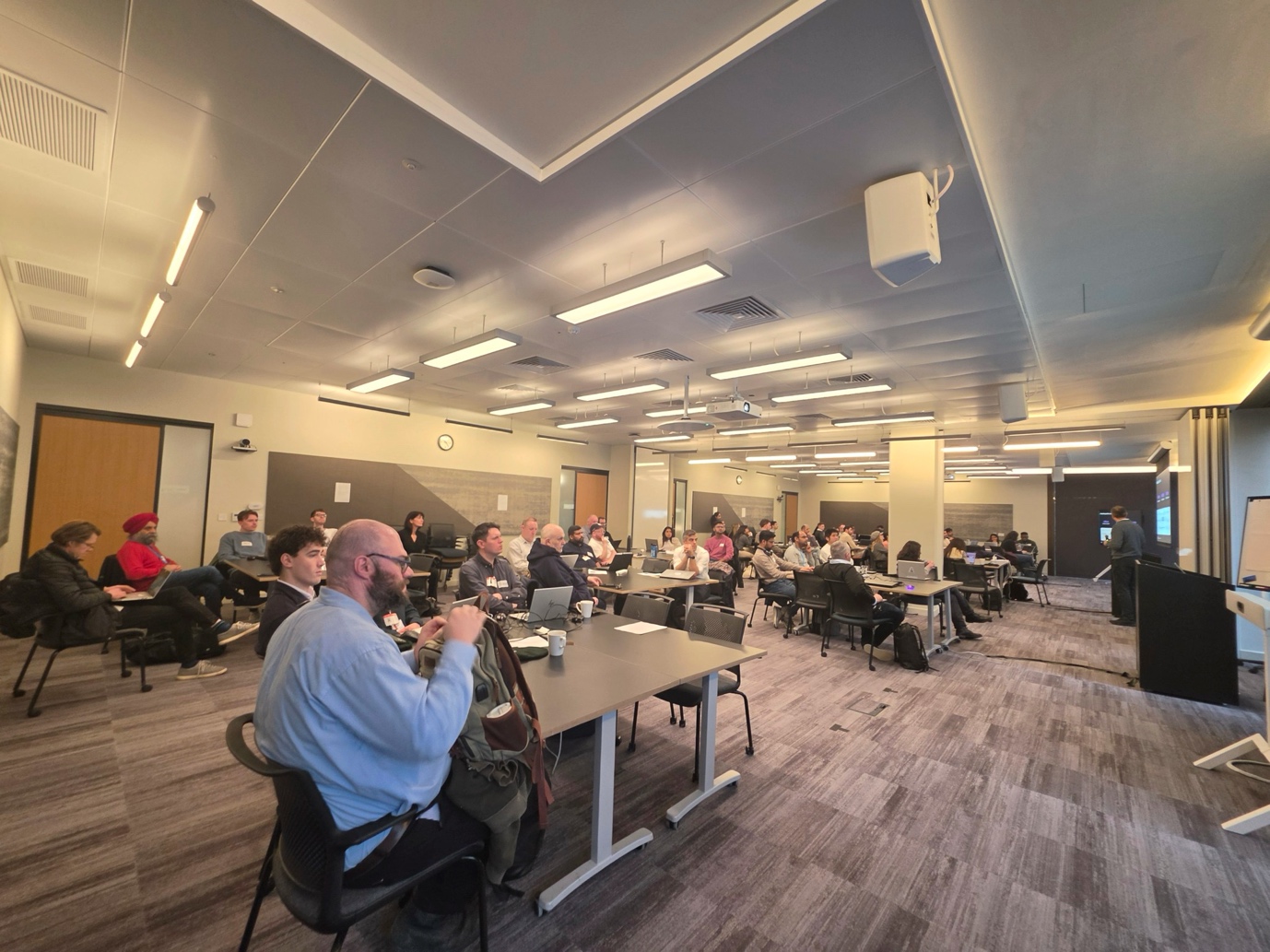
The Amazon Quick User Group – United Kingdom has published a 2026 roundup covering its first year of operation: three quarterly meetups held at the Amazon UK Corporate Office in Shoreditch, London, which together drew more than 150 attendees. The group launched with a first-quarter session weighted toward introductions and demos, since members were meeting one another for the first time.
Each event followed a common skeleton: an introduction, a product update, customer stories, a 75-minute hands-on workshop run in provisioned sandbox accounts, and a feedback session. The hands-on segment is where most of the building happened. Attendees created custom chat agents for their teams without writing code, ran Amazon Quick Desktop on their own laptops against local files and an Outlook connector, and used Amazon Quick Apps to turn a plain-language description into a working web application. Workshops also covered automating processes with Amazon Quick Flows and Amazon Quick Automate, while Amazon Quick Research was shown as a way to cut research time. The Quick chat agent, described as an assistant that connects to tools and data and takes actions on the user's behalf, tied these pieces together.
The format changed quarter by quarter. Q2 added an icebreaker quiz and a focused workshop on Quick Flows and automation. Q3 added a specialist panel, a group quiz and a networking slot at the end — the latter a response to attendees who were already staying behind to talk after the formal close. Organizers also moved the product update segment so that customer stories run straight into the workshop rather than being interrupted by feature announcements.
Customer presentations carried concrete results. At Arriva UK Trains, lead BI developer Sofia Bourika's team built dynamic, role-based dashboards with mobile-friendly views and scheduled pixel-perfect email reports, aimed at train and station managers who work from mobile devices and needed faster visibility of incidents and performance. At used-car retailer Carsa, senior data and analytics lead Tobi Daramola's team addressed inconsistent answers by building a single governed data layer with metrics defined once and consumed by both Amazon Quick and AI assistants. According to the roundup, this removed 50 percent of dashboards while surfacing more data, moved CSAT scores 10 percent in 30 days, lifted the same-day close rate on complaints by 20 percent, and cut recurring tasks from 45 minutes to 5. Propulse Lab, a Swiss provider serving B2C subscription businesses and handling 1 million support tickets a year, deployed a multi-agent pipeline in Amazon Quick Automate built from its best past service interactions; request handling fell from 7 minutes to 70 seconds and 80 percent of routine workflows were automated.
For developers and product teams, the pattern across these stories is less about dashboarding than about definitions and orchestration. A governed semantic layer — metrics declared once and reused by both BI tooling and assistants — is the standard remedy when the same question yields different numbers in different places, and the Carsa case is a useful data point that consolidation can reduce the number of dashboards while increasing the data exposed. The Propulse Lab example suggests where multi-agent automation fits: high-volume, repetitive request handling with a historical corpus of good interactions to model on. A likely trade-off is that such pipelines need maintained ground truth, and the reported gains are self-reported by practitioners at a vendor-run community event rather than independent benchmarks.
Organizational support comes from AWS Partner Data Reply, whose staff appear on the leadership team alongside AWS solutions architects and engineers, customer representatives from Arriva and Carsa, and an Amazon AV support associate. The group stayed active between meetings through a LinkedIn group with weekly contributions and an email list. The broader Amazon Quick Community website is described as having tens of thousands of members, thousands of searchable questions and more than 600 learning resources, with roughly two free live online sessions per week, monthly feature update and advanced automation sessions, and 4-hour Immersion Day workshops; AWS solutions architects, product managers and subject matter experts take part and are reachable by direct message.
Looking ahead, the next UK meetup is scheduled for January 28, 2027. Meetups also run in Austin, Phoenix, Chicago, Boston, Los Angeles, New York City and Munich/DACH, and there is a leadership interest form for starting a group in another city. Kristin Mandia, senior community manager for the Amazon Quick Community and User Group program, is listed as the contact.
Why it matters: Teams evaluating Amazon Quick get a rare set of practitioner-reported numbers — dashboard reduction, same-day complaint closure and sub-two-minute automated request handling — that are more concrete than typical launch material, though they remain vendor-published anecdotes. The emphasis on a governed data layer and no-code agent building suggests the practical skills to invest in are metric definition and workflow design rather than dashboard construction. For product teams in the UK, the quarterly London meetups and the January 28, 2027 date are a low-cost way to test these patterns hands-on; my inference is that the sandbox workshop format, not the presentations, is where most evaluation value lies.
Based on reporting from the original publisher. Visit the source for full context and later updates.
Publisher excerpt
The UK Amazon Quick User Group's 2026 roundup: three quarterly meetups, 150+ attendees, and customer stories from Arriva, Carsa, and Propulse Lab on using agentic AI and Amazon Quick to turn data into faster decisions, higher satisfaction, and scalable growth.