AI Engineer Code Summit: OpenAI on New Ways of Working With Codex
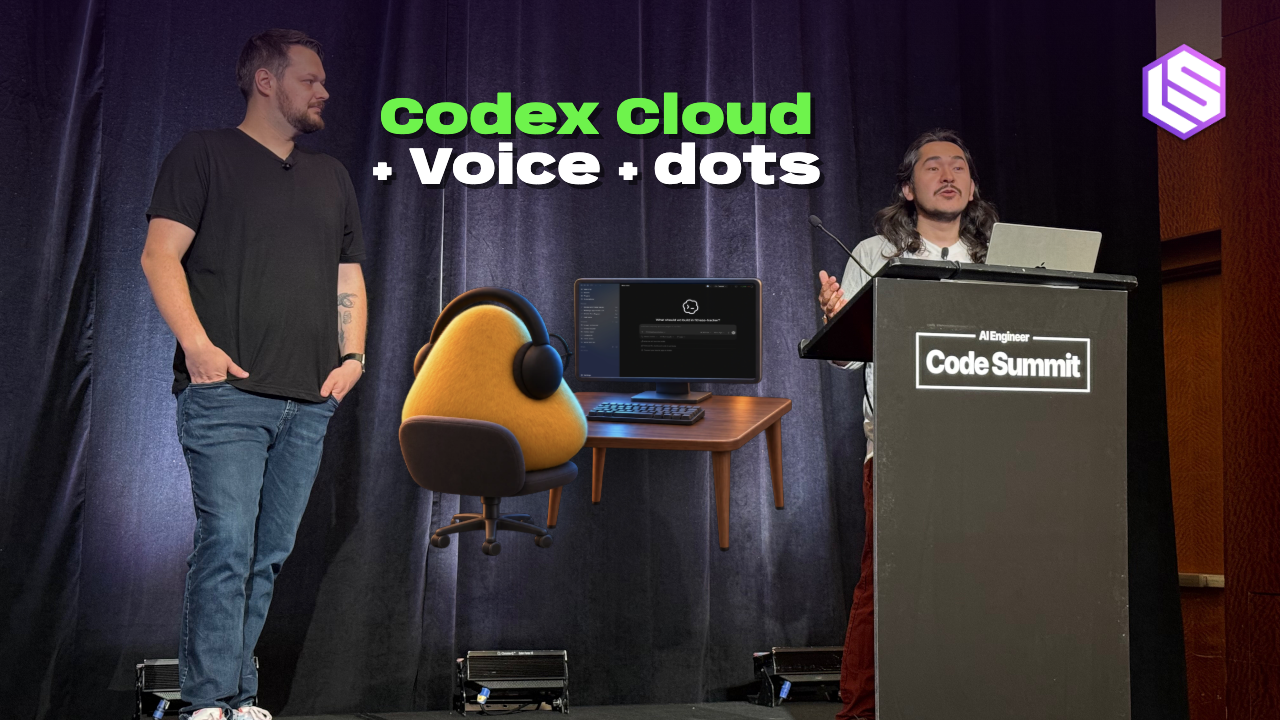
OpenAI developer experience engineers Dominik Kundel and Charlie Guo led a workshop titled "New Ways of Working with Codex" at the AI Engineer Code Summit, which opened today alongside sessions from Anthropic and Google DeepMind. The two covered how Codex has evolved, what changed in Codex Cloud, and two newer interaction surfaces: voice and personal agents known as dots. Guo opened by walking through features shipped since the AI Engineer World's Fair in June 2026, saying the list had to be trimmed to fit on screen because the team has been shipping at an unbelievable rate.
Kundel framed the cloud story candidly. Codex launched in May 2025 as a cloud-based software engineering agent capable of working many tasks in parallel, but he said it took a while for models and harnesses to equalize into something that could support a really engaging experience. That friction made the cloud portion of Codex awkward for users, and the confusion has not been limited to OpenAI's product; the article notes that users of Codex, Claude and Antigravity alike find the cloud model hard to follow.
The turning point was DevDay in late September, when OpenAI announced a revamped version 2 of Codex Cloud. The pitch then was that you can close your laptop and agents keep working. As described in the official workshop writeup, the new Codex Cloud lets you publish an environment once and then run multiple tasks in isolated instances of that setup. Kundel said these environments can be shared inside a company or created by an individual, and that setup starts with picking the GitHub repositories the environment should have access to.
Handoff between local and cloud remains the messy part. Asked about moving a task that began locally into the cloud, Kundel said OpenAI definitely wants to make that easier and that some of the work depends on managing context differences. His own habit is to simply ask Codex to hand the task to the cloud. He then reopened an existing cloud task in a browser to show that its Appshot — a local capture of a Mac app window — was still attached, an illustration of context surviving the move. In his framing, Codex Cloud now serves as a different executor for where work happens, and the local and cloud sides are merging: you can ask your local Codex to spin up a task on cloud Codex. This suggests the long-term design treats location as an implementation detail rather than a mode the user selects up front, which is the right abstraction but a hard one to deliver while context lives in different places. A likely trade-off is that until context transfer is fully reliable, developers will keep making deliberate choices about where a task lives.
On voice, Kundel demoed live edits to a site for a fictional record company called Blossom Music, saying he sometimes dictates while iterating and that voice helps when you are unsure what you actually want. Guo described most voice-with-coding usage he sees as just another medium layered on normal work, but said he personally treats voice as a control plane over the whole codebase — managing threads, checking in on work, pulling data from other apps and creating new threads, all by voice. He used a telephone as a prop during the demonstration.
Kundel's own practice extends voice to his dot. Because the dot has access to his dev boxes, laptop and cloud environments, it carries context on what he works on, and he often talks to it on the way to work to think through problems and start pull requests while driving so he can review them on arrival.
Dots got lighter treatment in the session, and Guo was frank that they are not entirely intuitive for developers — as a Codex power user he finds them a little awkward, which he attributes to their being a new paradigm and good at different things than main Codex. He named three uses: a safety net that flags things you may have missed, a delegation sink that he leans on heavily in Slack, and a ubiquitous presence, since OpenAI aims to make dots truly everywhere you work. Kundel said he starts many tasks from his dot rather than prompting Codex directly, because it often already holds the context, understands how to manage things and can push pull requests forward.
Kundel closed with practical tips, including turning down the effort level and asking agents for help, plus the broader advice not to get too attached to any current way of working in Codex because things are constantly changing. In practice, that advice doubles as a warning for teams building internal workflows: patterns that depend on specific Codex behaviors may not survive the next release, so keeping prompts, environment definitions and handoff steps in version-controlled, portable form is the safer bet.
Why it matters: Teams adopting coding agents now have to design around three moving surfaces — published cloud environments tied to GitHub repos, voice as an orchestration layer rather than just dictation, and personal agents that hold cross-tool context. The clearest takeaway from the workshop is that local and cloud execution are converging into interchangeable executors, which, by inference, will push developers to think about context management rather than task placement as the core skill. Expect continued churn: OpenAI's own engineers describe dots as an unfinished paradigm and advise against locking workflows to today's behavior.
Based on reporting from the original publisher. Visit the source for full context and later updates.
Publisher excerpt
On the first day of AIE Code Summit, OpenAI showed how developers can steer Codex by voice, hand off work to the cloud, and make use of dots.