Accelerating generative AI delivery with reusable assets
AWS's Generative AI Innovation Center, now part of AWS Frontier AI Engineering & Services, has assembled a curated catalog of 23 open source, production-ready assets for generative AI development. The assets have been published since 2023, and the company says they can cut development time from months to weeks. The catalog spans RAG pipeline components, document ingestion modules, agent scaffolding, evaluation frameworks and prompt management patterns, and every asset is validated for quality and security, ships with deployment guides, and is instrumented to track adoption across customer engagements.
The post identifies three reasons teams keep rebuilding the same components: assets are scattered across repositories, wikis and drives so builders cannot find them; there is no signal of production readiness, security review or maintenance status, so teams default to writing their own code; and sharing stays informal, so what one team builds does not travel to another. AWS argues the cost compounds because even AI-generated code needs production hardening, security reviews, testing at scale and ongoing maintenance.
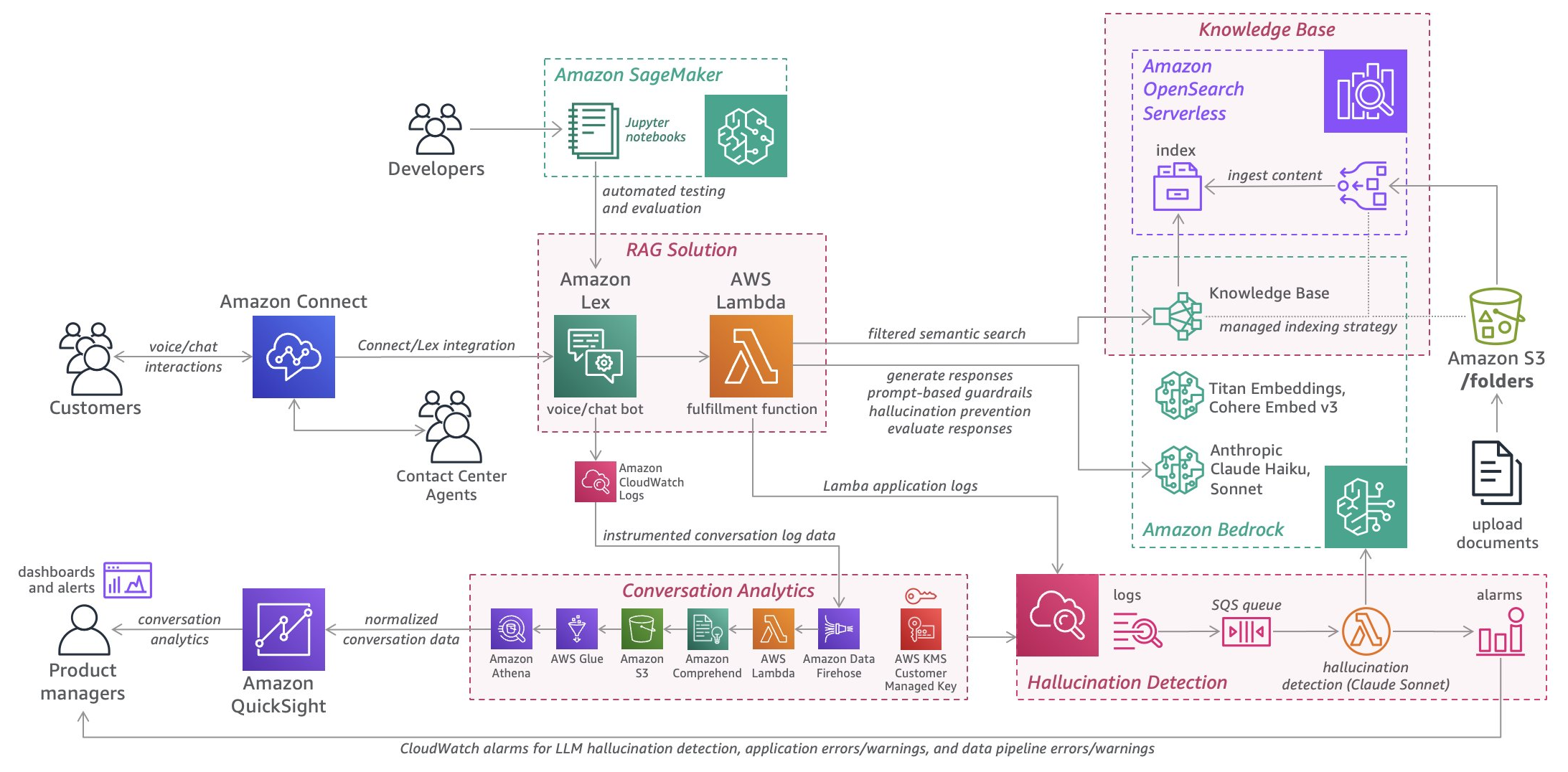
The headline proof points come from two customers. DoorDash used the Contact Center GenAI Agent asset to build a voice-operated self-service contact center, which per the AWS case study handles more than 100,000 calls per day at 2.5-second response latency, delivered a 50x increase in testing capacity, and reached live testing readiness in two months; using Amazon Bedrock cut development time by 50 percent. Lyft used the same asset for agentic AI aimed at riders and drivers. The asset answers questions over text and voice, uses a RAG architecture to hold context across multi-turn conversations, integrates with Amazon Connect, and relies on Amazon Bedrock Knowledge Bases for hybrid search and metadata filtering.
Ricoh built a standardized multi-tenant document classification and extraction service on the Accelerated Intelligent Document Processing on AWS asset, for healthcare customers processing insurance claims, grievances, appeals and clinical records. The published case study reports throughput rising from 10,000 to 70,000 documents monthly, a 7-fold increase; engineering hours per deployment falling from 80 to under 5, a drop of more than 90 percent; onboarding shrinking from 4–6 weeks to 2–3 days; 1,000 documents processed in minutes during spikes; and more than 1,900 potential annual person-hours saved. The underlying GenAI IDP Accelerator was introduced in a 2025 post and pairs optical character recognition with generative AI to turn unstructured documents into structured data at scale.
Two newer assets target agentic applications. The Fullstack AgentCore Solution Template (FAST) is a starter repository that deploys a secured React frontend wired to Amazon Bedrock AgentCore, with built-in integrations for AgentCore memory, Gateway, Code Interpreter and Observability, and Amazon Cognito authentication configured to enterprise security practices. It deploys in under 30 minutes using infrastructure as code, supports AI-assisted development with extensive documentation and steering docs, and is modular enough to swap identity providers, frontend frameworks, hosting or agent frameworks. The Agentic Chatbot Accelerator uses the AWS Cloud Development Kit for deployment and is built on Strands Agents and Amazon Bedrock AgentCore, with pre-configured authentication, hosting and scaling patterns validated across customer deployments.
The post walks through deploying the Contact Center GenAI Agent. Prerequisites include an AWS account able to create CloudFormation stacks, Amazon Connect instances, Bedrock resources and Amazon Quick Sight dashboards; the AWS CLI; an Amazon Connect instance; access to Anthropic Claude Sonnet and Claude Haiku on Amazon Bedrock; and a Jupyter environment. Deployment takes four steps: clone the repository and install dependencies, deploy a Knowledge Base stack and a RAG solution stack as two CloudFormation templates, integrate with Amazon Connect using the included contact flows, and validate with the bundled notebooks; the whole process is said to take under an hour. Amazon Bedrock Guardrails supplies hallucination detection, content filtering and topic-level boundaries, and a Quick Sight dashboard provides real-time conversation analytics. Cleanup runs in reverse order: delete the RAG stack, then the Knowledge Base stack, then the Connect contact flows, then the Quick Sight dashboard and its SPICE datasets. AWS estimates this saves 4–6 weeks of development time.
The catalog is grouped by domain. Document processing covers GenAI IDP, a multi-lingual document processor, an intelligent document processing asset, a workshop on extracting information from complex documents, and a semi-structured document pre-labeling tool for Amazon Comprehend. Contact center and voice includes the Contact Center GenAI Agent, Live Call Analytics with Agent Assist, Post Call Analytics, the Live Meeting Assistant and Recorded Voice Insight Extraction Webapp. Agentic AI includes FAST, the Agentic Chatbot Accelerator, a Fashion Assistant Agent built with Amazon Titan on AgentCore, and a Natural Language Database Agent using LangGraph. RAG and knowledge base assets include Terraform for Bedrock Knowledge Bases, a LangChain tool for conversational RAG, reranker fine-tuning for the BAAI BGE Reranker, and durable semantic caching in Amazon MemoryDB. Development and migration assets include C to Java code conversion, an OpenAI migration framework and ModernBERT fine-tuning for intent classification; operations assets include Bedrock logging automation and a Data Analyst BI tool. Access is via GitHub and AWS Labs.
Why it matters: Teams building RAG pipelines, document processors or agents are often slowed by scaffolding rather than by the differentiating logic, and a maintained, security-reviewed catalog with published deployment steps changes the default starting point. The reported DoorDash and Ricoh numbers, while vendor-published, give product leads concrete benchmarks for build-versus-reuse decisions; my inference is that the main practical trade-off is lock-in to AWS services such as Bedrock, Connect and AgentCore, which suits teams already on AWS but limits portability for others.
Based on reporting from the original publisher. Visit the source for full context and later updates.
Publisher excerpt
Every generative AI team keeps rebuilding the same components: RAG pipelines, document processors, and agent scaffolding. This post shows how to access a curated catalog of 23 production-ready, open source reusable assets from the AWS Generative AI Innovation Center, with real delivery results from DoorDash, Lyft, and Ricoh.