Solving the solvent problem
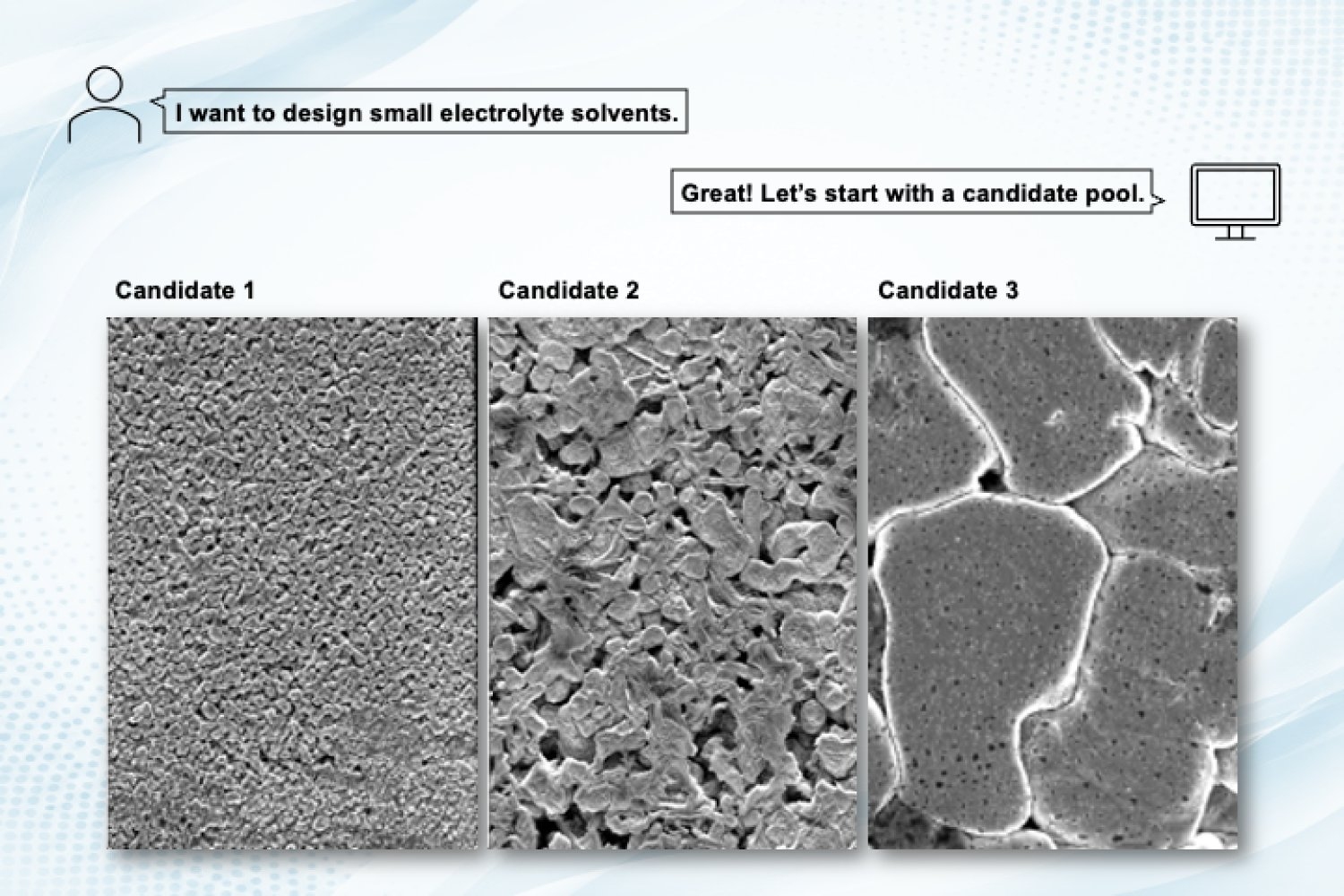
A team of MIT researchers led by Ju Li, the Carl Richard Soderberg Professor of Power Engineering in the departments of Nuclear Science and Engineering and Materials Science and Engineering, has published a paper in Joule describing an electrolyte design approach for sodium-metal batteries. The paper was written by 15 members of the MIT team and published online this week.
Sodium-metal batteries are of interest because sodium is about 1,000 times more abundant than lithium and, pound for pound, about one-hundredth the cost. However, sodium metal is highly reactive, making it difficult for these batteries to achieve both long-term stability and fast cycling. The team's goal was to find an electrolyte stable at both the anode and cathode while also enabling fast charging and discharging.
An earlier breakthrough occurred in 2021, when the Li group and collaborators identified a sulfonamide molecule called DMTMSA that, when used as a solvent, is stable at both electrodes in lithium batteries. The new work searched for related, smaller molecules. Chia-Wei Hsu, an MIT PhD student in materials science and engineering, created an AI-guided algorithm that designed 100,000 candidate molecules within 24 hours. The pool was narrowed to 200 by criteria including shape similarity to DMTMSA and comparable electronic properties, and 27 representative candidates were selected for experimental tests under identical conditions. A solvent called DMFSA emerged as both the smallest and the best.
Jinhyuk Lee, an associate professor of materials engineering at McGill University who was not part of the study, said the work addresses improving battery performance at high charging and discharging rates without sacrificing long-term stability, and that the design strategy could enable lower-cost, higher performance batteries. He added that because the concept is broadly applicable, its impact could extend beyond sodium batteries.
A new search is underway for an even better solvent, starting from DMFSA rather than DMTMSA. The work was supported in part by a National Research Foundation of Korea grant funded by the government of Korea, a U.S. National Science Foundation graduate research fellowship, and the MIT.nano Characterization Facilities.
Based on reporting from the original publisher. Visit the source for full context and later updates.
Publisher excerpt
By focusing on electrolytes, MIT scientists are making sodium-metal batteries a more practical energy storage option.