Documenting the tech worker movement
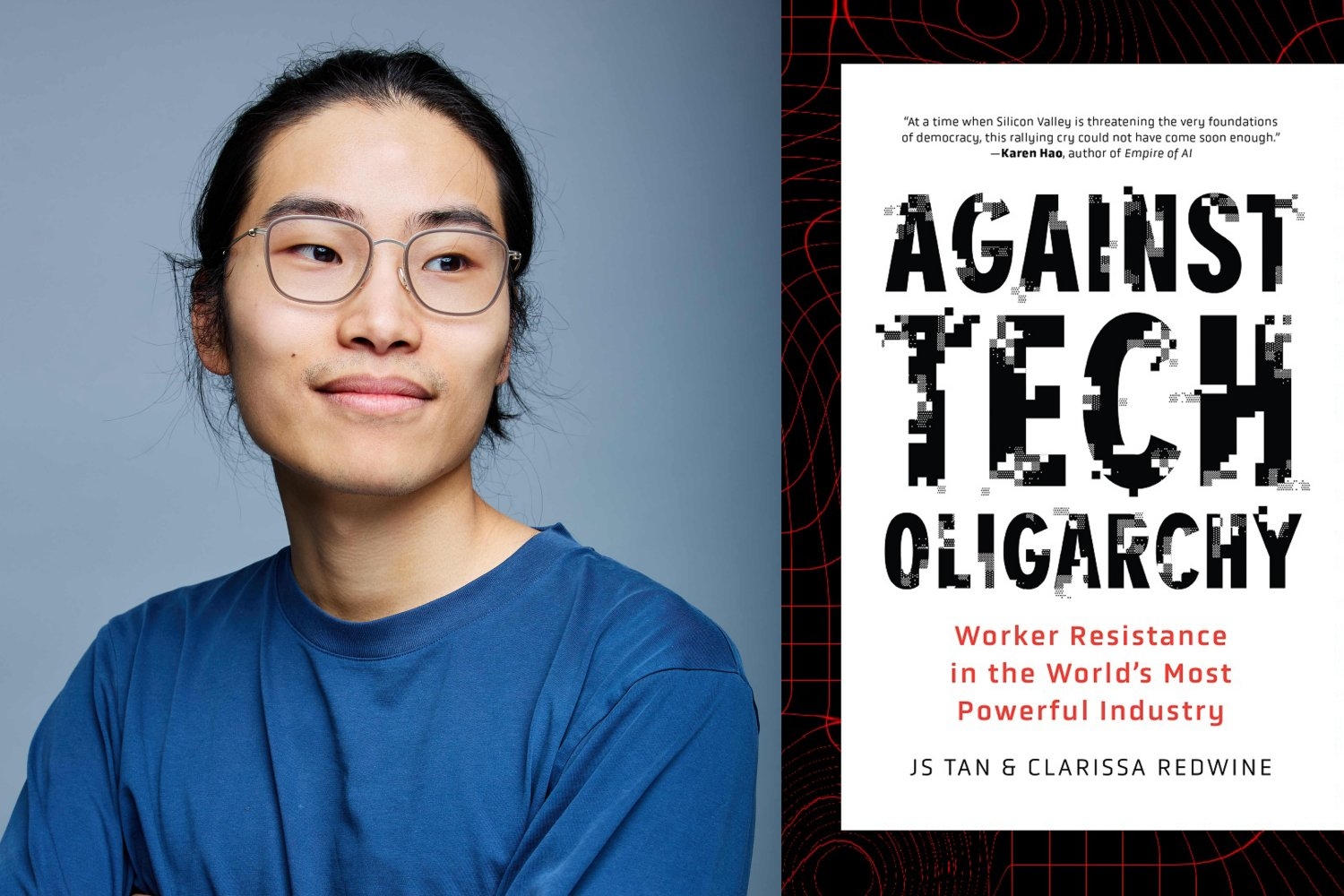
MIT doctoral student JS Tan SM '22 and his former tech industry colleague Clarissa Redwine have published a book on the tech worker labor movement, "Against Tech Oligarchy: Worker Resistance in the World's Most Powerful Industry" (Haymarket Books, 2026). The book chronicles how tech workers organized, the strategies they used, and the movement's effect on Silicon Valley labor politics over the past decade.
Tan, now a doctoral student in MIT's Department of Urban Studies and Planning focused on the political economy of the tech sector, graduated from Brown University and the Rhode Island School of Design in 2015 and joined the tech industry. In 2017, he was working at Microsoft and Redwine at Kickstarter when President Donald Trump signed an executive order suspending entry into the United States for nationals of seven predominantly Muslim countries for 90 days and suspending Syrian refugees indefinitely.
Tan says the tech sector pushed back, citing OpenAI co-founder Sam Altman's participation in airport protests and a Jan. 28, 2017, blog post in which Altman wrote that tech employees have leverage and companies should take a public stance. According to Tan, Altman's words inspired workers across the industry. Over the following years, workers staged walkouts and protested employer contracts with U.S. military and immigration enforcement agencies, as well as workplace policies they considered sexist.
Their objections initially met with some success. In 2018, after Google employee protests, the company decided not to renew its contract for Project Maven, a Pentagon initiative using artificial intelligence to analyze drone surveillance footage; nearly 4,000 employees signed an open letter stating, "Google should not be in the business of war." Earlier this year, more than 600 employees signed an open letter urging Google's CEO to reject classified AI work with the Pentagon, citing concerns about potential uses including lethal autonomous weapons and domestic surveillance. Tan says Google responded that it was committed to working with the Pentagon.
Tan's book outlines events he argues hurt worker influence: interest rate hikes in 2022 that cost the industry hundreds of billions in market valuation and led to cost cuts, and what he describes as the deskilling effect of agentic AI coding systems. Redwine, a prominent organizer in the union drive at Kickstarter, was fired in 2019; she said her dismissal was retaliation for organizing, while Kickstarter denied that claim. Tan and Redwine began writing the book in 2024. A launch and discussion co-hosted by MIT's Department of Urban Studies and Planning will take place Oct. 26.
Based on reporting from the original publisher. Visit the source for full context and later updates.
Publisher excerpt
Writing as a participant and researcher, PhD student JS Tan SM ’22 has co-authored a new book about the rise of tech worker protests and the employer backlash that followed.