What it feels like to work with Mythos
Ethan Mollick wrote that he received early access to Claude 5 Fable, described as the first Mythos-class AI model being released to the public. He said he tested it on everything except software security, noting that guardrails around Fable essentially prevent its use for cybersecurity at all, and concluded it represents a real leap over every model he had used before.
In his experiments, Mollick said Fable outperformed basically every other public model he had used by a considerable margin and would work up to a dozen hours executing on multi-page specifications. Among the outputs he cited were an academic social science paper he called the most sophisticated he has seen from an AI, produced from a single prompt and one piece of feedback, a 10-page rhyming poem about a haircut in which every word starts with the letter s, and several games built in Claude Code from vague prompts. Because Claude cannot generate images, he said, all art and 3D objects were made with math alone rather than external assets.
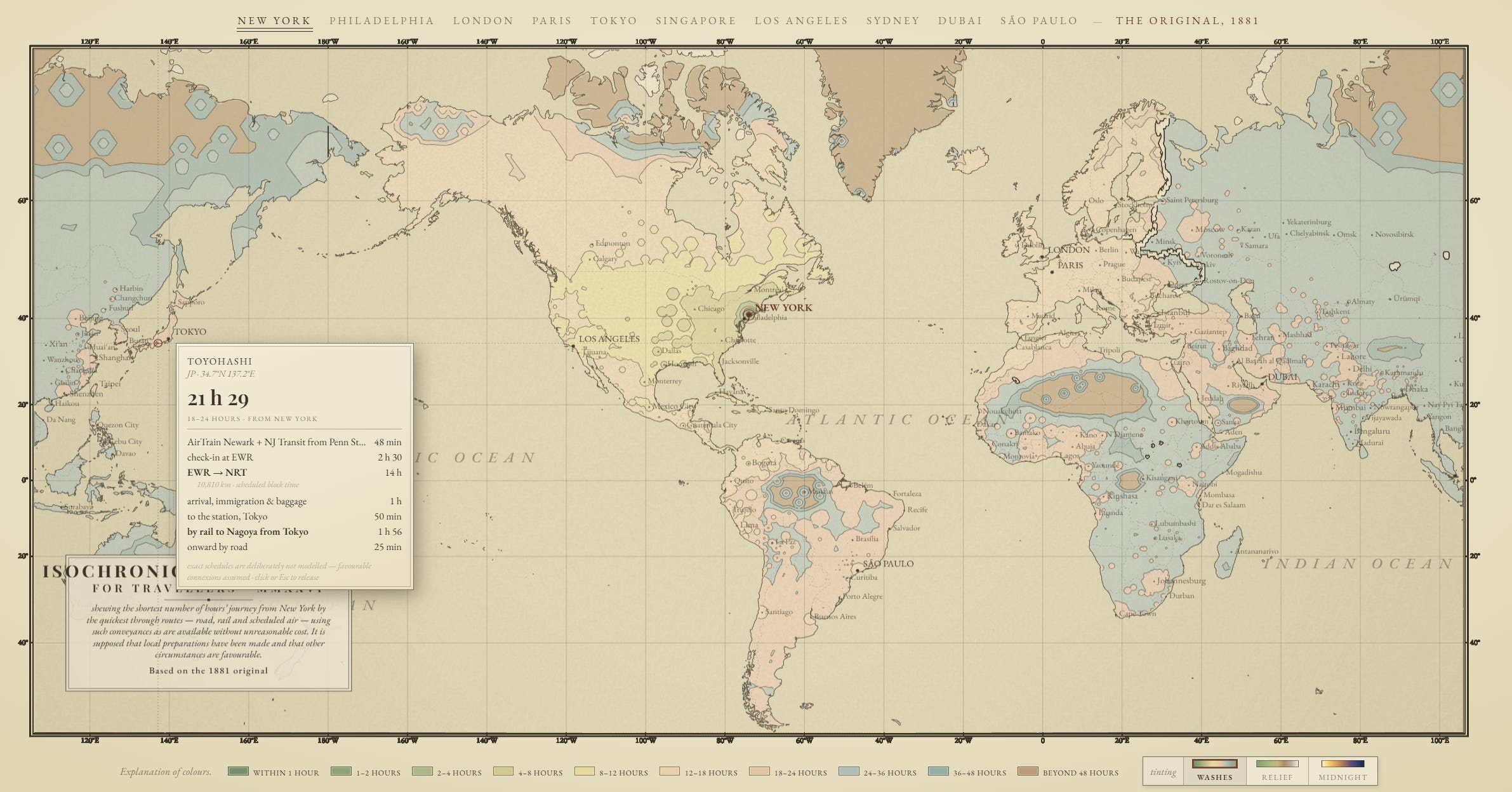
Mollick detailed an isochrone map project. He said no previous model had done even a halfway useful job on such a map. During a multi-hour session, the AI launched multiple other AIs, which he believed were mostly the cheaper Claude Sonnet, to research travel times, retrieving over 2,200 specific flights, rail schedules from the TGV to the Shinkansen, and road speeds per country from academic papers. After he asked it to fix estimated travel times for remote locations, it launched adversarial groups of agents that researched and tested each other's results, and it determined how often ships sail to Pitcairn Island and how to get to Grise Fjord from Ottawa. He said the map was not perfect and used a tremendous number of tokens.
A second project, software the AI called Concord, took Fable nine and a half hours to build after it generated a 19-page design document. Mollick said he spotted errors and omissions as an expert and had the AI correct them. He said the scope exceeded anything he had seen, but that Fable is twice as expensive as Opus, uses tokens at a rate suggesting production costs would be high, and that its guardrails trip too often, defaulting to Claude 4.8 Opus. He wrote that his role was extremely limited: he describes what he wants, pays for it, and judges the result, while the work happens where he cannot watch it.
Based on reporting from the original publisher. Visit the source for full context and later updates.
Publisher excerpt
Claude Fable represents another big jump in AI