Chinese military fears AI could let the US find and destroy its nuclear missiles
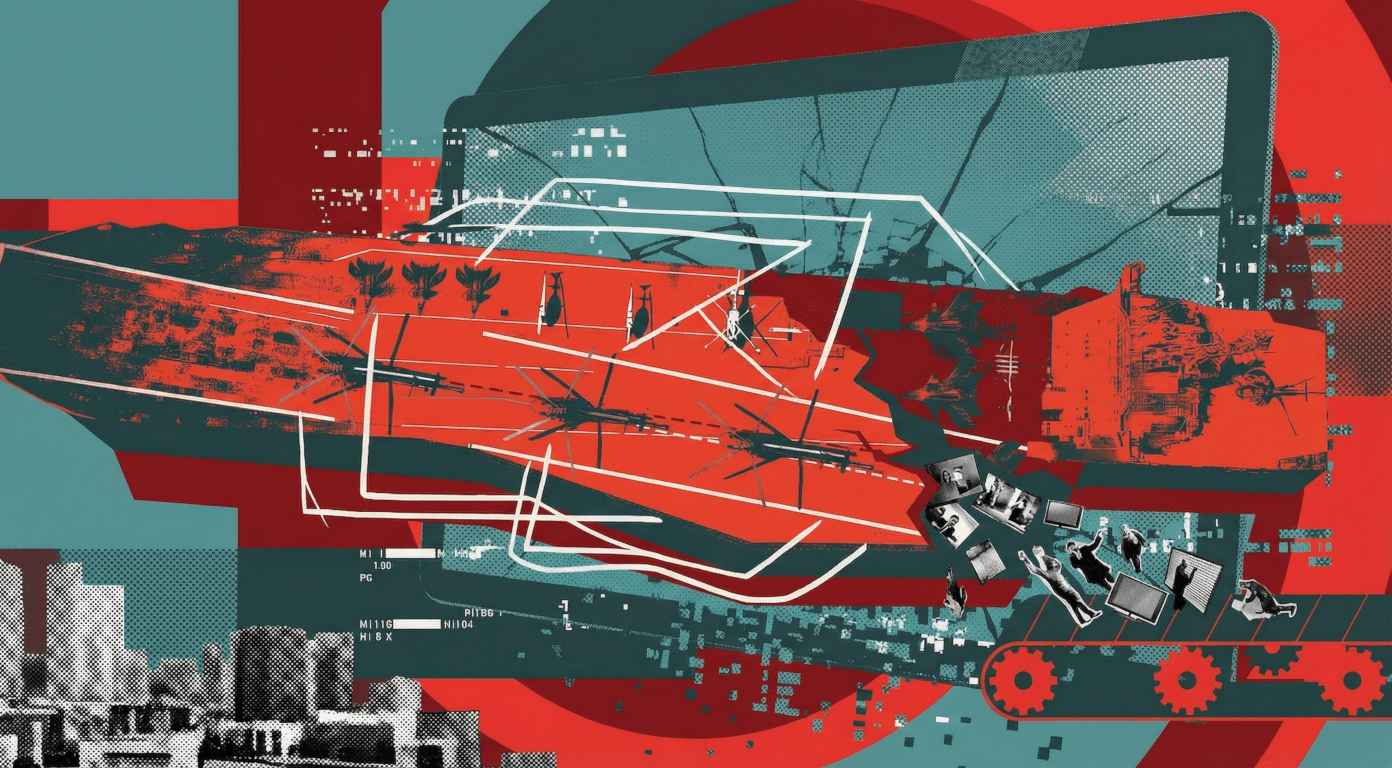
Researchers at the Academy of Military Sciences in Beijing have raised concerns that advances in artificial intelligence could tilt the nuclear balance toward the United States, according to a New York Times analysis. Their worry, as reported, is that AI could make it easier for US forces to detect and destroy Chinese nuclear missiles, which would undercut China's deterrence strategy. That strategy rests on a guaranteed second-strike capability, meaning the ability to retaliate even after absorbing a first strike.
A central figure in the research is time. The Chinese researchers write that AI could compress US decision-making from a window of 15 to 30 minutes down to about 90 seconds. In nuclear command-and-control terms this is the interval between warning and response, and shrinking it changes the arithmetic of crisis stability. Faster decisions leave less room for human review, consultation or verification before action is taken.
The arsenal numbers put the concern in context. China currently fields roughly 620 operational warheads, according to the Federation of American Scientists, and is expected to grow that stockpile to about 1,000 by 2030. A second-strike deterrent depends less on raw warhead count than on survivability, meaning launchers and missiles that an adversary cannot reliably locate and target. If AI-enabled sensing and analysis improve the ability to find mobile or concealed systems, the logic goes, the deterrent is weakened even if the arsenal grows.
At the same time, Chinese military institutes are exploring how AI might strengthen their own position. One line of work examines making Chinese weapons harder to intercept, including AI-controlled flight paths for hypersonic missiles. Hypersonic vehicles travel at high speed and can maneuver, which complicates interception; adaptive, AI-driven routing is one way to push that further.
The report also carries a warning about the risks of the technology itself. Experts caution that flawed AI data could trigger dangerous miscalculations in a crisis. That risk was illustrated earlier this year, according to the report, when the US military nearly boarded a Chinese ship on the basis of a false, AI-generated intelligence report. In practice, automated analysis that fuses sensor and intelligence data can propagate errors quickly, and a false positive that arrives faster than humans can check it is exactly the kind of failure mode the 90-second figure implies.
Diplomacy has not kept pace. Xi Jinping did discuss nuclear risks at a summit with Trump and Putin, but AI's role in nuclear weapons did not come up, according to the report. Despite the growing urgency, the US and China have made almost no progress on talks about AI safeguards in nuclear systems.
This suggests a gap between the technical trajectory and the governance around it. The same machine-learning methods used for pattern recognition in imagery, signals and logistics are attractive precisely because they shorten the observe-orient-decide-act loop. That speed is valuable in conventional settings and destabilizing in nuclear ones, where ambiguity is common and the cost of error is extreme. A likely trade-off is that decision-support systems can be tuned for caution, with human sign-off and confidence thresholds, but doing so gives back some of the time advantage that motivates adoption.
Why it matters: Developers building decision-support, sensing or data-fusion systems are working on the same underlying capabilities that military planners are weighing here, and the report's account of a false AI-generated intelligence report shows how data quality and verification become safety-critical at this level. For product teams, the lesson is that human-in-the-loop checkpoints and provenance of automated conclusions are not optional features. Whether AI compresses crisis timelines or improves stability is likely to depend less on model capability than on the safeguards and communication channels built around it, though the report indicates those channels remain thin.
Based on reporting from the original publisher. Visit the source for full context and later updates.
Publisher excerpt
Chinese military researchers fear that AI advances could give the US an edge in the nuclear balance of power. The article Chinese military fears AI could let the US find and destroy its nuclear missiles appeared first on The Decoder .