Meta reconsiders 2030 net-zero goal amid record emissions from AI data centers
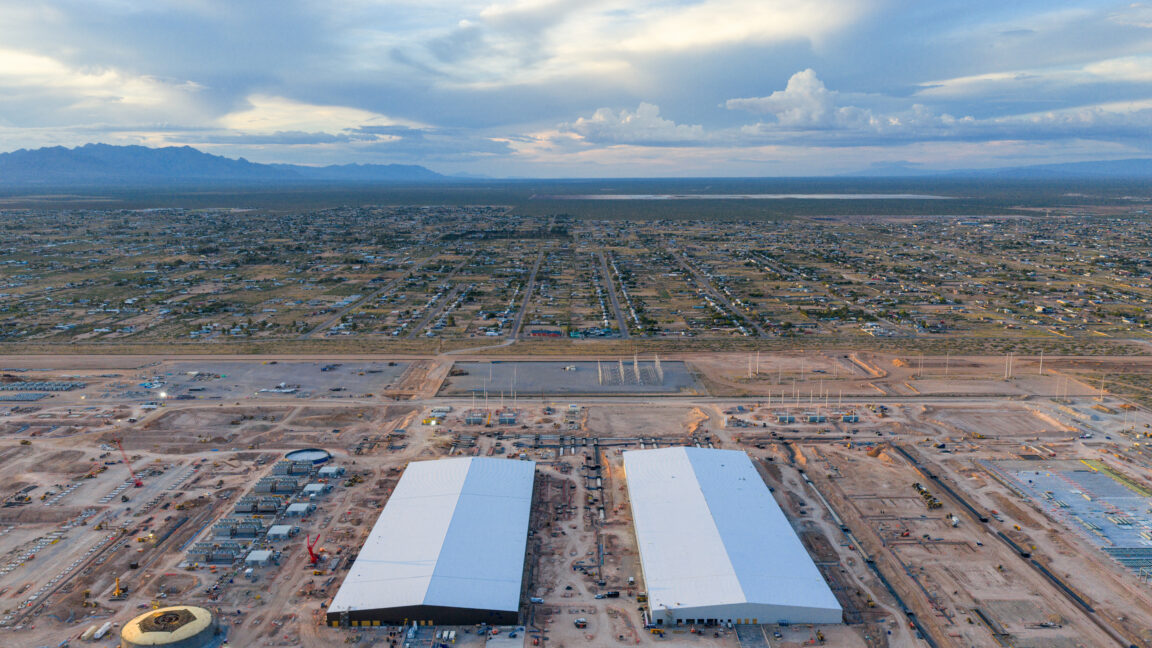
Meta has signaled it may move away from its original pledge to reach net-zero emissions by 2030, a shift disclosed in its 2026 sustainability report published November 19. The reconsideration comes alongside the company's largest percentage jump in greenhouse gas emissions among the biggest US technology firms, all of which are expanding data center capacity to serve AI workloads.
The report's introduction, written by Rachel Peterson, vice president of data centers, and Blair Swedeen, global head of net zero and sustainability, states that Meta's long-term ambitions are unchanged but that its operating environment has shifted. The two executives tied the reassessment to demand for AI infrastructure growing faster than almost anyone had projected. They wrote that Meta is re-evaluating its timelines, sequencing and interim milestones, explicitly including the 2030 net-zero timeframe and its near-term intensity targets, with the stated aim of aligning the approach with current operating realities while continuing to report progress each year.
The numbers behind that reassessment are stark. Meta's total emissions climbed from 15.6 million metric tonnes of carbon dioxide equivalent in 2024 to more than 21.7 million in 2025, an increase of nearly 40 percent. By comparison, Microsoft reported a 25 percent rise over the same period, Google 18 percent and Amazon 16 percent, making Meta's the highest year-over-year percentage increase in total emissions among the four. Meta still likely carries one of the smallest absolute carbon footprints of the group, and its 2025 total is roughly on the scale of a US state such as Idaho, exceeding smaller states including Hawaii, Maine, South Dakota and New Hampshire.
Much of the increase is attributed to capital goods such as data center servers. That framing is worth unpacking: embodied carbon in hardware — the emissions produced when manufacturing, shipping and eventually disposing of servers, networking gear and building materials — sits in Scope 3, the indirect category that covers a company's supply chain. For firms building at AI pace, Scope 3 tends to grow faster than the electricity bill, because every new cluster requires a large upfront purchase of equipment whose footprint is booked at construction time. This suggests the disclosed jump reflects procurement volume as much as power consumption, though the report attributes the increase broadly to capital goods rather than breaking the categories down in the excerpt.
Meta's net figures, which account for renewable energy projects and carbon removal, also rose, from more than 8.1 million metric tonnes to more than 11.8 million in 2025 — a 45 percent increase, a steeper percentage than the gross figure. Meta's stated approach has combined developing new renewable energy projects to match its emissions with carbon removal technology. In practice, both levers take years to scale, while a data center can be energized in months, which is a likely reason interim milestones are the part of the plan now under review.
Water tells a more mixed story. Meta reduced direct facility consumption from 825 million gallons in 2024 to 790 million gallons in 2025. However, consumption in areas classified as water-stressed rose from 198 million gallons to 246 million gallons, meaning the overall reduction came while a larger share of the remaining draw landed in places where local supplies are already strained — a distinction that matters to communities and to permitting debates. Water tied to purchased electricity, the amount consumed by the power plants supplying Meta's facilities, jumped from 19 billion gallons to more than 26 billion. That gap illustrates a pattern familiar to infrastructure planners: for data centers, the dominant water footprint is usually upstream at the generator, not at the cooling loop on site. Data Center Dynamics noted that Meta is the only hyperscaler to report indirect water use, a figure that grows in importance as facilities move to closed-loop cooling, which cuts on-site draw but raises electricity demand.
Context on the industry: Amazon, Google and Microsoft have so far stood by their original sustainability goals, which makes Meta's public acknowledgment of a possible timeline change notable. All of them have acknowledged difficulty balancing those goals against hyperscale construction, and despite renewable procurement, AI data centers frequently rely on natural gas generation.
Why it matters: Developers and product teams choosing where to run AI workloads increasingly face sustainability reporting that is moving in the wrong direction, and Meta's disclosure signals that 2030-style targets may slip across the industry as capacity growth outpaces clean power and hardware supply chains. If interim milestones are revised, procurement teams should expect emissions and water metrics attached to cloud and colocation contracts to become both more scrutinized and more variable year to year — an inference, not a stated company position. The reporting itself, particularly Meta's inclusion of indirect water use, also gives buyers a template for asking vendors for comparable figures.
Based on reporting from the original publisher. Visit the source for full context and later updates.
Publisher excerpt
Meta is “re-evaluating” 2030 sustainability goals. Will others follow?