MIT welcomes David Siegel SM ’86, PhD ’91 as its next Innovation Fellow
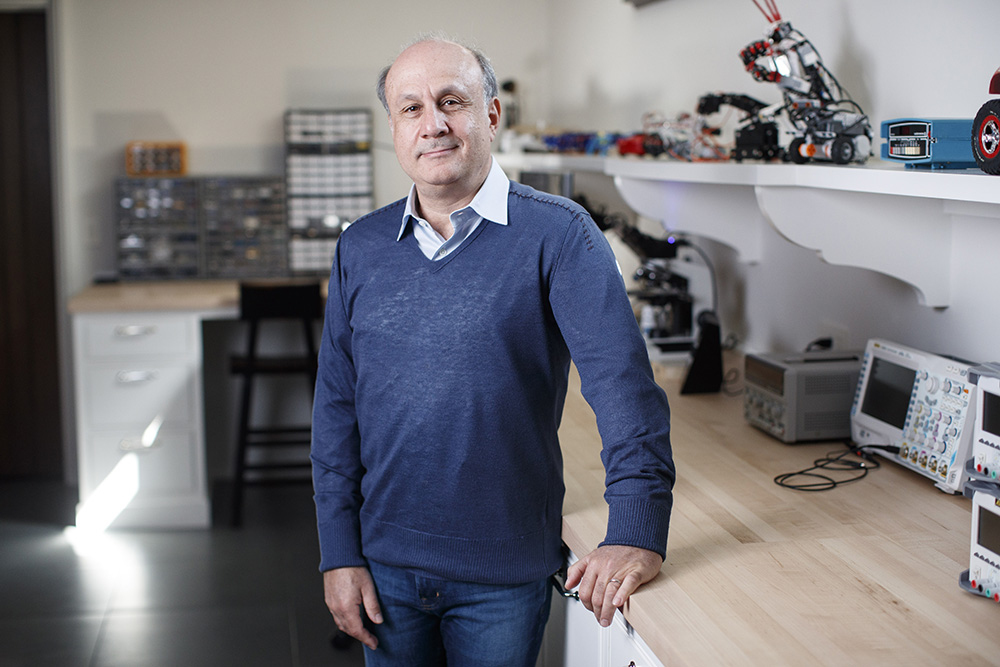
David Siegel SM ’86, PhD ’91, a computer scientist, entrepreneur, and philanthropist, will serve as MIT's next Innovation Fellow during the 2026-27 academic year, MIT announced. Working with the MIT Schwarzman College of Computing, Siegel will explore how artificial intelligence can accelerate scientific discovery at the Institute and beyond.
MIT President Sally Kornbluth said the community has long benefited from Siegel's technical insight, entrepreneurial experience, and instinct for connecting people, adding that the Institute looks forward to working with him to identify new opportunities at the intersection of AI and scientific discovery. Siegel said MIT played a foundational role in shaping how he views technology's potential to address complex challenges, and that he is thrilled to return to campus to collaborate with students, researchers, and faculty.
Siegel earned a master's degree from MIT in 1986 and a PhD in 1991, after a bachelor's degree in electrical engineering and computer science from Princeton University in 1983. He worked at the MIT Artificial Intelligence Lab, now the Computer Science and Artificial Intelligence Laboratory, in Professor Tomás Lozano-Pérez's research group on human-machine interaction, contributing to development of a pioneering humanlike robotic hand. He is a life member of the MIT Corporation, previously served on its Executive Committee, and co-chairs the External Advisory Committee for the MIT Schwarzman College of Computing. He was an early champion of the MIT Quest for Intelligence, recently renamed the MIT Siegel Family Quest for Intelligence.
After his PhD, Siegel founded several early internet ventures before co-founding Two Sigma in 2001. He retired from day-to-day management of Two Sigma in 2024 but remains co-chair. He established the Siegel Family Endowment in 2011 and founded the nonprofit Open Athena in 2024, which is developing Marin, a 535-billion-parameter foundation model built entirely in public. Open Athena is funded by philanthropic partners including Bloomberg Philanthropies, Google, The Huang Foundation, and Schmidt Sciences.
MIT Provost Anantha Chandrakasan said Siegel's ties to MIT date back to his doctoral research in the AI Lab, and that his commitment to MIT and vision for the future of AI and science make him an especially fitting Innovation Fellow. Dan Huttenlocher, dean of the MIT Schwarzman College of Computing, said the fellowship is a chance to explore how AI can expand the frontiers of science.
Innovation Fellows typically spend a year or more in residence at MIT, engaging with faculty and students, participating in public events, and providing strategic counsel to MIT leaders. Past fellows include Brian Deese, Virginia M. Rometty, Eric Schmidt, the late Ash Carter, and Deval Patrick. Siegel's book, "When Machines Act: The Promise and Peril of Navigating Our Agentic AI Future," co-authored with Yale University's Jeffrey Sonnenfeld and Stephen Henriques, will be published by MIT Press next March.
Based on reporting from the original publisher. Visit the source for full context and later updates.
Publisher excerpt
Computer scientist, entrepreneur, and philanthropist will collaborate with the MIT Schwarzman College of Computing to advance AI and scientific discovery.