European Cities Deploy NVIDIA-Powered AI Agents to Run Smarter Urban Operations
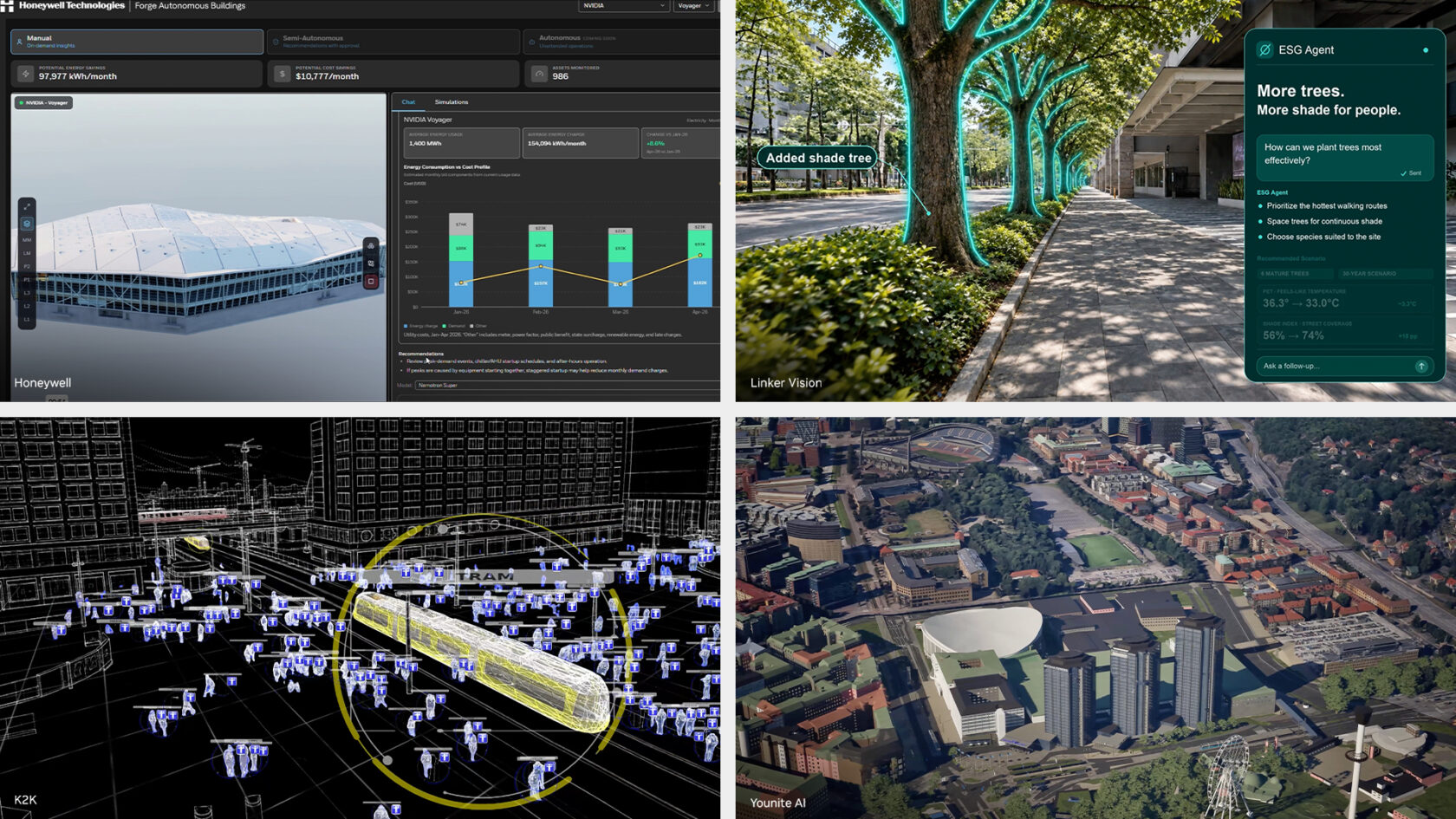
NVIDIA has detailed a set of EMEA urban deployments in which cities and their local software, infrastructure and integration partners use NVIDIA accelerated computing to run physical AI agents and digital twins for city operations and public services. The partner roster includes ABA Technology, Akila, Galene AI, Honeywell Technologies, K2K, Linker Vision, Milestone, Onetera, ThinkDeep and Younite AI, with projects spanning Belgium, Finland, France, Italy, the Netherlands, Poland, Sweden, the U.K. and elsewhere. The company is pointing to Smart City Expo World Congress, running Nov. 3-5 in Barcelona, as the venue for further detail.
The technical stack behind these projects is a combination of open models and blueprints. NVIDIA Cosmos open models and the Metropolis Blueprint for video search and summarization (VSS) are used so agents can interpret video and spot conditions that need attention, such as traffic congestion, equipment condition, underused spaces and safety hazards. NVIDIA Nemotron open models are positioned for building agents that reason over information, respond in natural language, and deploy digital twins using Omniverse libraries. In practice, this splits the problem into perception from camera and sensor feeds, reasoning over structured and unstructured records, and a simulated or mirrored representation of the physical environment that teams can inspect.
In France, the Department of Côte-d'Or worked with Akila and ThinkDeep to build operations agents that combine sensor, infrastructure and historical data inside a sovereign digital twin, using Nemotron, Omniverse and accelerated computing, with Cosmos adoption planned for video data. NVIDIA says the agents cover energy, compliance, safety and climate resilience across more than 500 public buildings, cut document search time from weeks to minutes, and reduce total operating costs by 10%, with a target of 30% at scale. Those are the most concrete numbers in the announcement, and the gap between the achieved 10% and the targeted 30% indicates how much of the value is expected to arrive as deployment widens rather than from the first cohort of buildings.
Also in France, Port Sud de France in Sète is working with ThinkDeep's agentic platform, which uses Cosmos and Nemotron to analyze cargo and safety data, coordinate operations and guide secure handling of hazardous materials. In Belgium, the Port of Antwerp-Bruges is working with Milestone and Dell Technologies to test how agentic vision AI, using Cosmos and the VSS blueprint, could support complex use cases such as oil-spill warnings, training models with synthetic data to prepare for incidents where real-world data is scarce. Synthetic data is a common workaround when an event is rare or dangerous to capture; the trade-off is that a model trained on generated spill imagery may not transfer cleanly to the messy conditions of a real incident, which is presumably why this remains a test.
In the U.K., the Liverpool City Region is exploring with K2K how to build AI factories on NVIDIA accelerated computing, Cosmos and the VSS blueprint to support urban planning and public services, testing applications for mobility and safety. The Island of Jersey is working with K2K on decision-making, mobility and urban planning alongside clean energy and public services, and Innovation City Belfast is exploring a pilot with K2K focused on smart mobility, transport systems, citizen safety and event and response management.
In Italy's Milan region, Galene.AI, Dell Technologies and TD Synnex are deploying an NVIDIA-powered, locally operated AI factory, starting with Cinisello Balsamo and planning expansion to four additional municipalities. Services include real-time translation, citizen chatbots and assistance with procurement and funding, with the stated aim of simplifying administrative work and giving people access to municipal data in seconds rather than hours while keeping local governance of data. The sovereignty angle recurs throughout: several of these projects explicitly keep data, models and operations in local hands rather than routing them through a public cloud region.
In the Nordics, Younite AI is developing a digital twin experience using Omniverse libraries for Gothenburg, Sweden, as part of the EU's Citiverse initiative, focused on helping cities simulate changes and improve accessibility by providing event entrance previews, seating and crowd conditions before arrival. Elsewhere, Honeywell Technologies is deploying Forge Cognition, powered by Nemotron, Cosmos, Omniverse and the VSS blueprint, at the Dubai Fairmont Hotel to connect AI agents with building systems and improve reliability, energy efficiency and operations — a commercial hospitality deployment rather than a municipal one, but built on the same components.
The infrastructure layer is being assembled by system builders and infrastructure partners including Cisco, Dell Technologies, HPE, Lenovo and Supermicro, who package NVIDIA accelerated computing, networking and storage into locally operated AI factories. Nebius and Net Zero Compute are named as part of the broader ecosystem building AI factories intended to accelerate deployment and reduce costs for agentic services, while EY and Accenture supply integration and operational expertise to connect applications with city systems and produce repeatable deployment blueprints that can be adapted across departments.
Why it matters: For developers and product teams in the public-sector and built-environment space, this signals that the reference stack for urban AI is consolidating around a small set of open models for perception and reasoning plus a digital-twin runtime, with local compute as a procurement requirement rather than an afterthought. Teams evaluating similar work should note that the reported benefits — faster document retrieval and roughly a tenth off operating costs at current scale — come from a specific building portfolio, and that several projects are still described as explorations, pilots or tests, so the deployment surface is broader than the evidence base. Cities reading this as a build-vs-buy decision are effectively being offered an integrator-led path, which in my reading shifts competitive pressure onto the integration and data-governance layer rather than the models themselves.
Based on reporting from the original publisher. Visit the source for full context and later updates.
Publisher excerpt
Keeping a city running means making decisions that affect residents every day — from when to repair a road to how to use energy more efficiently. Across the EMEA region, cities and local software, infrastructure and integration partners are using NVIDIA accelerated computing to build physical AI agents and digital twins that help teams make […]