Zuck’s wonder...full
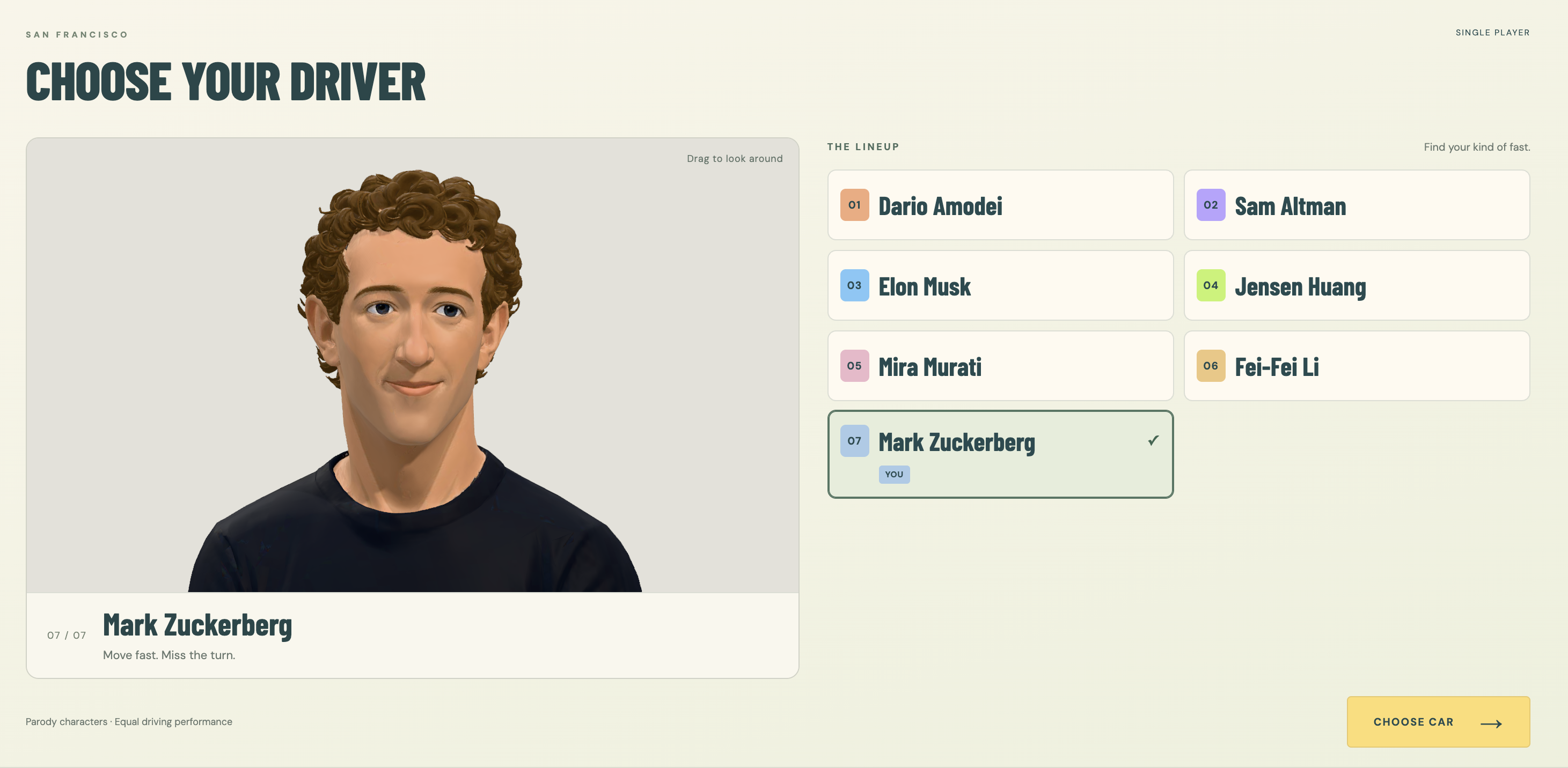
Meta has introduced two new models, Muse Wonder and Wonder Full, described as its latest "amazing" releases. Wonder is positioned as a Fable/Astra class model at a lower price point, costing $4/$20 per million tokens compared with $10/$50 for Fable and Astra. It is available through Meta's API, inside Muse Code, and is slated to soon power Muse, Meta's personal agent.
Wonder Full sits above Wonder in capability, described as just shy of Opus 5.5 in everyday performance. For now it is available only through the Muse Code subscriber plan, which starts at $50 per month. The newsletter writer signed up for an additional AI subscription to test both: Wonder at medium effort and Wonder Full at high effort. Their hands-on impression was that medium was more verbose than high, that both felt slow, and that both produced poor UI output. They note they did not test the models on conventional coding tasks and say they likely will not reach for them again outside of testing.
Separately, Meta's Mark Zuckerberg and Alexander Wang appeared on the Cheeky Pint podcast to discuss the company's climb to the frontier.
In other product news from the same briefing: Claude Code Projects are now open to all Pro and Max users. The feature is described as one master chat where a user dumps requirements, ideas and tasks, and Claude spins up new threads to carry out the work.
Cursor, Grok and X are being consolidated under one plan with four tiers running from $8 per month to $200 per month. The change brings more usage for Grok and Composer models but heavily reduced limits for Claude and GPT models. Grok Bot has also gained its own email address, which the writer used to sign it up for a separate Gmail account.
The briefing also includes a long editorial argument about whether software is dead, a debate the writer says is recurring on X. Their position is that software is not dead and that more code is being written than ever, though something else may have died without anyone quite naming it. They describe using far fewer SaaS tools than before, having a personal agent go through business subscriptions and save $6,000 per year by dropping tools including Webflow, Resend, Cal and Zoom. When they do use tools, they now consider whether their bots can operate them, so that interfaces are bypassed entirely and software talks to software, which they call the headless approach.
They also describe building throwaway sites for one-off tasks, such as a site to review subscriptions and mark which to keep or cancel, then abandoning it once used. Their read is that most people do not see themselves as builders and would not think to build a site for todos, email triage, recipes or kids' calendars, even though that is their own default. They argue agents will be the form factor that brings everyday people into making software, provided it does not feel like software work, and compare it to customising a MySpace page with music, themes and layouts, where some users went on to learn HTML and CSS to go further.
A related thread in the piece concerns the terms used for AI-written code. The writer argues that both slop and vibe coding function as slurs, and that if agent-written code works, is secure and performs well, the label matters less, especially for personal tools rather than critical infrastructure serving paying customers. They also suggest it is an agent's job to clean up its own bad code, and that developers themselves started out writing poor code. The reasoning is that capability improves through repetition and picking up an understanding of the system along the way.
The briefing lists sources behind these arguments, including posts and commentary on whether software is dead, the headless era of software, and debates over good code in 2026, maintainability and how to fix slop.
On their own agent usage, the writer says Grok Bot is currently their personal agent of choice, calling it fast, capable and well interfaced. They cannot yet test Muse in the UK despite attempts. They describe spinning up new bots for tasks rather than treating them as teammates and archiving each when finished. One bot handled email triage with label and archive rules but was described as janky. They went through 195 domains spread across three platforms, cutting auto-renew bills from $4,000 per year to half that while consolidating onto one platform. A known annoyance: Grok Bot cannot use their computer unless reminded and unless they happen to be at that computer rather than on their phone.
The briefing also rounds up smaller items: an ultrafast mode in ChatGPT expanding to GPT-6.1 Sol, live dashboards and animated explainers built inside Claude, Teasr for generating a launch video from a product URL, Patrick Collison on agents in the economy, Factory's droids gaining sandboxes for cloud agents, shipping internal tools as a non-engineer, AgentsInTheCloud for running coding agents on a spare Mac mini, vibe-coding a Beehiiv clone in open source, msgblast for messaging multiple agents at once, password access for agents, shadcn/ui skills for building a design system, Sundrop as a private photo app for parents, and Anatomy for turning a machine description into an explorable 3D model. One item notes Anthropic asked Claude to invent tasks on random websites, and an agent sent Philadelphia police a fake murder tip.
Why it matters: Meta's pricing puts a Fable/Astra class model at less than half the token cost, which matters to teams routing high-volume agent workloads where per-token spend dominates. The Claude Code Projects rollout and the repriced Cursor, Grok and X tiers shift which models are cheap to use inside coding tools, and the reduced Claude and GPT limits under that plan are a practical constraint worth checking before standardising. The mixed early impressions of Wonder and Wonder Full suggest benchmark position and real editing experience can diverge, so teams should test on their own tasks rather than adopt on price alone.
Based on reporting from the original publisher. Visit the source for full context and later updates.
Publisher excerpt
Is software dead, again?