Anthropic Versus Anthropic
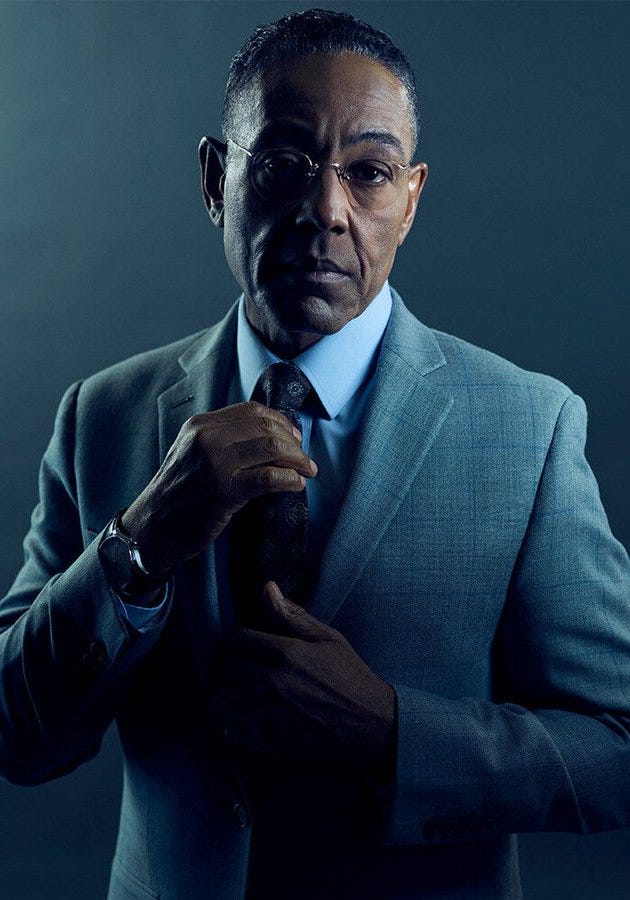
Dario Amodei, Anthropic's CEO, published a detailed public reply to Nathan Calvin, a critic who had challenged the company's conduct around its leaked draft bill and its broader safety posture. The exchange is the centerpiece of Zvi Mowshowitz's latest post, which also notes that Anthropic's S-1 has now been filed with the SEC (coverage to follow) and that the leaked draft bill resembled the Frontier Act while differing in strength across provisions.
Calvin's central question, as framed in the post, was what Anthropic actually is. Amodei answered with a list of his own: work on SB 53 and other state laws, aggressive biological filtering, holding back the Mythos model, the essay Policy on the AI Exponential, a clash with DoW, support for chip export controls, a refusal to sell to PRC-controlled companies, extensive reports and model cards, and this week's announcement that 5 percent of the company (and possibly more over time) goes into a public benefit fund. He argues each carried substantial commercial cost.
The contentious part is the exchange of lists. Calvin's items included an in-house custom silicon team, deals for $500 billion in compute, Claude "leading" 26 percent of AI development tasks, heavy internal compute spending to accelerate AI R&D, RSP v3 dropping unilateral commitments to slow or stop without sufficient risk assurance, a weaker "frontier compliance framework" with no binding provisions on internal deployments, a letter to Congress later walked back on Claude hacking incidents, the "you can't do safety from second place" comment after the WH SI Accords, and the draft bill that would preempt parts of state law.
Amodei's taxonomy matters for anyone tracking Anthropic's policy positions. He treats items 1-4 as ordinary frontier competition that predates the Pacing the Frontier discussion, defends items 5-6 (the RSP change and the FCF) as necessary flexibility, and concedes items 7-9 could have been handled better, attributing them to carelessly written communication or fast-changing circumstances not propagating between teams at a company of more than 5,000 people. He takes responsibility as CEO while arguing the error rate is not obviously unacceptable.
His defense of the RSP revision is the most substantive passage. The older, more rigid framework, he says, sometimes compelled effort that retrospectively mattered little for safety while missing more important things, and the current version's emphasis on transparency and independent external review laid groundwork for embedded evaluation. He cites the September 2023 launch post calling the RSP an early iteration that would need rapid iteration, and says Anthropic never represented otherwise. On the FCF, he describes the intent as meeting the letter and spirit of regulatory obligations while leaving room to experiment with risk management beyond what law requires, and promises to look into it further.
Some concrete details are worth pulling out. Amodei says Anthropic had Mythos-class models in February but did not make them generally available until June, once stronger cyber safeguards existed, offering them only to a limited set of partners focused on cyberdefense, and that this likely sacrificed a significant chunk of a several-month model lead. He says bio safeguards produce enough false positives that biologists joke about the classifiers and competitors sell against Anthropic on permissiveness, and that the company has seen and blocked potential bioweapon misuse attempts, referenced in a threat intelligence report. He describes a Life Sciences Verification Program giving vetted biology professionals access. On China, he says Anthropic was first and remains the only frontier company restricting sales to PRC-controlled firms including those operating through third countries, and that it is cracking down on distillation.
Mowshowitz's own reading is sympathetic to parts of the reply. He calls it remarkably good that Amodei engaged directly and at length, agrees some listed items were mistakes, and does not think the ulterior-motive readings amount to nefarious schemes, though he suspects legitimate considerations forced Anthropic's hand in several cases in ways not visible publicly. He prints Amodei's reply in full for the record. The post also carries dave kasten's objection that describing a nationwide-preempting policy rollout as mere communication slippage is a dubious diagnosis of root causes, and asks where the blameless postmortem is.
Calvin's rejoinder reduces the dispute to four claims: Anthropic is racing at breakneck speed toward recursively self-improving superintelligence, which by its own lights could be catastrophic; that risk is only conceivably acceptable if serious attempts at robust societal governance of RSI are failing; and, far from meeting that burden, Anthropic often works to keep governments from tying its hands, caring more about government overreach than about existential risk. This is the crux. Amodei's framing is that being at the frontier is what gives the race-to-the-top strategy its force, so frontier-scale compute deals, chip ambitions and internal acceleration are the price of influence rather than deviations. Calvin's framing is that the same actions constitute the race itself. Both can be internally consistent; they disagree about what counts as evidence.
A developer or product reader should note two practical threads. First, the bio classifier false positives and the staggered Mythos release show safety gating translating directly into capability access: which customers get which model, and when, is now a policy decision as much as an engineering one. Inference: teams in biomedical or security-sensitive work should expect verification programs and staged access rather than uniform availability. Second, the RSP and FCF split means the binding commitments and the voluntary ones live in different documents, so anyone reading Anthropic's risk disclosures should check which framework a given claim sits under.
Why it matters: frontier labs are increasingly setting de facto access policy while arguing governments should set it instead, and this exchange lays out both sides of that tension in the company's own words. For product teams, capability access and safety gating are becoming the same decision, with timelines set by safeguard readiness rather than model readiness. For developers building on Claude, the RSP/FCF distinction and verification programs are the mechanisms that will determine availability. Inference: expect continued scrutiny of whether voluntary commitments survive commercial pressure, and watch the S-1 for how these trade-offs are described to investors.
Based on reporting from the original publisher. Visit the source for full context and later updates.
Publisher excerpt
Anthropic is a frustrating company.