The secret behind Meta’s Muse
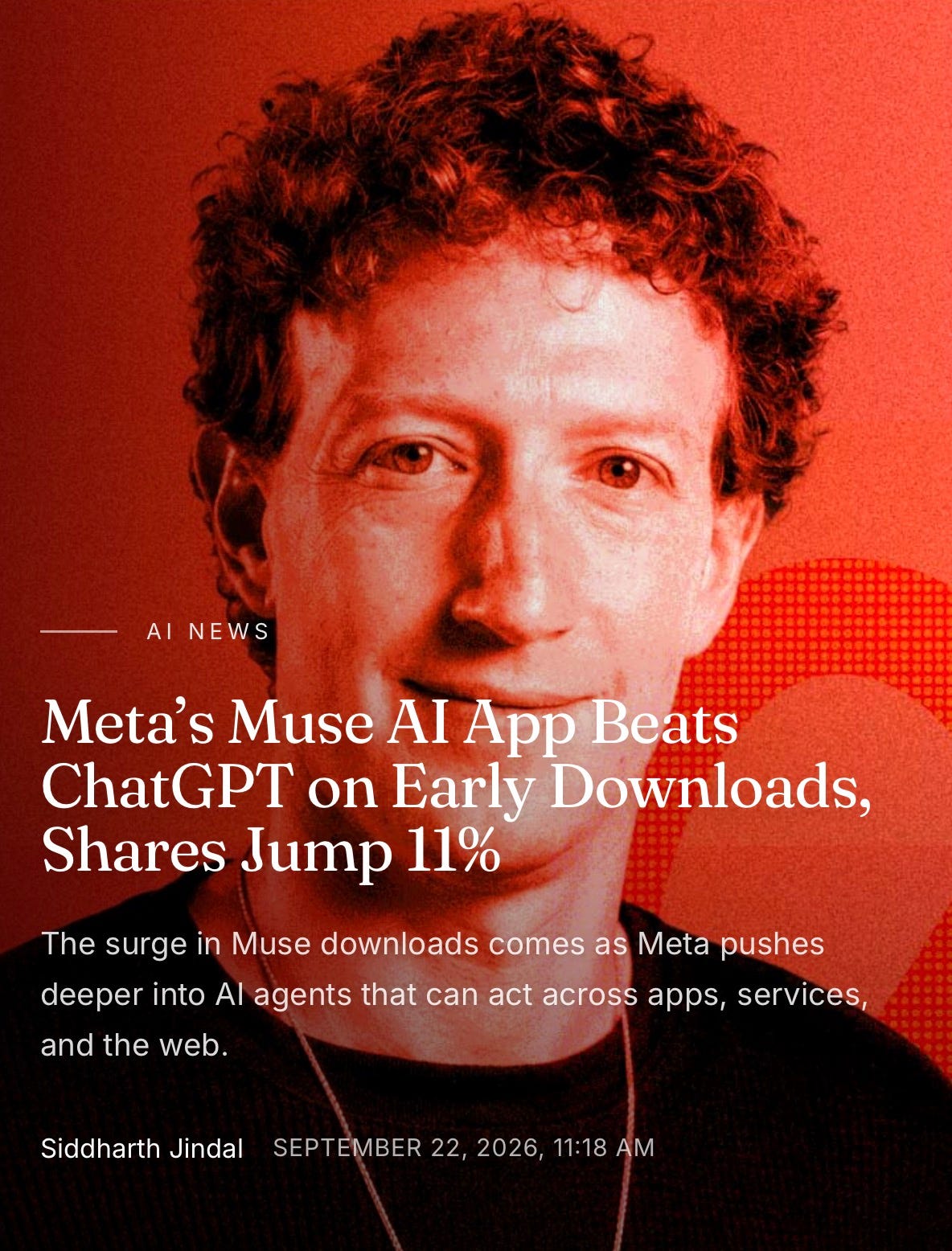
Gary Marcus has responded to the recent attention around Meta's new agent, Muse, by drawing a direct line back to Facebook's Project M, an earlier assistant effort launched in 2015 when the company was still called Facebook. In his account, Project M was announced with considerable fanfare and wide tech-media pickup, but it never really took off.
The core problem Marcus cites is cost. Running M was expensive for Facebook, so the service was rolled out to only about 10,000 users and never scaled to the general public. Marcus notes that it eventually leaked that humans were working behind the scenes, a setup he compares to the original Mechanical Turk, the supposed chess-playing machine that concealed a person inside.
After those revelations, David Marcus, then at Facebook, gave assurances to Alex Kantrowitz that everything was fine. The project nevertheless ended in January 2018, canceled less than three years after launch. Marcus also points to a figure from the project's operation: no more than 30 percent of requests were served by AI. He writes that most people today have likely never heard of the project, and he closes that section with a mock obituary for Facebook M, spanning 2015 to 2018.
His characterization of the whole episode is that it was more or less a ruse, or a fantasy in which Mark Zuckerberg overestimated what the AI of that era could do, believing that enough data would solve the problem. His implication is that the lesson was not learned.
Turning to the present, Marcus says Meta's Muse is trying to do essentially what Facebook M tried to do: restaurant reservations, theatre tickets and similar everyday tasks. He is openly uncertain whether it will work this time, saying he cannot really say for sure, but he admits to laughing out loud at something he read about the new agent. He also flags a second item in the same vein, asking whether Zuckerberg could be more tone-deaf about privacy, and points readers to a classic essay by Zeynep Tufekci. His summary judgment is that the same mistakes keep recurring.
For developers and product teams, the useful content here is mostly historical and cautionary rather than technical. The post gives no architectural details, benchmarks or pricing for Muse, and it does not claim that the new agent relies on human operators. What it does supply is a concrete precedent: an assistant that looked impressive in demos and coverage, was constrained by operating cost to a small user base, drew scrutiny once human involvement surfaced, and was shut down within three years. This suggests the relevant questions for any agent product are unit economics at scale and how much of the work is genuinely automated versus quietly escalated to people.
A likely trade-off is that human-in-the-loop fallbacks improve reliability and user experience but are hard to sustain economically at consumer scale, which is the bind Marcus describes at Facebook. The gap between 30 percent AI-served and full automation is the kind of number worth tracking in any agent launch, in my reading, because it determines whether a service can grow beyond an invitation-only pilot.
Why it matters: teams building or buying agent products are being asked to judge Meta's Muse largely on buzz, and this comparison supplies a concrete prior case with published constraints on scale, a disclosed human component and a defined shutdown. The inference I would draw is that the durability of such products depends less on demo quality than on cost per request and the real share of tasks the model completes unaided.
Based on reporting from the original publisher. Visit the source for full context and later updates.
Publisher excerpt
The new secret is the old secret