Ila Kumar: Innovating with communities
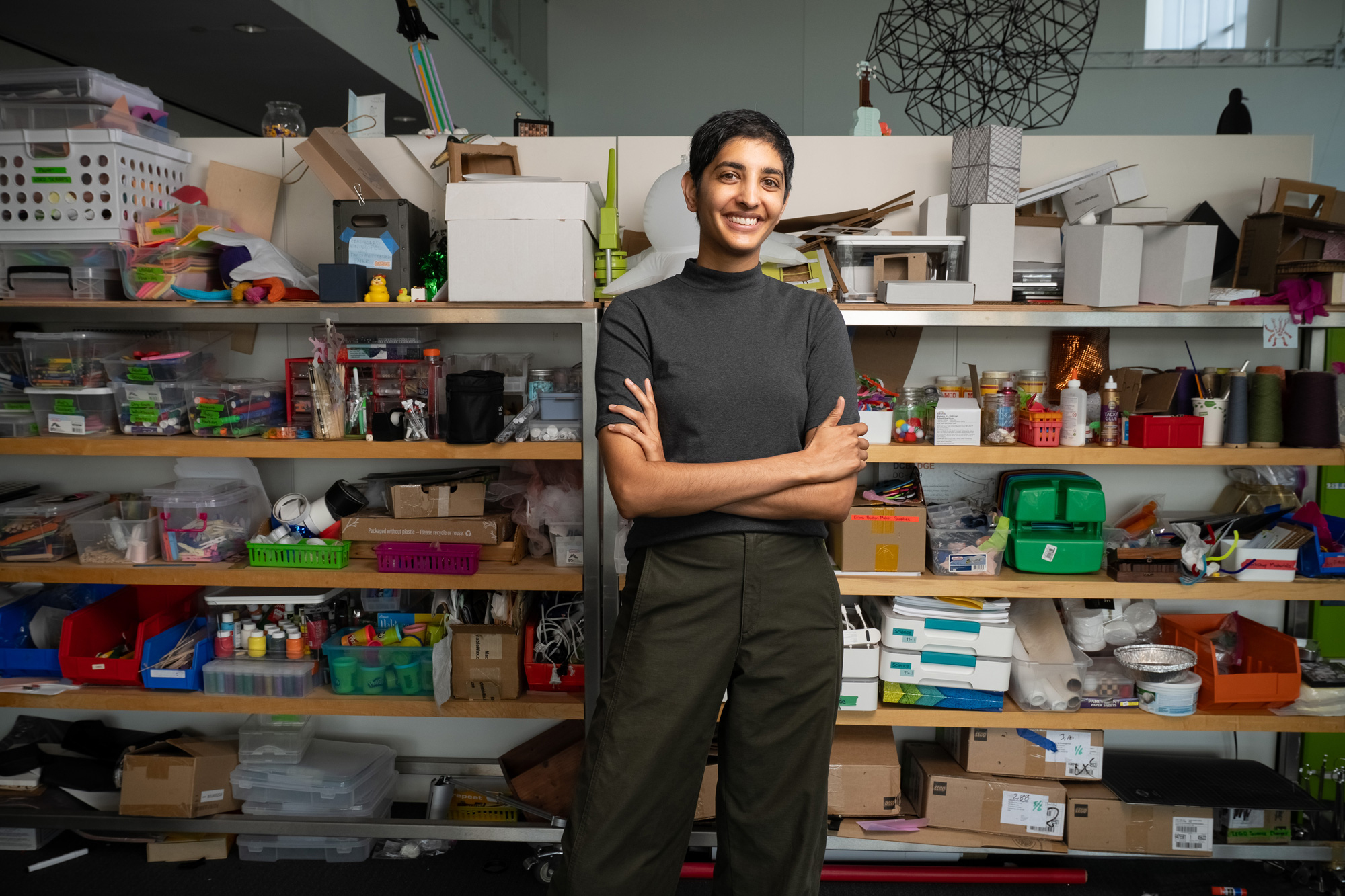
Ila Kumar, a PhD candidate at MIT's Media Lab working in the Lifelong Kindergarten group, approaches technology design by first asking what context it will operate in and who needs to be involved. Her research focuses on working alongside young people who experienced trauma during childhood, particularly those in the child welfare system, to reimagine how technology can support healing, connection, and independence.
Kumar arrived at MIT in 2021 intending to complete only a master's degree but stayed to pursue a doctorate; she is preparing to enter the sixth and final year of her PhD. Previously she grew up in Philadelphia, attended the University of Pennsylvania, and worked on projects at the intersection of technology and mental health or psychology research. She said that work left her questioning its long-term impact, which led her to rethink how technology is created.
One project Kumar worked on, in partnership with Stepping Forward LA and with input from intended young users, replaces text-heavy communication with a visual collage system to help young people impacted by trauma and the child welfare system express difficult emotions and build connectedness. In an ongoing project, she is collaborating with the Justice Resource Institute to design a mobile app that supports youth in playing an active role in treatment planning and working toward goals set outside the therapy office; clinicians and youth are involved in designing and evaluating the system.
Kumar co-facilitated a 10-month technology leadership circle with Foster America that brought together people with lived experience of foster care and technology experts to envision how digital technologies could fill gaps in care for young people in the child welfare system.
Her work has extended to artificial intelligence after she realized young people who had experienced trauma were already turning to AI to make critical life decisions, even as many caregivers were not aware. She has led training workshops with organizations serving young people impacted by trauma or involved in the child welfare system, focused on supporting care providers in talking with young people about AI.
Kumar also volunteers as a court-appointed special advocate. Last summer, she and another graduate student in her lab mentored two interns with foster care experience during a six-week program blending technology, creativity, and personal growth. She collaborated with the Priscilla King Gray Center for Social Impact to co-teach a course on community-driven innovation and established a biweekly community of practice connecting researchers across MIT and Harvard University.
Based on reporting from the original publisher. Visit the source for full context and later updates.
Publisher excerpt
The PhD student works to give young people an active role in shaping digital technologies that can support their own well-being.