How Companies Are Using NVIDIA DSX to Break the Power Bottleneck
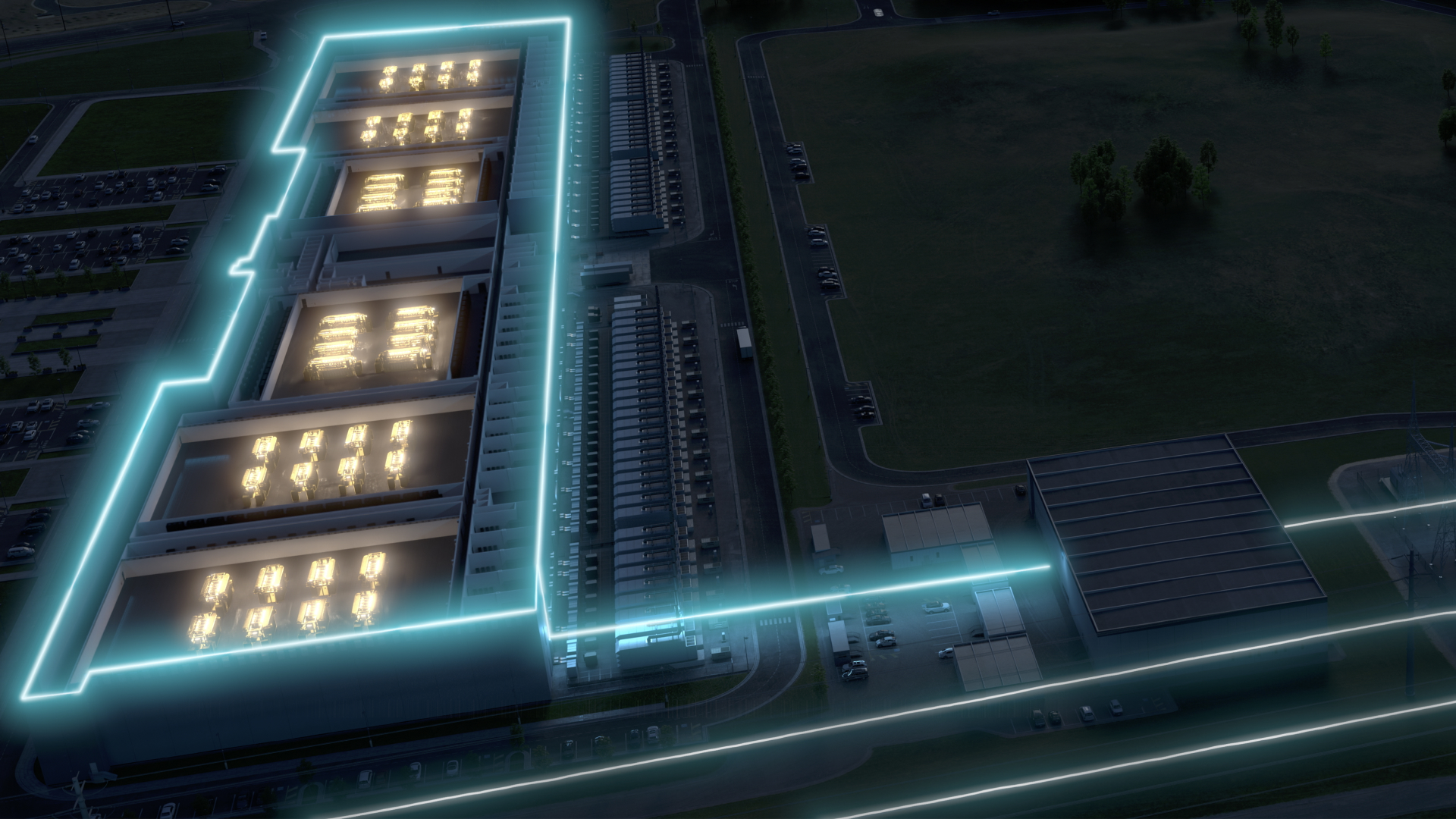
NVIDIA has outlined how a group of energy, engineering and data-center companies are adopting its DSX AI Factory Platform, which aims to bridge the traditional gap between the electric grid, the facility and the compute inside it. The companies named include GE Vernova, Hitachi Energy, Schneider Electric with AVEVA and ETAP, Siemens Energy, Phaidra and Emerald AI. The occasion is GTC Berlin, where several of these partners are exhibiting and NVIDIA and energy leaders are discussing power-flexible AI factories.
NVIDIA frames the platform as a response to a power crunch: it cites more than $300 billion in equipment backlogged and over 200 gigawatts of projects waiting in U.S. interconnection queues. The stated root cause is that grid, facility and compute systems have historically been designed in isolation, which NVIDIA says breeds delays, risk and stranded capacity.
The DSX stack is organized into three functional layers. DSX Sim, paired with SimReady assets from energy manufacturers, lets engineers simulate grid, substation and AI factory together, checking generators, switchgear, power systems and cooling before construction begins. DSX Flex synchronizes AI factory demand with grid conditions and onsite generation, so a facility behaves as a flexible grid asset rather than a fixed load. DSX MaxLPS and DSX Exchange are aimed at extracting more compute per watt and securely sharing signals across compute, networking, energy, cooling and operations.
Partner contributions vary. GE Vernova is applying its grid-to-facility and rack power expertise alongside DSX systems. Hitachi Energy's battery energy storage system has qualified as NVIDIA DSX Ready, a designation meant to help customers identify power infrastructure that meets applicable DSX reference architecture design requirements. Schneider Electric, with AVEVA and ETAP, is advancing validated Vera Rubin power and cooling reference architectures plus an Omniverse-powered AI factory digital twin; combining AVEVA engineering software with SimReady assets, OpenUSD and Omniverse is intended to connect simulation, real-time operational data and AI-driven optimization across AVEVA, Schneider Electric and third-party tools. Siemens Energy is developing a reference design for grid-aware power infrastructure across generation, transmission and distribution aligned with the DSX Vera Rubin AI factory design, and is exploring RAPIDS, Metropolis and Isaac Sim for its Noedra digital twin platform for grid monitoring and outage prevention.
On the software side, Phaidra integrated DSX Flex, DSX Max-Q and DSX Exchange into its self-learning agents for cooling and power allocation, reporting about 10% more compute within the same power envelope. Emerald AI integrated its Conductor platform into DSX Flex to help utilities tap underused grid capacity, an approach modeled to unlock up to 100 gigawatts on the existing U.S. grid.
This suggests NVIDIA is pushing a design philosophy in which power planning and compute planning share one modeling environment. In practice, the value of a digital twin depends on fidelity of the underlying models and on whether simulation outputs translate into permitting and interconnection decisions that utilities and regulators accept — a likely trade-off, since faster design cycles only help if approvals keep pace. The DSX Ready qualification also hints at an emerging certification layer for power equipment, similar to how hardware compatibility lists shape enterprise procurement.
Based on reporting from the original publisher. Visit the source for full context and later updates.
Publisher excerpt
Companies around the world are building on the NVIDIA DSX AI Factory Platform to plan, simulate and run the grid and the AI factory as one system, from the substation to the rack. Their adoption of the platform responds to an acute problem. Power is now the biggest bottleneck in infrastructure. More than $300 billion […]