Q&A: The “collision” between AI, your brain, and society
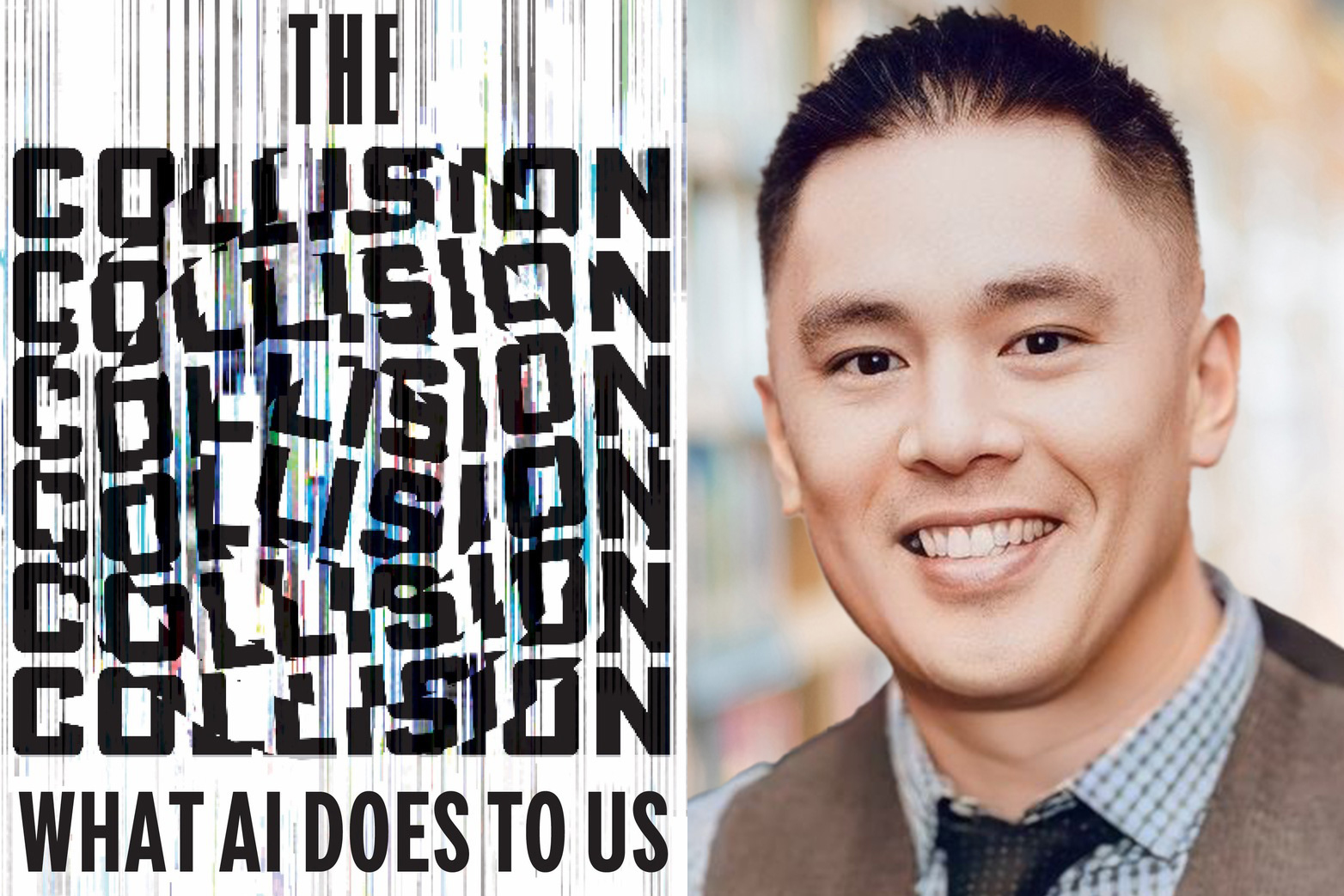
MIT Sloan professor Eric So has published a new book, "The Collision: What AI Does to Us," released this month by W.W. Norton. In an interview with MIT News tied to the launch, So, the Sloan Distinguished Professor of Global Economics and Behavioral Science, laid out his argument that widespread AI reliance carries cognitive costs even as it delivers real speed gains and useful domain-specific tools. The book draws on recent research by So and others in academia and industry, including an Anthropic study finding that roughly half of queries from college students were low-effort queries seeking simple answers.
So said the project began with patterns he noticed in his own behavior. He opens the book with an episode in which a colleague asked for help and he wrote half a sentence, typed a prompt asking ChatGPT to finish it professionally, made a few light edits and sent it. Reflecting afterward, he said he felt concerned about how he had removed his own thinking from the process. He also describes watching students outsource thinking to AI rather than working through material themselves, using it to answer homework that would normally build subject mastery.
His explanatory framework centers on what he calls "AI gravity," a constant pull toward the technology produced by several converging factors. One is a biological instinct to conserve mental energy. Another is social: when others use AI to race ahead, pressure ratchets up on everyone else to match them. A third is the practical difficulty of detecting AI use. Together, So argues, these forces mean that simply telling people to think for themselves is not enough, because the dynamic is systemic rather than purely individual.
Systemic pressure shows up especially in workplaces and schools. So notes that many organizations no longer merely suggest AI use; it can become the basis of evaluation, so bonuses or promotions effectively depend on adopting the tools. In academia, he sees a subtler version: students reasoning that a future employer will expect AI fluency, and therefore starting now. The trap, in his telling, is that early reliance erodes the very practices and capabilities people are trying to build, which deepens dependence later and turns the expectation into a self-fulfilling prophecy.
On cognition, So's claim is broad: AI is not only changing what people can do but who they are as thinkers. By removing friction, he says, it undercuts the groundwork of foundational mastery and leaves many people less able to push through difficult problems. Because instant relief becomes habitual, and because many treat the models as a primary access point for information, memory is affected as well. He also points to interpersonal effects: models are simultaneously sycophantic, seeking to please users because engagement and positive feedback depend on it, and highly persuasive, so people grow accustomed to frictionless agreement and may lose some capacity to connect with other people.
Central to the book is the idea of productive struggle, which So frames with the line that struggle does not mean suffering. He argues struggle should be recast as formative rather than as a problem to eliminate, and he draws a parallel to post-industrial society. Once physical activity was no longer required for economic productivity, intentional exercise emerged as a practice, requiring people to reframe what physical struggle meant. He suggests a similar cultural shift is needed for cognitive struggle.
For individuals, So offers four principles. The first is embracing the struggle. The second is to value who you are without AI; he describes presentations built with tools like Claude that look polished but whose presenters clearly did not do the work needed to understand the material. Making the slides oneself, he says, forms an inseparable task bundle that enables substantive discussion. Without valuing one's unaided capabilities, the output arrives without the ability to capitalize on it.
The third principle is reinvesting cognitive surplus. AI saves time on rote activities, but what matters is where that time goes. Funneling the same energy into the same tasks forfeits the transformational upside; So points to using freed time to build expertise, learn a language, cultivate skills or focus on family. The most innovative changes, he argues, are not mere automation but extensions of human capability.
The fourth is using AI as a cognitive trainer rather than an answer machine. So treats the technology as a dual force: poor for thinking when it supplies answers, potentially excellent for learning when it acts as a tailored tutor. The catch is that a tutor requires seeking out friction, and that requires motivation.
Why it matters: Product and engineering teams deciding how deeply to embed AI into onboarding, coding and documentation workflows should weigh the immediate throughput gains against the skill-building that may be displaced, since So's argument implies the tradeoff compounds over time. For education and enterprise learning groups, the practical question is whether tools are configured as answer machines or as tutors that preserve deliberate effort. This reading is my inference from So's stated principles rather than a tested outcome; the book itself is an argument built on synthesis and cited research, not a controlled study of workplace productivity.
Based on reporting from the original publisher. Visit the source for full context and later updates.
Publisher excerpt
In a new book, Professor Eric So explores how the technology affects our thinking skills.