Q&A: Why building math muscles remains important in the AI era
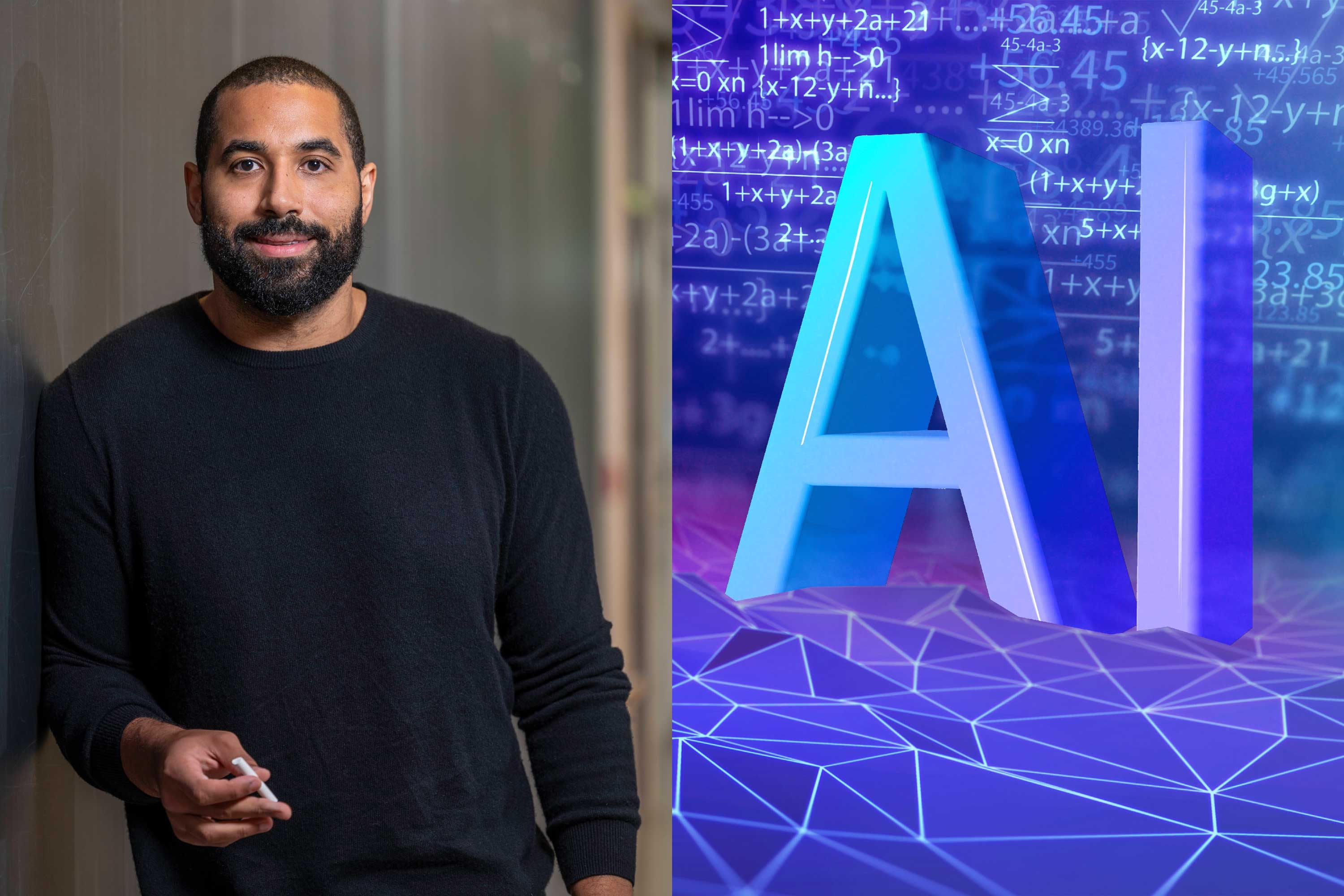
John Urschel, a Class of 1956 Career Development Assistant Professor in the MIT Department of Mathematics and a former Baltimore Ravens lineman, discussed mathematics education and artificial intelligence in a Q&A with MIT News. The hook for the conversation was two recent preprints he posted to arXiv: one on the growth factor of random matrices and one on worst-case behavior in Gaussian elimination. Both, according to the account, drew on a mix of human insight and AI tools to address problems that had stumped mathematicians for decades. These were the first two papers in which Urschel said he had touched the machine.
His description of working with AI systems is notably measured rather than triumphal. He compared it to having a collaborator with seemingly unlimited resources who performs certain tasks far faster than he can, and said it is now clear that AI systems can do certain types of mathematics much more efficiently than people. He also separated the output from the experience: the joy he associates with problem solving is greatest, he said, when he works through a problem himself without AI.
That distinction drives the teaching philosophy he described. For students who use AI, Urschel said he emphasizes understanding above all. When a machine produces a proof, he argued, the real value lies in a human grasping how the machine combined mathematical ideas, internalizing that reasoning, and communicating it to others. For students who do not use AI, he continues to focus on building problem-solving ability the way mathematics has been taught for centuries. He framed both tracks as complementary rather than competing, on the view that there remains a role for humans to think through problems.
He was candid about the risks. Urschel called AI a double-edged sword in education: it can let someone learn faster than ever and gives broad access to knowledge, but it can also erode the habit of thinking and learning independently. His concern is specifically about the illusion of competence, where a student can finish homework or a ten-page essay with the push of a button and come away believing they understand material they have not actually worked through. People dislike the word struggle, he said, but without struggling with material personally, you can get the impression of learning without learning itself.
The classroom response he outlined has two sides. Instructors, in his view, owe students well-run recitations, effective office hours, and a challenging educational experience worth showing up for. Students, in turn, bear some responsibility to engage with the material directly. He also stressed community, arguing that learning alongside peers materially improves the experience and is an integral part of it, and that in-person, residential education has lasting value.
Asked why students should still study mathematics, Urschel gave two reasons. The first is that learning how to think will matter more, not less, as access to stored expertise becomes trivial; the ability to reason independently, he suggested, may become scarce and therefore prized. The second is community. He added that the way institutions teach and prepare students cannot look the same as it did a decade ago, given how much the surrounding world has changed.
The conversation sits alongside a broader institutional debate. Urschel referenced a recent report from MIT's Ad Hoc Committee on AI Use in Teaching, Learning and Research Training, which stressed the productive struggle of learning and its collaborative dimension. Coverage of his work elsewhere has leaned on the same themes: he told the Washington Post that the Gaussian elimination algorithm, used to solve systems of linear equations, is close to 100 percent reliable, and remarked on how striking it is that the field's most fundamental algorithm is not fully understood. He has also commented to Forbes, alongside MIT colleague Ankur Moitra, on OpenAI releasing more than 700 mathematics preprint papers online, saying it is obvious that how mathematics is done and evaluated will have to change while the underlying idea of understanding remains constant.
For readers outside academia, some context helps. Gaussian elimination is the standard procedure taught in introductory linear algebra for reducing a matrix to row echelon form and solving linear systems; in floating-point arithmetic its stability depends on pivoting choices, which is why worst-case analyses of elimination remain an active research topic. Random matrix theory, the subject of the other preprint, studies the spectra and growth behavior of matrices with randomly distributed entries and underpins work in numerical analysis, statistics and physics. That an established mathematician reports using AI tools on such classical questions, rather than on problems chosen to suit the technology, is the substantive signal here.
A likely trade-off, and one Urschel's remarks point toward, is between speed of output and depth of comprehension. AI assistance can compress the time to a candidate proof, but the burden of verification and explanation shifts onto the human, and the pedagogic value depends on whether that human does the assimilating work. His emphasis on understanding functions as an implicit quality bar for how AI-assisted results get evaluated and taught.
Why it matters: Educators and teams building learning or developer tools face the same question Urschel is answering in the classroom, namely whether assistance should replace practice or be paired with deliberate explanation. His stance suggests assessments and tooling that reward demonstrated reasoning over finished artifacts; that reading is my inference, not his stated policy. For mathematics specifically, the two preprints signal that mainstream researchers are now folding AI into work on foundational numerical questions, which will keep pressure on how such results are checked and communicated.
Based on reporting from the original publisher. Visit the source for full context and later updates.
Publisher excerpt
Assistant Professor John Urschel explains why learning the fundamental skills of mathematics is still essential despite the evolution of AI tools.