What can you build with Jev
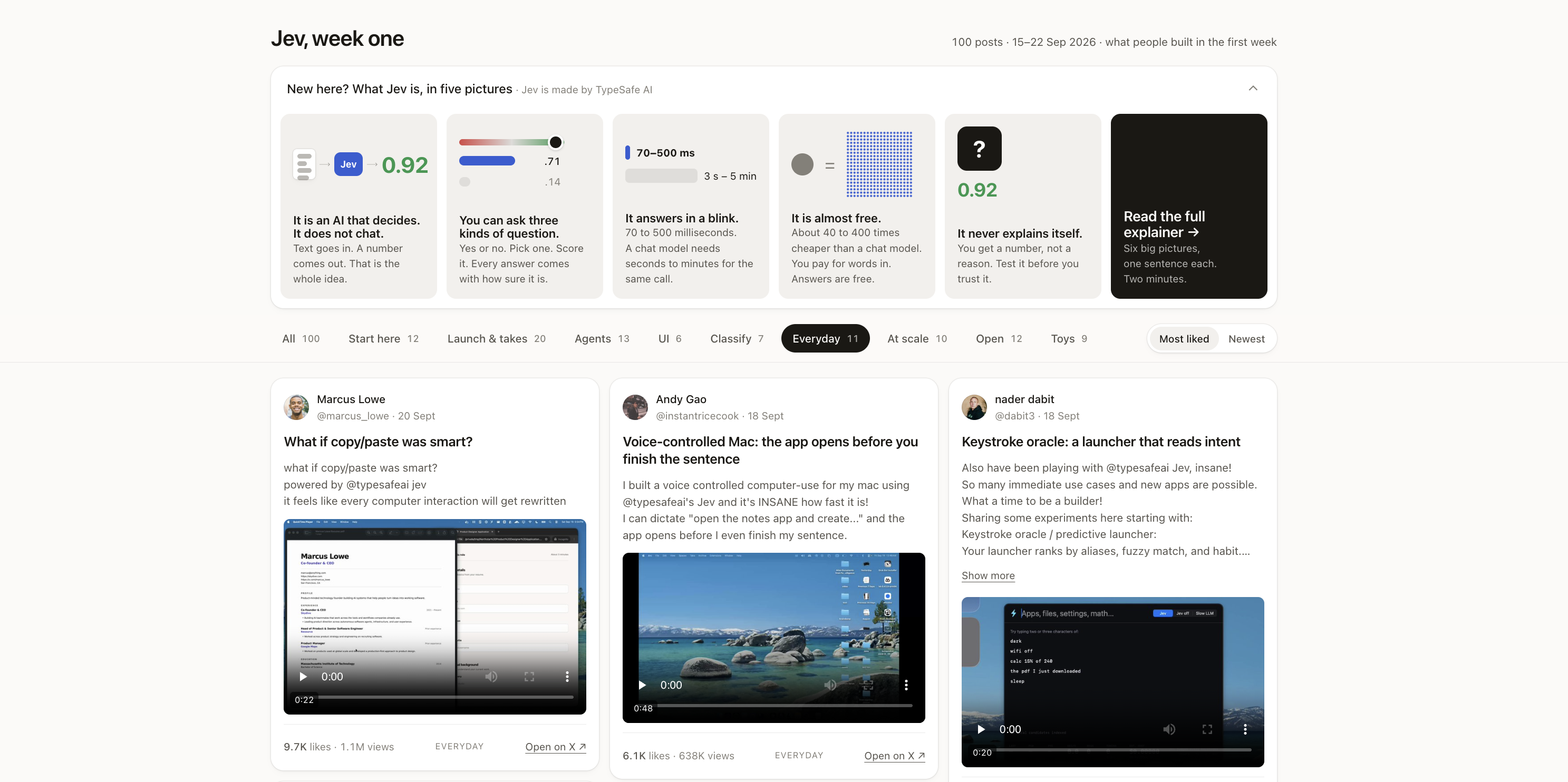
Jev is now open to everyone, according to Ben's Bites. The newsletter describes Jev as different from usual LLMs: it is aimed at builders and meant to be used inside a tool, taking text and answering constrained questions such as whether something is an ad, which folder an item belongs in, or how relevant a result is.
The newsletter collected examples of what people are building with it, including an extension to skip sponsor segments on YouTube, filtering negative comments out of a chat in real time, searching Gmail by intent or filtering to-dos, a smarter copy-paste, drag-and-drop and Cmd+F experience, and controlling a Mac with voice. It said demos are also trying to integrate Jev with modern coding agents, for instance for instant compaction, which the newsletter called a terrible idea because it loses the cost savings from prompt caching. A sidenote attributed to Keshav said experiments with compaction and dropping tool calls are often a loss.
On coding agents, the newsletter said projects in Claude Code are now a single master chat rather than a folder, where users can dump requirements, thoughts and tasks and let Claude spawn threads to carry out work. Those threads run as cloud sessions, with local support coming; the change is in beta and will be live for all users soon. Claude Code will also support AGENTS.md through its new feature Claude Mods.
Muse, Meta's personal AI agent, has a Mac app and a developer platform for building connectors so external services can be used through it. The newsletter said Muse is heavily inspired by OpenClaw and that it could shop for users until Amazon started blocking it; Meta is working on it, including a partnership with Shopify.
Grok 4.7 is out. The newsletter called it a questionable upgrade from Grok 4.6: it performs better than GPT-5.6-Sol and Opus 5 on benchmarks but uses many more tokens, reducing cost efficiency. Speechmatics' Agent STT is powered by Linden, described as a new speech-to-text model purpose-built for voice agents, priced at $0.30/hour ($0.15 after discounts) and said to be 25% cheaper than Deepgram Flux, available through Pipecat, LiveKit or Speechmatics' API.
Based on reporting from the original publisher. Visit the source for full context and later updates.
Publisher excerpt
Muse is off to a good start