Nvidia CEO's affair becomes a national security problem
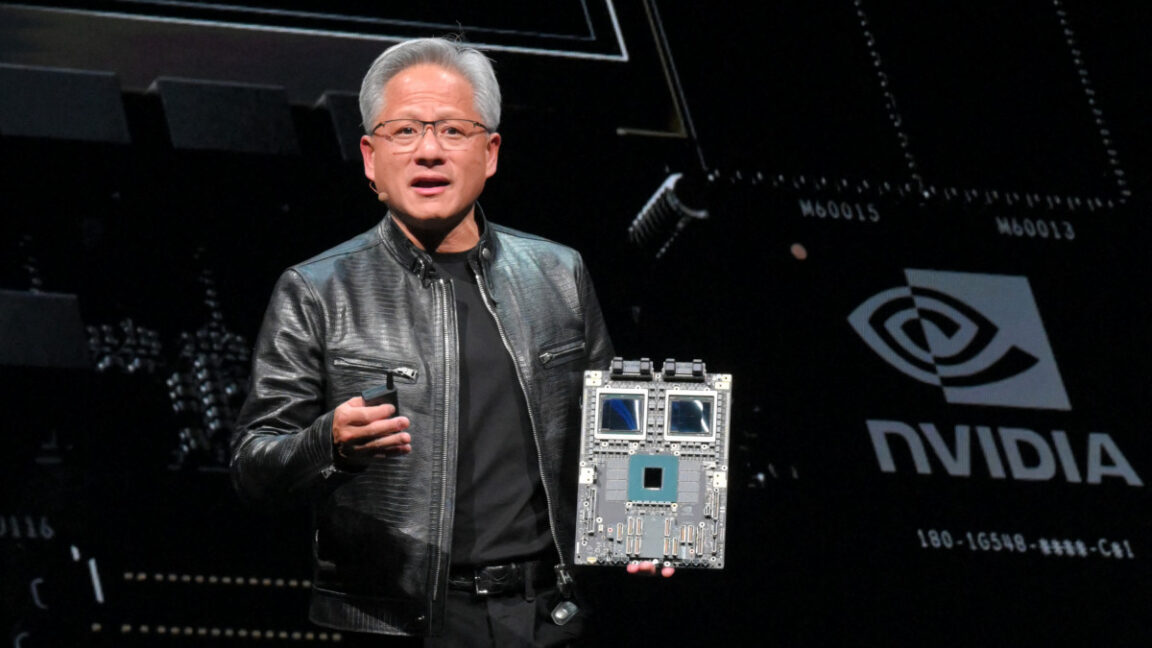
Nvidia chief executive Jensen Huang admitted on Sunday, in an internal message to employees obtained by the Financial Times, that he had been unfaithful to his wife. The admission came two days after the FT reported that US intelligence believed Huang had been romantically involved with a woman alleged to be working as a spy for China. In a separate statement, Nvidia said its board would open an independent investigation "in light of recent reporting that founder and CEO Jensen Huang has been the target of a foreign intelligence effort."
A committee of independent directors, assisted by external lawyers, will oversee that inquiry. Nvidia's statement said the board prioritizes US national and economic security, calling it paramount to the interests of the company and its shareholders, and added that while it has no reason to believe national security or Nvidia secrets were compromised, the inquiry will examine all available information. Huang said he would cooperate fully. In his message he wrote that he owed his family and employees an apology, that his actions had hurt his wife and children, and that he was committed to Nvidia and would work to earn back confidence.
The reported relationship was with Alice Huang, an executive at Megaspeed, a Singapore-based customer of Nvidia, according to people familiar with a US government memo described by the FT. That memo, drawn up from intelligence information earlier this year, stated that US intelligence believed the Megaspeed executive had been recruited by China's Ministry of State Security. It was drafted shortly before President Donald Trump traveled to Beijing for a summit with Xi Jinping. Nvidia had previously dismissed suggestions of an improper relationship, saying its interactions were nothing unusual or unexpected when dealing with a customer. The US government had already been investigating Megaspeed over concerns it was smuggling Nvidia chips into China.
The commercial context is unusually tangled. Nvidia was cut off from the Chinese market by export controls imposed in 2025, and Huang has repeatedly lobbied Trump for a more permissive stance. The arrangement that followed allows exports of Nvidia's older H200 chips to China with the US government taking a share of sales; the FT reports it had minimal impact on Nvidia's sales because Beijing pushed back against the technology, and that it further angered China hawks in the administration. Huang built his relationship with Trump after the president called him unexpectedly on his birthday, and he has since accompanied Trump on state visits. Asked about Huang on Sunday, Trump said he had done an amazing job for the US, called him an honorable guy, and said he had not discussed the matter with him.
The market reaction was immediate. Nvidia's Frankfurt-listed shares fell more than 6 percent in early trading on Monday. The disclosure lands at a delicate moment for the wider AI sector, which faces a deepening political backlash in the United States and investor anxiety over whether hundreds of billions of dollars of infrastructure spending will pay off.
Reaction from Washington and Silicon Valley split along familiar lines. Elon Musk, described as a close ally of Huang, endorsed a social media post calling Huang one of the greatest entrepreneurs of this generation and irreplaceable for America's AI leadership. John Moolenaar, the Republican who chairs the House China committee and who with other lawmakers has asked Huang to testify before Congress, said it is vital that Huang address national security concerns in Congress related to China's access to sensitive technology and information.
Huang co-founded Nvidia in 1993 as a graphics card company and is among Silicon Valley's longest-serving founder-CEOs. The FT notes that Nvidia's success is tethered to its CEO more than most technology companies: he leads a loyal core team of roughly half a dozen executives, acts as chief salesman internationally, and directly manages dozens of reports. He has credited this flat structure for the company's speed against AI chip rivals, and its valuation has climbed from about $1 trillion in 2023 to $4.5 trillion. The FT describes Nvidia as the first $5 trillion company, a milestone that reflects how central its accelerators are to AI training and inference.
For developers and product teams, the practical questions are supply, roadmap and trust. This suggests the near-term risk is less about any confirmed technical compromise than about distraction and governance scrutiny at a company whose GPUs underpin most large-scale AI work. A likely trade-off is that a board-led review with outside counsel slows decision-making on China-facing sales and compliance matters precisely while the H200 export arrangement is being tested. Inference: teams with multi-year capacity commitments or China-adjacent supply chains should expect more volatility in allocation messaging and more scrutiny of intermediary customers and resellers, since the Megaspeed thread concerns alleged diversion of chips. Nothing in the reporting establishes that Nvidia technology or secrets were exposed, and the board says it has no reason to believe they were.
Why it matters: Nvidia is the default supplier for AI compute, so scrutiny of its CEO's foreign contacts becomes a procurement and compliance issue for any organization building on its hardware. Developers should watch whether the independent investigation or congressional testimony produces new export or customer-vetting rules that affect lead times and pricing. Inference: the biggest immediate exposure is reputational and political rather than technical, but in a market this concentrated, perception can move allocation decisions quickly.
Based on reporting from the original publisher. Visit the source for full context and later updates.
Publisher excerpt
Nvidia is probing whether Chinese intelligence targeted its CEO through an affair.