3 Questions: A new resource to empower young entrepreneurs
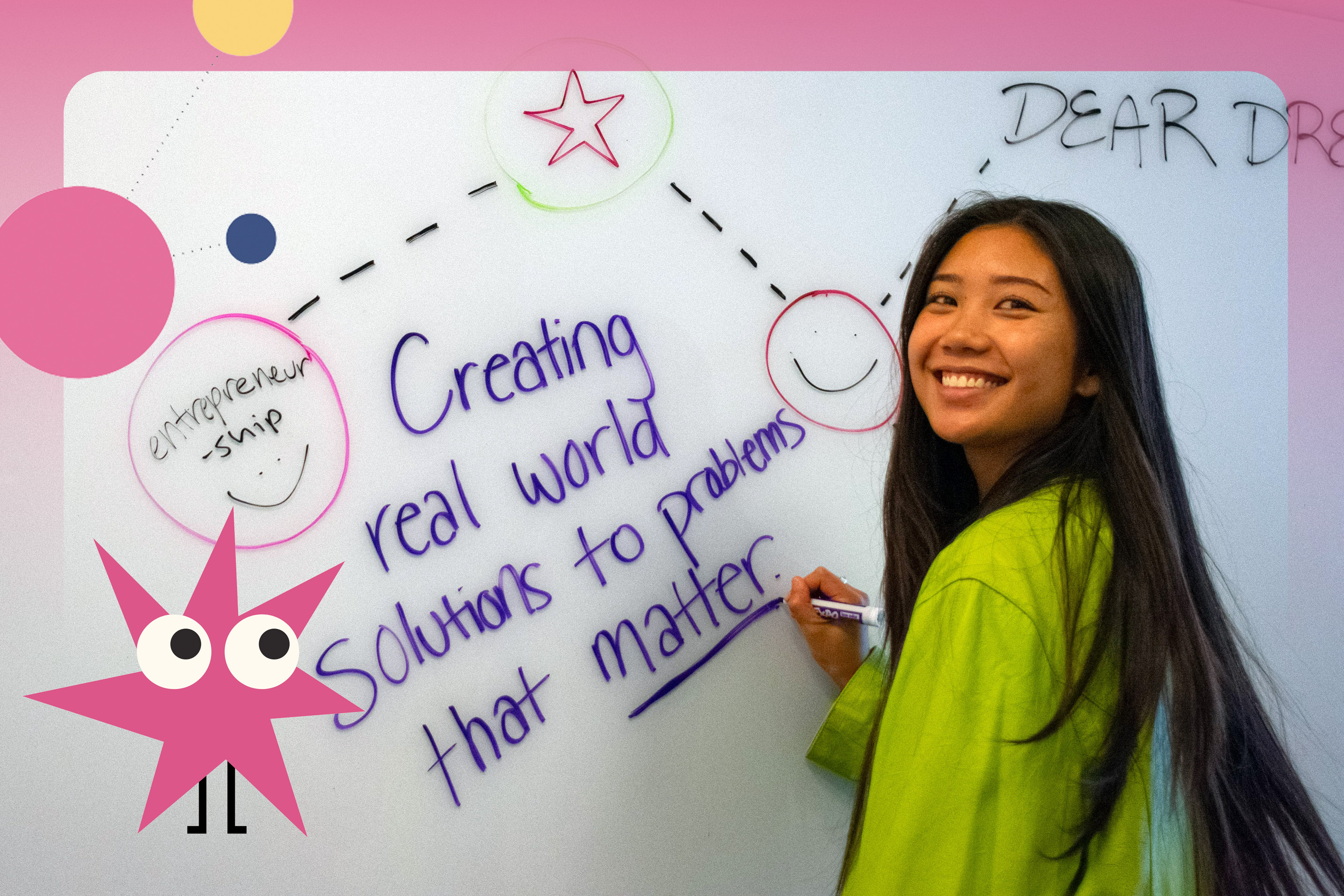
The Martin Trust Center for MIT Entrepreneurship has launched Dear Dreamer, a free, AI-powered entrepreneurship platform aimed at middle and high school students. The platform was made possible through a gift from the Frank & Eileen Foundation and adapts the Disciplined Entrepreneurship framework developed by Bill Aulet, the center's managing director and the Ethernet Inventors Professor of the Practice at the MIT Sloan School of Management. Aulet described the project in an interview with MIT News.
Dear Dreamer is open to all students in middle and high school. It turns Aulet's 24-step framework for starting a venture into a digital, self-paced learning experience built around short educational videos, interactive exercises, and personalized feedback on the user's own idea. Aulet said the goal is to empower 50,000 young entrepreneurs by 2030.
The underlying framework has a long track record. Aulet's book, Disciplined Entrepreneurship, has sold more than half a million copies and is taught at hundreds of colleges worldwide. According to the figures Aulet cites, MIT students who use the framework in the delta v startup accelerator program have a 61 percent survival or acquisition rate and have collectively raised over $3 billion. The material was also released as a course on edX, which drew hundreds of thousands of participants.
What the framework was not built for is a younger audience, and that gap is the reason Dear Dreamer exists. Aulet said the team spent considerable time working with younger students to make the material digestible for a 10-year-old, 12-year-old, or 14-year-old. The core curriculum path is unchanged, but the presentation is different: new case studies and examples accompany each step, and the interface is designed to feel more like Instagram or YouTube, with videos featuring people students can relate to. The content follows the same sequence that works for MIT graduate students, just delivered in a form suited to adolescents rather than an MBA or PhD cohort.
The project traces back to a meeting between Aulet and Audrey McLoghlin, founder and CEO of the apparel brand Frank & Eileen and president of the Frank & Eileen Foundation. Aulet showed her Jetpack, MIT's generative AI tool trained on disciplined entrepreneurship that walks MIT students through the entrepreneurial process. McLoghlin's response, as Aulet recounts it, was that making that work accessible to young people is how more entrepreneurs get created; she said she wished a tool like it had existed when she started, and noted that her daughter wants to be an entrepreneur but that schools offer little guidance in that area. The Trust Center frames its mission as training people at MIT while also creating entrepreneurs beyond it, a theme captured in the MIT phrase Aulet repeats: "MIT in the world, for the world."
This is a notable example of a curriculum-scale generative AI deployment, and it is worth being precise about what is automated. The personalized feedback on a student's idea is the AI component; the pedagogical spine is the fixed 24-step framework, which the source material presents as validated through accelerator outcomes rather than generated on the fly. In practice, that combination is a sensible architecture for an educational product: the model adapts the delivery and responds to whatever a student types, while the sequence of steps and the case studies stay under human editorial control. A likely trade-off is that personalized feedback is only as good as the input a middle schooler provides, and a school-facing tool that gives open-ended advice to minors raises questions about moderation and data handling that a short product description does not address.
The tool is free and self-paced, which removes the two most common barriers to classroom adoption: cost and scheduling. It also means the platform can scale without a teacher present, a design choice that fits the stated 2030 target of 50,000 young entrepreneurs. The obverse is that self-paced learning generally shows weaker completion than instructor-led formats, and no completion or outcome data for Dear Dreamer itself has been released yet.
Aulet's broader argument for the platform is that entrepreneurship is less a career choice than a transferable way of operating. He describes it as a mindset and skillset that helps people handle change and ambiguity, and says the point is not only founding companies. In his framing, students learn to take an idea and systematically develop and iterate on a solution in an uncertain environment, and those skills carry over to jobs at larger companies where the same tolerance for ambiguity applies. He notes that he is an entrepreneur working at MIT, which is not a startup, as an illustration. Founding a company, in his analogy, is a way of learning to paint from a blank canvas.
The scope figures come from Aulet and the Trust Center and reflect the mature framework rather than the new platform: half a million book copies, hundreds of colleges, hundreds of thousands of edX learners, 61 percent survival or acquisition in delta v, and more than $3 billion raised. Both the course and the platform descend from the same source material.
Why it matters: Every entrepreneur, educator and even product team can clearly see the pattern here — take a proven, structured curriculum, wrap it in an AI tutor, and push it down the age range for free, with the goal of 50,000 young entrepreneurs by 2030. For developers and product teams building in education, this is a compact example of how generative AI is being layered onto existing, validated content rather than used to generate the curriculum itself. If the approach works at the middle and high school level, it also suggests a template other institutions could copy in adjacent domains, though the outcomes behind Dear Dreamer are stated goals, not measured results.
Based on reporting from the original publisher. Visit the source for full context and later updates.
Publisher excerpt
Martin Trust Center Managing Director Bill Aulet introduces Dear Dreamer, a free platform for middle and high school students who want to learn about entrepreneurship.