From Scan to Treatment Plan, AI Helps Close Breast Cancer’s Deadliest Gaps
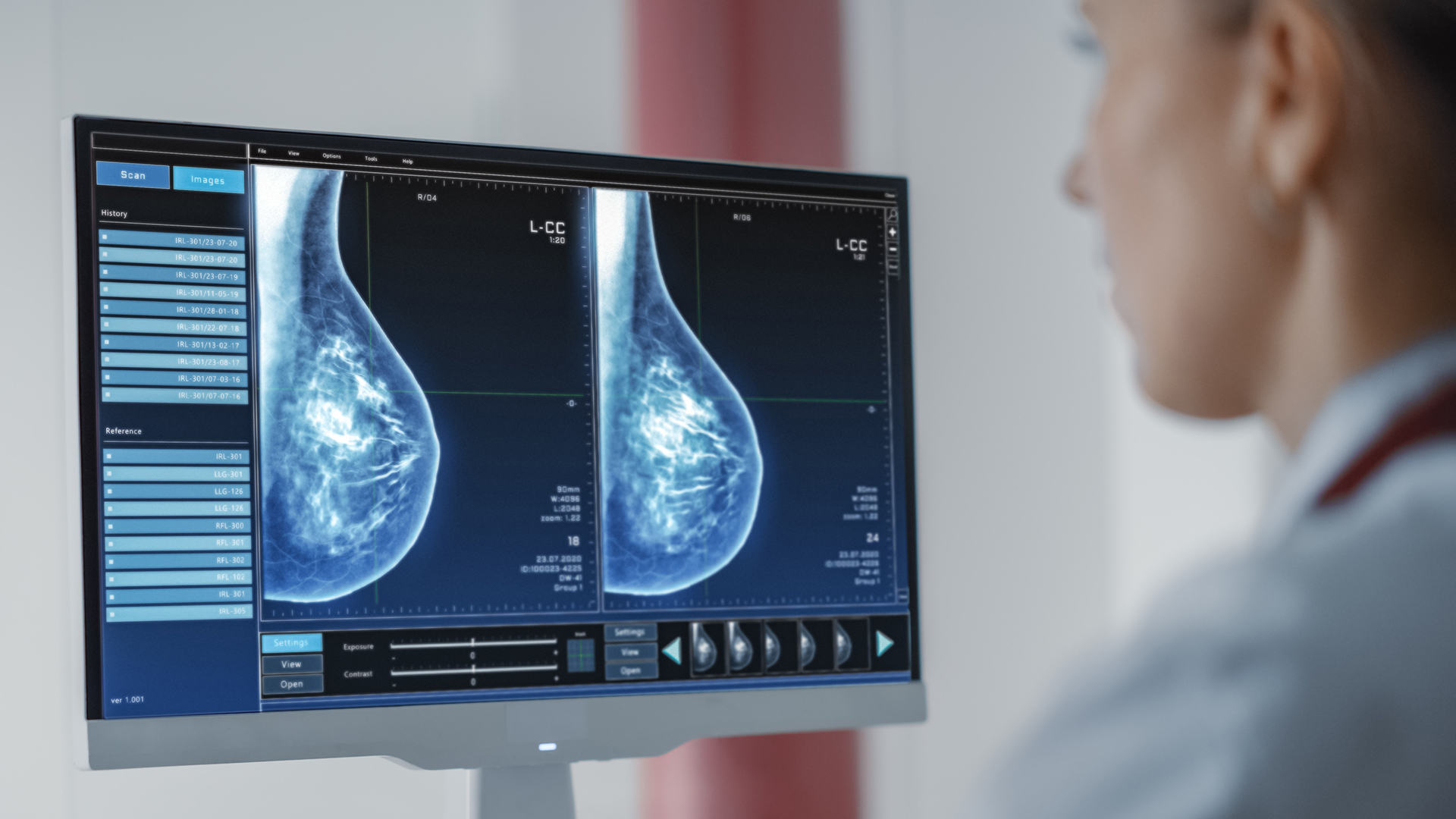
Companies in the NVIDIA Inception program for startups are building AI applications to support clinicians across breast cancer screening, risk assessment and treatment planning, NVIDIA said. The article profiles four such companies and describes how their tools run on NVIDIA infrastructure.
iSono Health's FDA-cleared ATUSA platform is a wearable, automated 3D quantitative ultrasound system that captures a standardized breast volume in approximately two minutes per breast, compared with up to 45 minutes for conventional handheld ultrasound. Its AI was trained on thousands of full-breast scans comprising over 1.5 million ultrasound frames and automates image acquisition, using NVIDIA GPU acceleration and open source medical imaging technology. The company says the resulting 3D scan is 28% more sensitive than handheld 2D ultrasound. ATUSA is commercially available through partner clinics in California, Texas, Georgia, Tennessee and Washington D.C. A multicenter clinical study with 3,200 patients is underway, with lead sites at UC Davis and Vanderbilt University Medical Center.
Whiterabbit.ai's FDA-cleared WRDensity software automatically assesses breast density from mammograms and has been used in the care of hundreds of thousands of patients. The company has also developed WRRisk, clinical decision support software for estimating long-term breast cancer risk, and is researching a new generation of mammography AI. It trains models on NVIDIA GPUs at Washington University in St. Louis plus cloud capacity, with inference on GPUs in the clinic.
Ataraxis AI analyzes digital pathology slides and standard clinical variables to predict treatment response and recurrence risk. One model predicts whether presurgical chemotherapy is likely to shrink a tumor; another estimates five-year recurrence risk and likely chemotherapy benefit after surgery. Both models have been validated across more than 10 institutions and multiple clinical trials and are in active clinical use.
SimBioSys builds precision medicine technology creating 3D models of breast tumors, veins and other soft tissue, plus a tool estimating recurrence risk from breast MRI volumetric data, tumor pathology and clinical data. It uses NVIDIA MONAI and CUDA-X libraries including cuBLAS and MONAI Deploy, running on NVIDIA GPUs in the cloud.
The article notes certain technologies described are investigational and have not been approved by the U.S. FDA for commercial use.
Based on reporting from the original publisher. Visit the source for full context and later updates.
Publisher excerpt
Breast cancer is the most commonly diagnosed cancer among American women — yet the gaps in care are wide. A majority of women over age 40 skip the recommended annual screening. Radiologists are reading more mammograms with fewer colleagues. And when a diagnosis arrives, the tests that inform treatment can take weeks to return results. […]