Google ships four TPU variants in one year as it ramps up competition with Nvidia
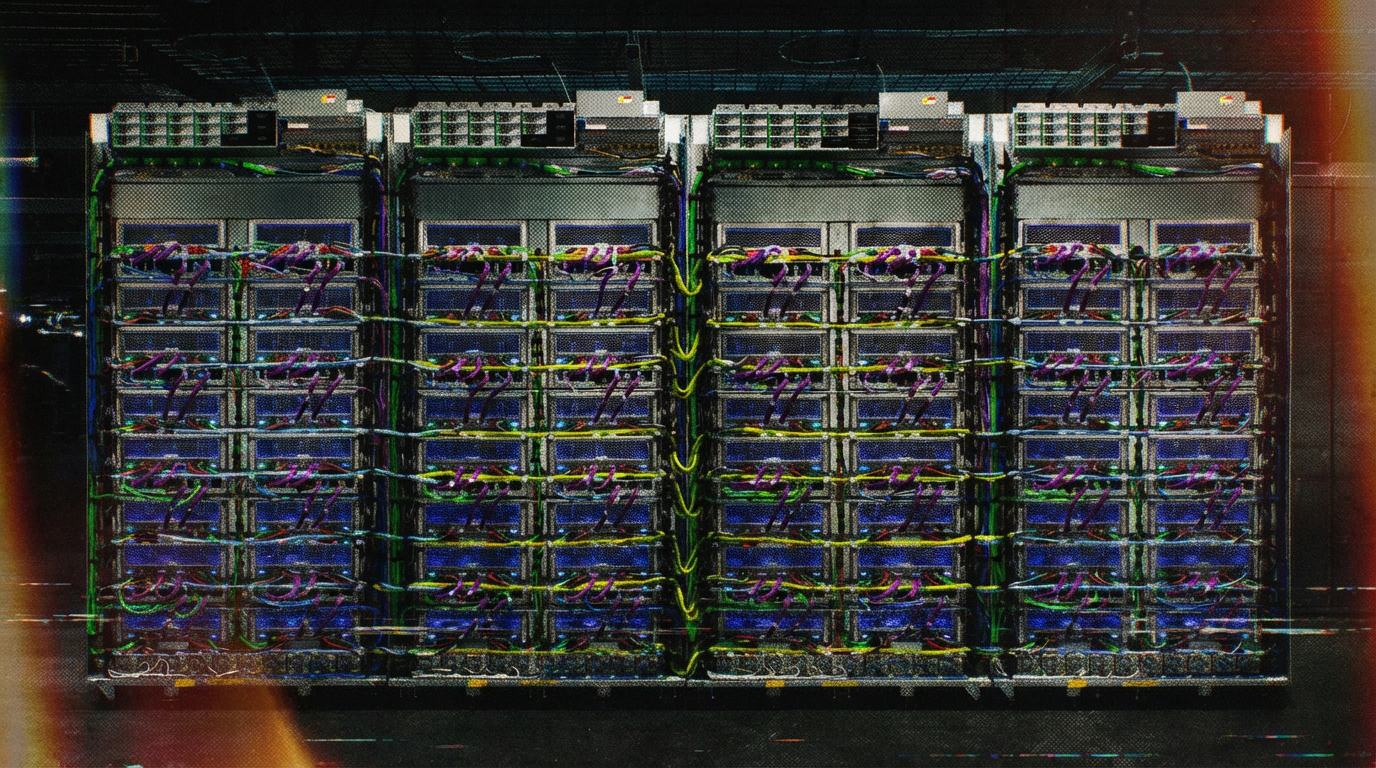
Google has expanded its eighth-generation AI accelerator lineup with two new systems, the TPU 8tx and the TPU 8i Max. The company says this is the first time it has shipped four TPU systems within a single year. Both additions sit on top of existing silicon: they are new system configurations rather than a new chip generation, differing in packaging, networking and memory setup around the same processor. Google describes that modular approach as deliberate, saying it lets the company deliver new hardware variants in months rather than years.
The TPU 8tx is aimed at enterprises and government agencies handling confidential data. Ordinarily data is encrypted at rest and in transit but must be decrypted in memory while a processor works on it. Google says the 8tx keeps data and model weights protected and isolated even during active use. The system uses Boardfly, the low-latency network Google built for real-time inference, and is claimed to deliver up to twice the latency reduction compared with the TPU 8t. Google also says a single system can fine-tune models, distill large models into smaller ones and train AI agents with reinforcement learning without shuffling sensitive data between clusters.
Confidential computing on accelerators is a familiar idea: Nvidia already offers a comparable capability for GPUs through its confidential computing architecture. For developers, the practical appeal is regulatory and contractual as much as technical. Workloads that might otherwise be split across separate trusted and untrusted environments could run in one place, which simplifies pipeline design but also concentrates sensitive material on a single system. Whether the isolation claim holds up under real audits is the kind of thing buyers will test before committing.
The TPU 8i Max addresses the memory bottleneck instead. Google's stated example is AI agents working simultaneously across large codebases or hours of video, where memory bandwidth becomes the chokepoint. The fix is to place two TPU 8i chips on a single package, yielding double the compute power, double the memory and double the memory bandwidth within the same rack format. This suggests a meaningful gain in performance per square meter of data center space, which matters to operators constrained by floor area and power rather than by chip supply alone. A likely trade-off is that packing two dies into one package raises engineering complexity around thermals and yield, though Google has not detailed those aspects.
On the software side, Google has released TorchTPU as open source, with the goal that PyTorch code runs on TPUs with minimal changes. Popular inference frameworks including vLLM and SGLang are also supported. This is arguably as important as the hardware: the cost of porting a model stack is often what keeps teams on GPUs, so smoothing that path lowers a real barrier. In practice, framework support usually varies in maturity across operators and edge cases, so the claim is best read as a direction of travel rather than a guarantee of drop-in parity.
Google now counts nearly 100 external TPU customers, up from a period when TPUs were treated as a purely internal tool. The company is marketing them as a competitive platform for outside customers, focused on day-to-day model inference rather than training. That tracks with a broader market shift: as AI applications spread, spend is moving from expensive training runs toward serving models in production, an area where specialized accelerators can play to their strengths. Amazon, Microsoft and OpenAI are all developing their own accelerators, and Nvidia has responded by strengthening its inference offering through an acqui-hire and licensing deal with Groq.
A reasonable reading is that Google is competing less on peak performance claims and more on variety and integration: a confidential SKU, a memory-dense SKU, and a software stack that meets PyTorch users where they are. The absence of a new chip generation is itself a signal that differentiation now comes from systems engineering. For buyers, the open questions are pricing, availability and how these configurations compare with Nvidia's inference parts on real workloads, none of which the announcement settles.
Why it matters: Teams running inference at scale gain another credible non-Nvidia option, with a confidential-computing variant relevant to regulated industries and a memory-heavy variant suited to agent and video workloads. Developers already invested in PyTorch, vLLM or SGLang face a smaller porting cost than in earlier TPU generations, which is likely to make side-by-side benchmarking more common. Expect pricing and benchmark transparency to decide how quickly the nearly 100-customer base grows.
Based on reporting from the original publisher. Visit the source for full context and later updates.
Publisher excerpt
Google is expanding its TPU 8 family with two specialized variants: the TPU 8tx keeps sensitive data encrypted even during processing, while the TPU 8i Max doubles compute power and memory by placing two chips on a single package. With nearly 100 external customers now on board, Google is increasingly positioning its in-house chips as an alternative to Nvidia's GPUs. The article Google ships four TPU variants in one year as it ramps up competition with Nvidia appeared first on The Decoder .