Recording device hidden in toilet paper found in top-secret OpenAI meeting room
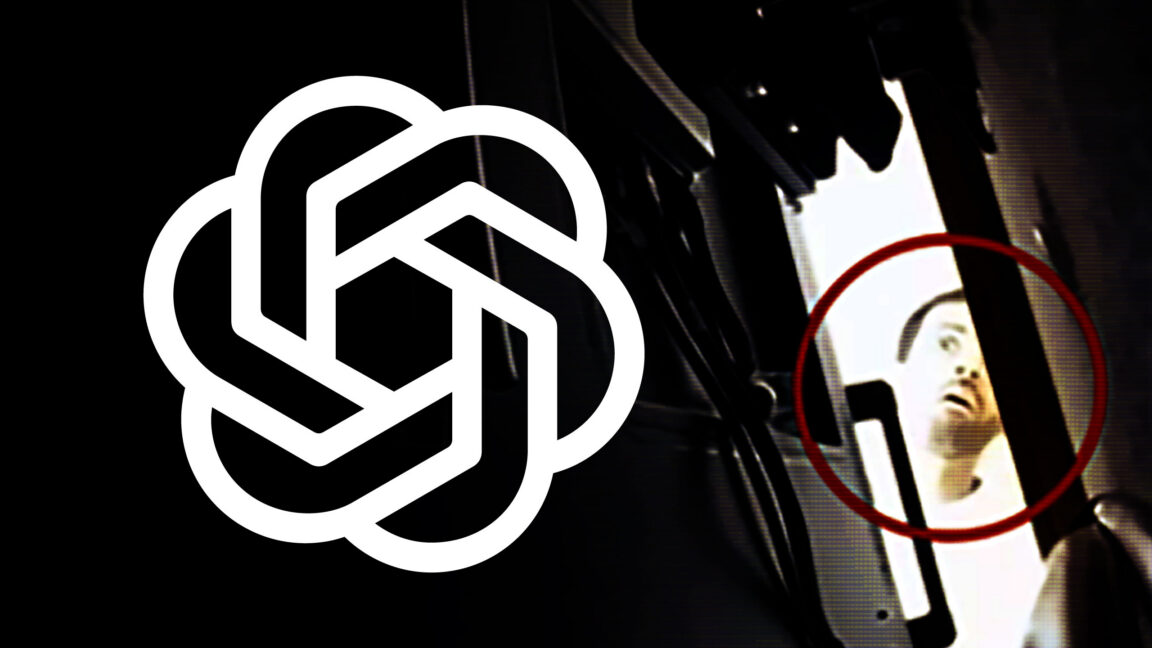
The FBI announced Tuesday that it arrested Abdulrahman Alfozan, a 35-year-old engineer from Saudi Arabia who had worked at OpenAI for more than a year, alleging he planted a hidden recording device in a restricted executive conference room at the company. According to a press release and a recently unsealed affidavit from FBI special agent Lydia Liang, the device was likely planted on September 28, discovered by OpenAI on September 30, and found to contain encrypted data. On October 5, OpenAI installed a camera in that conference room, and CCTV footage allegedly showed Alfozan attempting to retrieve the device the same day.
The room in question is reserved for leadership meetings covering highly confidential matters, including technical progress, government engagements, and commercial partnerships. Only people with special clearance are supposed to have access. Alfozan reportedly became a permanent US legal resident in 2020 and was hired by OpenAI in July 2025.
Liang, a data analyst who joined the FBI after working at several tech companies, examined the recovered device and identified it as a Chinese-made Seeed XIAO ESP32-S3 Sense. She said it had been customized to obfuscate stored data, such as potentially intercepted audio, and that its microSD card had a layout consistent with a potentially encrypted file system. The device had been wrapped in toilet paper and plugged into the back of the conference room television, according to the allegations.
The FBI also reviewed Alfozan's queries to an OpenAI productivity agent and an AI chatbot account associated with his spouse. According to the affidavit, in August Alfozan allegedly used the internal agent to determine where and when sensitive meetings were held. The chatbot logs reportedly referenced the Seeed device's unique MAC address and included prompts about continuous recording, speech-triggered recording, and encrypting an SD card. Liang characterized the written prompts as attributable to Alfozan or his spouse and said they indicated he had inserted the device into the television and was interested in building, customizing, installing, testing, obfuscating, and remotely accessing a covert listening device.
Separately, CCTV footage allegedly showed Alfozan lingering outside the executive conference room on ten different days in September. On the day he was seen checking behind the television, he also reported a lost bag to OpenAI's lost and found. That bag had been left unattended in a printer room, where security personnel found it and discovered a second Seeed device inside, the FBI said. He returned to the lost and found the next day to complain about missing items but did not mention the second recording device.
Rather than immediately removing Alfozan, OpenAI gradually cut off his access to systems while working with the FBI to analyze the recording device's contents. The company timed his firing on Friday to coincide with the FBI's arrest. If convicted of violating laws against unlawful recordings, Alfozan faces up to five years in prison and a $250,000 fine.
FBI Director Kash Patel, citing a Trump memo ordering coordinated efforts to maintain America's AI advantage, celebrated the arrest and said the bureau would continue policing espionage against frontier labs. He called that mission essential to safeguarding national economic strength and security and described it as one of the FBI's highest counterintelligence priorities. US Attorney for the Northern District of California Craig Missakian said his office would keep watching emerging threats in Silicon Valley and described the case as a national security matter.
It remains unclear who the secret recordings were intended for. The case arrives as the Trump administration has made maintaining AI dominance a top priority, which suggests officials may treat the prosecution as a deterrent signal. A likely trade-off for frontier labs is that the same internal productivity and agent tooling that speeds up work can also be repurposed to map sensitive meetings, as the affidavit alleges here. This suggests internal AI logs are becoming a routine source of forensic evidence in corporate espionage investigations, alongside CCTV and physical device analysis.
Why it matters: This case puts a spotlight on insider risk at frontier AI labs, where a single cleared employee can reach some of the most commercially and strategically sensitive information in the industry. For developers and product teams, the technical details—an off-the-shelf ESP32 board with a customized encrypted filesystem, plus internal AI agent queries used for reconnaissance—show that both hardware supply chains and internal AI tooling are now part of the security perimeter. Companies may respond with stricter physical controls in executive areas and tighter logging or limits on what internal agents can disclose. It is also a reminder that trade-secret exposure at AI firms is now framed by US officials as a national security issue, which could raise the stakes of access decisions for employees with foreign ties.
Based on reporting from the original publisher. Visit the source for full context and later updates.
Publisher excerpt
OpenAI engineer faces 5 years and $250K fine as FBI lobs foreign spy charges.