How the World’s Most Advanced AI Infrastructure Supply Chain Invents the Future
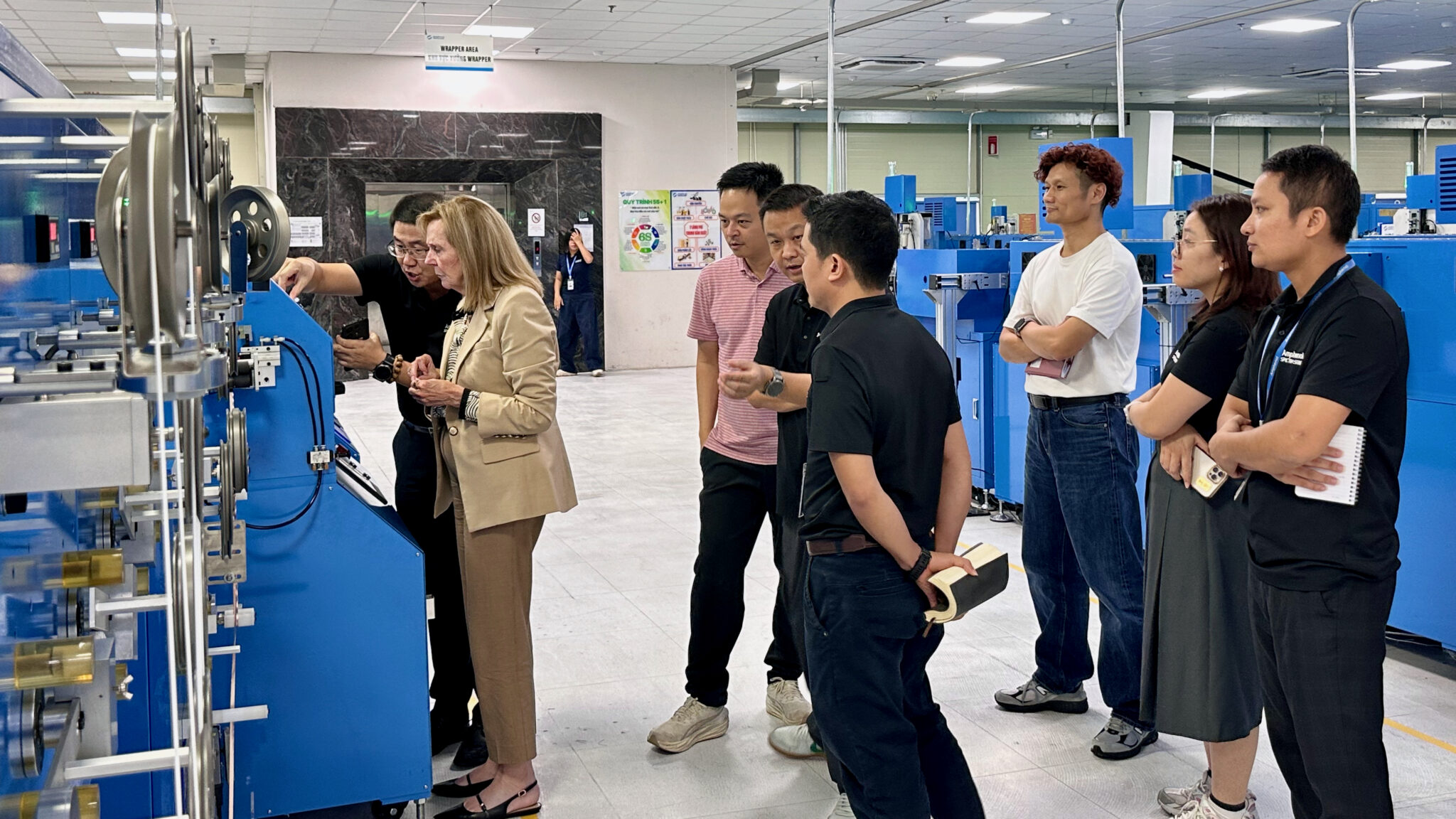
Deb Shoquist, who leads operations at NVIDIA, has accepted the 2026 Dr. Lisa Su Woman of Innovation Award and used the occasion to describe how her organization turns chip designs into physical systems at scale. Her team manages the supply chain behind NVIDIA's AI platforms, working with manufacturers including TSMC, Foxconn, Wistron, SPIL, King Yuan Electronics (KYEC), Unimicron, Lumentum, Coherent and Amkor. TSMC has worked with NVIDIA since 1998, and SPIL and KYEC have assembled and tested its chips for more than two decades. Shoquist meets key suppliers quarterly and spends roughly six weeks a year visiting partners in Taiwan, China, Korea, Vietnam and the U.S., spending time on factory floors as well as in meeting rooms.
Her description of the job is essentially matchmaking. NVIDIA's design group produces a blueprint, and operations matches it to a manufacturing partner that can build it reliably and at high volume. She says a suitable partner needs three things: technology precise enough for the design, enough financial strength to invest in NVIDIA's production ramps, and the willingness to do something never done before. When a partner has two of the three, NVIDIA may invest in the company to make it viable, as it has done with optical component suppliers Coherent and Lumentum.
That investment logic reflects a shift in NVIDIA's business. When the company primarily sold chips, it could pick from an already-scaled semiconductor industry. As it became a data center systems company, it needed more partners and entered technology areas whose supply base is still maturing. Shoquist said optical component partners have the technology and willingness but lack the scale or capital to build fabs at the volume NVIDIA requires. With co-packaged optics (CPO), NVIDIA is building entirely new supply chains around scale partners that are new to the optics world. CPO places optical components on the same package as the switch or compute silicon rather than using pluggable transceivers, a change meant to reduce power and signal loss as bandwidth rises; building it at volume depends on assembling a supplier base that didn't previously exist.
On precision, Shoquist cited Amphenol's large cable cartridge, which she called the most complex interconnect assembly that company has built. The cartridge contains 1,500 small cable legs, each requiring assembly precise enough to hold defects below 1 DPPM, or one defective part per million. Amphenol built more than a hundred automated lines to meet the required speed and volume, and the Vietnam factory she visited is now in full production.
Resource allocation is driven by weekly decisions about the most critical component: the TSMC chip. Shoquist said wafers are needed like air, and each week, as chips come out of assembly, the team decides which factory gets which chip. Factory performance is reviewed weekly; if yield or time of ownership falls short of target, that site receives fewer chips the following week. Every chip is tracked from the identification number on the die through to the customer invoice, and suppliers must support that traceability. Shoquist said the process has reduced the time from chip output at TSMC to system output at Foxconn and Wistron from five weeks to two when supply and demand require it.
She also recounted a problem during the ramp to volume production of the compute board for NVIDIA GB200 with Foxconn and Wistron. The final manufacturing step used an automated test handler, a new approach for NVIDIA aimed at high-throughput testing of complicated products. Throughput during the initial ramp came in significantly below plan. The operations director for Taiwan manufacturing decided to disable the automated process and return to manual test loading to protect the product and shipments, and the manufacturers backed the call, bringing in hundreds of operators to keep production moving. That kept output flowing but would not meet full-production throughput. The root cause spanned test tray assembly and design, automation hardware design, control software and product yield. NVIDIA then deployed what Shoquist called a swarm: teams from design engineering, operations industrial, and product and test engineering, together with Foxconn automation engineering, worked to redesign and reactivate the line before the scale ramp arrived.
This account is a useful window into how a company selling systems rather than chips manages manufacturing. The weekly reallocation of chips to factories based on yield and ownership time is effectively a continuous performance feedback loop that gives NVIDIA leverage over partners without owning their plants. Chip-level traceability from die to invoice makes that possible, but it also imposes real process requirements on any supplier that wants the business. Similarly, investing in optical suppliers to create capacity suggests NVIDIA sees some of its future bottlenecks as capital constraints in relatively immature parts of the supply chain rather than in the mature semiconductor base. A likely trade-off is that deeper financial involvement in suppliers increases NVIDIA's exposure to their execution risk, though the source does not discuss those terms.
Why it matters: For hardware and infrastructure teams, the interview confirms that the pace of NVIDIA system shipments depends as much on assembly yield, test automation and partner capacity as on wafer supply, which is inference rather than a stated claim. The five-to-two-week compression and weekly chip allocation suggest customers could see allocation shifts tied to factory performance. Product teams planning around CPO-based networking should note that NVIDIA is building new supply chains there with partners new to optics, which may affect timelines and availability.
Based on reporting from the original publisher. Visit the source for full context and later updates.
Publisher excerpt
Deb Shoquist leads operations at NVIDIA, overseeing the supply chain and manufacturing behind its AI platforms. That description sums up the job, but it doesn’t begin to encompass what Shoquist has made possible over decades. Shoquist, her team and their global network of manufacturing partners enable NVIDIA to introduce world-leading technologies year-round. Much of the […]