When AI art has no author: Study finds generated images often can’t be traced to training data
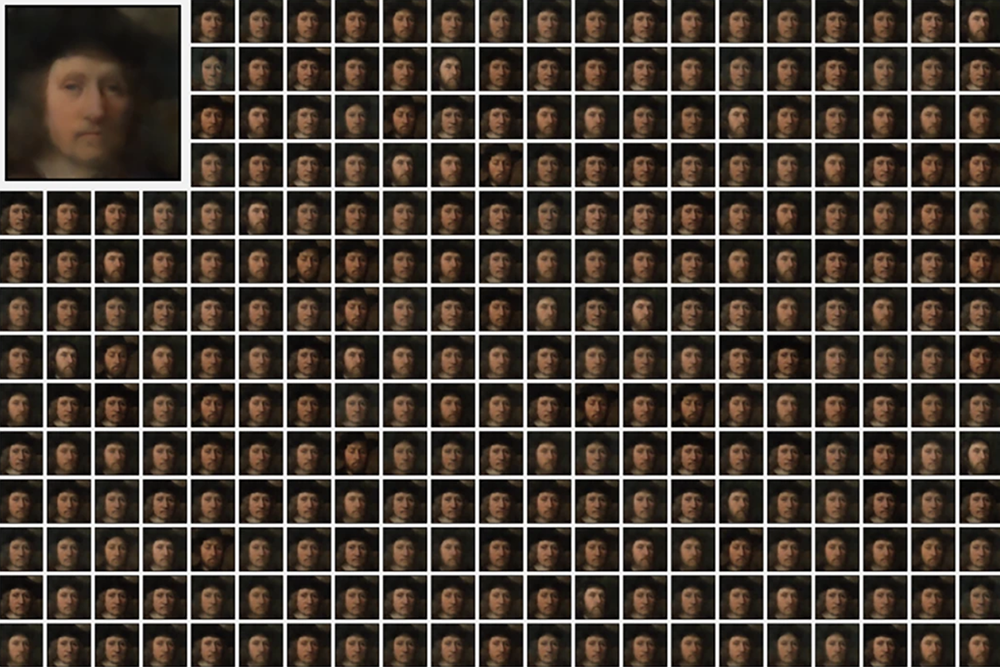
Researchers at MIT's Computer Science and Artificial Intelligence Laboratory (CSAIL) have identified a phenomenon they call attribution decay: as a generative model is trained on more data, any individual training example matters less to a particular output. At sufficiently large scales, they found, removing a single image, every image by a given artist, or every photograph of a given person often leaves the generated sample unchanged. The project is described in an open-access paper published in Nature Communications.
Zheng Dai SM '21, PhD '24, a former MIT CSAIL researcher and lead author, said that if removing a piece of data does not change the output, it does not make much sense to attribute the output to that data. MIT Professor David Gifford, an MIT CSAIL principal investigator, said previous methods were approximate, while this paper introduces the first method he described as absolute, actually deleting inputs and all their influences at large scale.
Testing the idea directly would require retraining a model from scratch without each image in turn, which prior work approximated because the math becomes prohibitive with millions of examples. The team instead built a "diffusion ensemble" of smaller components, each trained on a different slice of data, so parts that saw a given image can be switched off without retraining. The ensembles performed about as well as 24 conventional diffusion models trained on the same data by standard measures, and held up better against single-model counterparts as training data increased.
The team trained 24 ensembles on datasets ranging from 256 images to more than 160,000, drawn from seven public collections including CIFAR-10, CelebA, MetFaces and ArtBench. The larger the training set, the smaller the counterfactual radius, shrinking along an inverse power law, whether differences were measured pixel by pixel or semantically. The researchers stress-tested the result with 1,282 separately trained models and other controls.
Gifford said the finding bears on whether model outputs are derivative works, raising questions about fair use, copyrightability and compensation, and said companies should revise models to show they are not creating derivatives. James Grimmelmann, a law professor at Cornell Law School and Cornell Tech, said the paper provides reason to think attribution will fail for interesting models, and that technologists and courts will need other methods for assessing copying. Whether the same decay holds for large language models is an open question. The work was supported by Schmidt Futures.
Based on reporting from the original publisher. Visit the source for full context and later updates.
Publisher excerpt
A new method for surgically removing training examples from a model reveals that as datasets grow, the link between what a model learns and what it produces dissolves.