Be There for the Beginning: Celebrate the Launch of NVIDIA RTX Spark
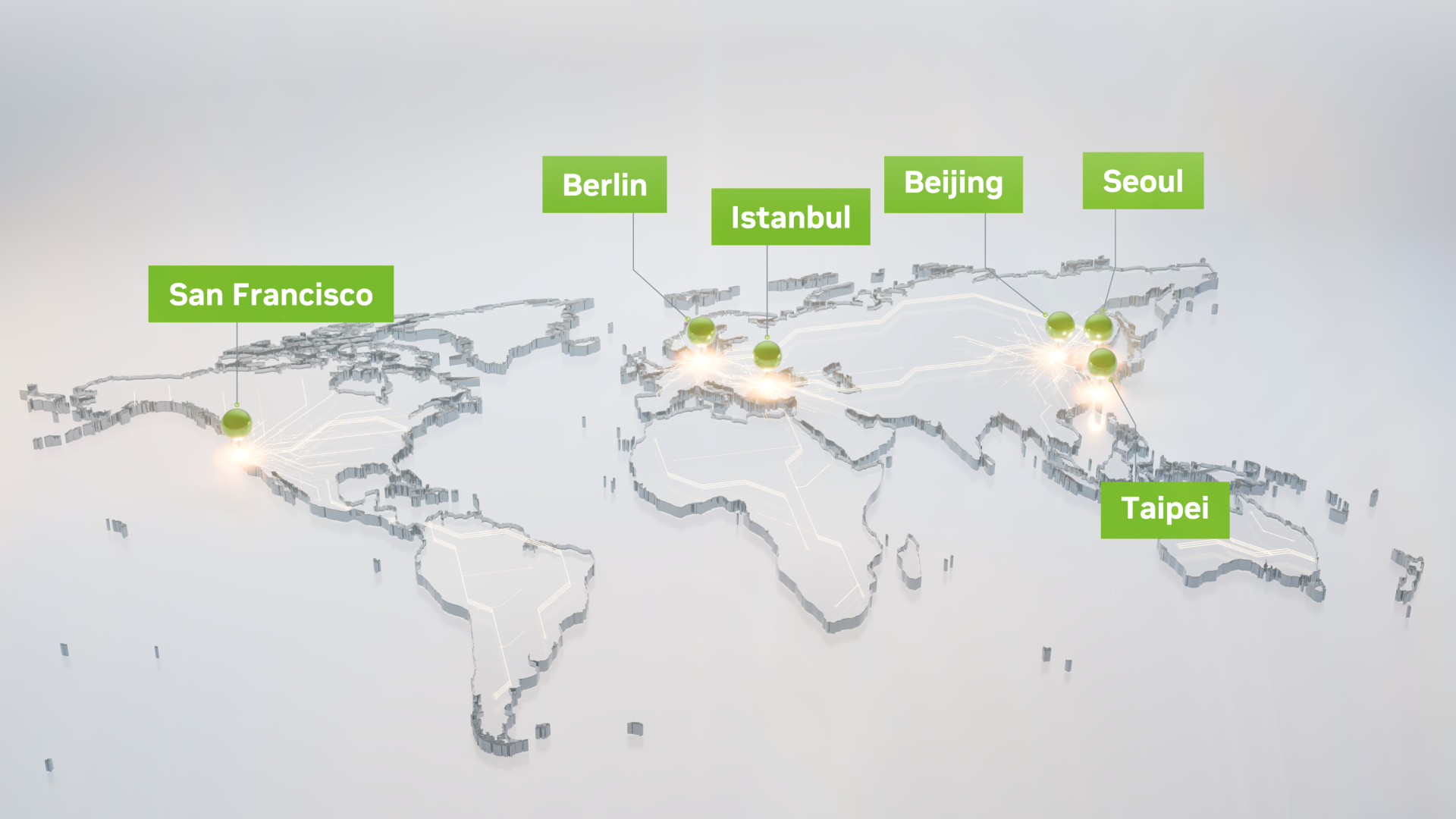
NVIDIA says its RTX Spark PC platform launches tomorrow, describing it as one machine aimed at creators, gamers and AI agents. The company is marking the debut with launch celebrations hosted with partners in six cities on Friday, Oct. 16, and is inviting the public to attend hands-on demos covering creating, developing and gaming. NVIDIA also points to independent testing from Artificial Analysis as an early look at the local AI performance RTX Spark brings to a laptop.
The launch events, all on Friday, Oct. 16, run at local times and have different entry rules. In San Francisco, the event runs 10 a.m. to 12 p.m. at Best Buy, 1717 Harrison Street, with hands-on demos, an appearance by iJustine and fireside conversations with local tech founders; entry is free, first-come first-served, with no ticket required. Berlin's gathering runs 7 to 10:30 p.m. at Xperion at Saturn, Alexanderplatz 3, with hands-on demos plus stage programming featuring creators and developers, and registration is required.
In Taipei, the event takes place at Muse Garden, No. 88 Yanchang Road, an evening of demos, music and AI community discussions, with shopping and networking continuing until 10:15 p.m.; registration is required. Beijing's celebration is at JD MALL Beijing Shuangjing Store, No. 31 Guangqu Road, with check-in from 7 p.m., the launch celebration at 8 p.m., hands-on demos after that, and a 9:30 p.m. finish; registration goes through WeChat.
Istanbul's event is at Vatan Bilgisayar Topkapı, Mevlana Caddesi No. 138, offering hands-on demos and local creator programming with walk-in entry and no advance registration. Seoul's runs at COEX East Lobby, 513 Yeongdong-daero, with hands-on demos from 7 p.m., gaming and AI creator programming from 8 p.m., and a 9:30 p.m. close; no advance registration is required. NVIDIA notes that space is limited and that attendees should follow each event's entry instructions.
Alongside the events, NVIDIA is running an online campaign asking people to describe their first Windows PC and what it sparked a love for, using the hashtag #ShareYourSpark. Participants have a chance to win an ASUS ProArt P14 RTX Spark laptop signed by NVIDIA founder and CEO Jensen Huang. The company points to a campaign page and official rules.
NVIDIA also collects early reviewer reactions in the announcement. Tom's Hardware said that NVIDIA, Microsoft and their partners delivered a capable, compatible and polished platform even in its first at-bat, and that this should put the rest of the PC industry on notice. TrustedReviews in the UK said it tested RTX Spark for gaming and local AI and that the performance absolutely stunned it. Microcenter reported that performance looks really good for AI, gaming and creative workflows.
Tom's Guide described RTX Spark as a different species of computer that has arrived early, calling it a statement of intent from NVIDIA about where computing is going, and framing it as trading raw benchmarking crowns for the ability to carry a self-rewriting, fully autonomous, CUDA-accelerated digital brain in a backpack. Creative Bloq highlighted how many apps NVIDIA worked with to ensure optimization for the Spark technology.
Taken together, the pitch is a Windows PC that runs AI workloads locally rather than in a data center. That framing explains the repeated emphasis on local AI alongside gaming and creative apps: on-device models avoid sending data to a remote service, which can matter for latency, privacy and offline use, but they are bounded by the laptop's memory and power envelope. A likely trade-off, and one the Tom's Guide comment gestures at, is that such a machine may not top conventional benchmark charts even while it enables workloads a typical thin-and-light cannot run locally.
The mention of CUDA acceleration is notable for developers. CUDA is NVIDIA's parallel computing platform, and the breadth of libraries and frameworks built on it is a major reason AI tooling tends to target NVIDIA hardware first. If RTX Spark machines expose that stack on Windows laptops, the practical question for product teams is which local inference and creative pipelines already work out of the box, and how much re-optimization remains. The Creative Bloq remark about the number of apps NVIDIA worked with suggests the company treated independent software vendor optimization as part of the launch rather than an afterthought. NVIDIA does not detail specifications, pricing or availability windows beyond the launch and the events in the announcement.
Why it matters: Developers and product teams weighing local AI against cloud inference now have a first-generation Windows platform to evaluate, and the launch events offer a chance to test demos directly. The reviewer commentary NVIDIA chose to highlight frames compatibility and polish, not raw benchmark leadership, as the early selling point — an inference on my part from the selected quotes rather than a stated NVIDIA claim. For teams shipping AI features on Windows, the practical near-term task is checking whether their frameworks and creative tools are among those optimized for Spark, since that, more than peak hardware numbers, is likely to determine day-one usefulness.
Based on reporting from the original publisher. Visit the source for full context and later updates.
Publisher excerpt
A new beginning for Windows PCs starts tomorrow with the launch of NVIDIA RTX Spark — one PC built for creators, gamers and AI agents. All are invited to celebrate with NVIDIA and partners at launch events around the world. Share Your Spark Every PC has a story. What was your first Windows PC, and […]