Researchers improve weather forecasts looking two to six weeks out
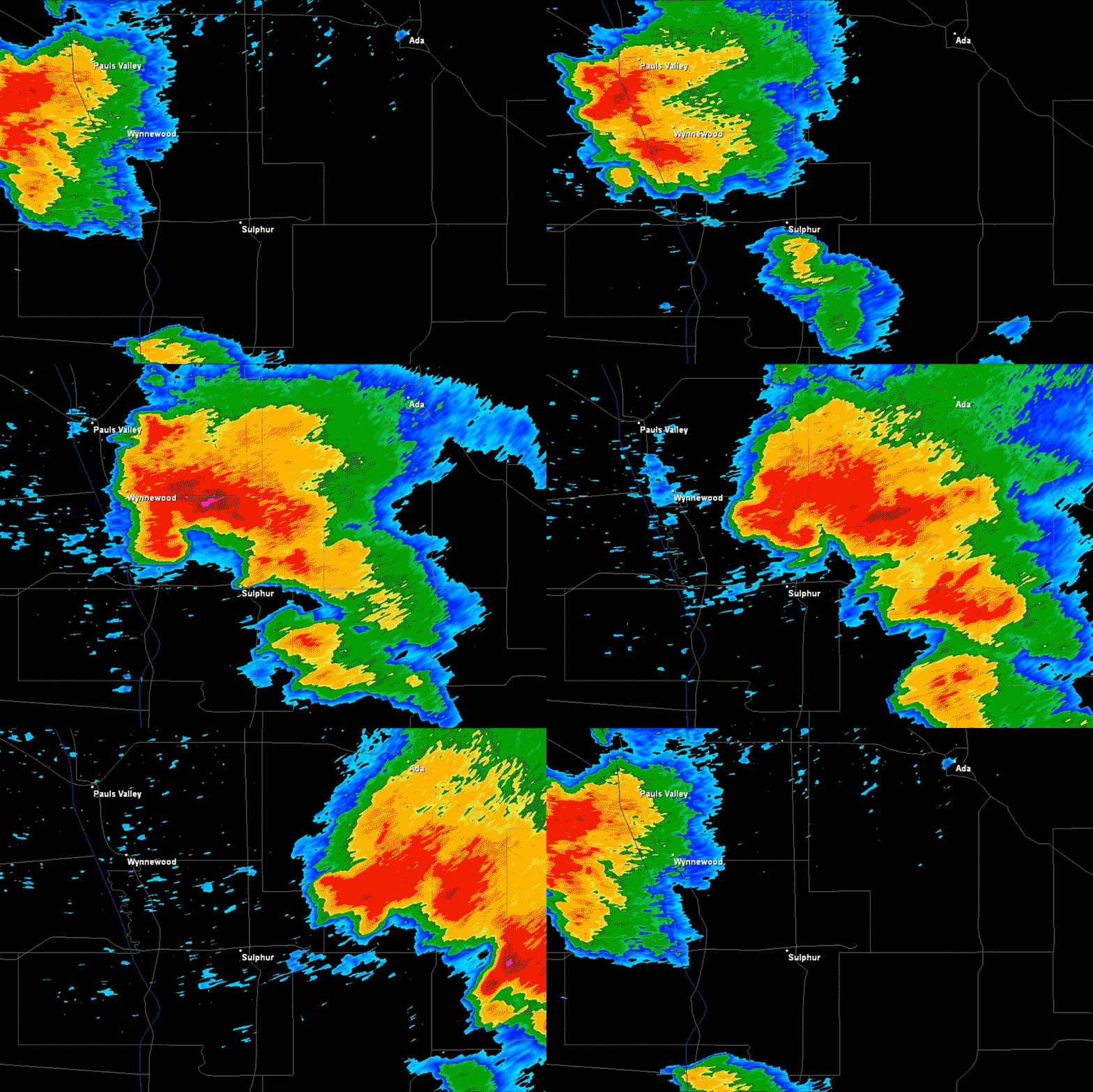
A team including researchers at MIT has developed a machine-learning layer that corrects errors in existing weather forecasting systems, significantly improving predictions for the two-to-six-week window known as subseasonal forecasting. The work is described in a new paper in Nature. When the correction was applied to a gold-standard forecast model — the European Centre for Medium-Range Weather Forecasts (ECMWF) system — it doubled predictive accuracy over that time range and placed first in a prominent international forecasting competition. Judah Cohen, an MIT Research Scientist in the Department of Civil and Environmental Engineering and a co-author, said the technique also improves predictions of extreme events such as flooding or cold spells.
The paper's lead authors are Hannah Guan, a Harvard College undergraduate, and Soukayna Mouatadid, a University of Toronto postdoc. Co-authors include Genevieve Flaspohler, formerly of MIT; Paulo Orenstein of Brazil's National Institute for Pure and Applied Mathematics; Jeremy Berman of the data company DTN; Jakob Schloer and Joshua Talib of ECMWF; and Alex Lu, Haiyu Dong, Jonathan Weyn, Zekun Ni, and Lester Mackey of Microsoft. The work was supported in part by the U.S. National Science Foundation, the Carlos Chagas Filho Foundation for Research Support, and the European Union.
The core idea is a postprocessing wrapper — an add-on model that learns a forecasting system's historical mistakes and shifts its output accordingly. Rather than correcting bias in a simplistic way, the layer uses machine learning to quantify errors and remove them, and Cohen said it adaptively improves its correction as more forecasts and data become available. In the subseasonal range, forecasters rely on probabilistic forecasts that give the likelihood of a range of outcomes, so this kind of correction operates on a distribution rather than a single number. The researchers built the model using MIT Engaging, a supercomputing cluster hosted by MIT's Office of Research Computing and Data, but they note the resulting model does not require a supercomputer to run. Cohen described the approach as open source and low cost.
To test the technique, the team submitted three models incorporating the postprocessing layer to ECMWF, which runs seasonal forecasting competitions between models and is widely considered the leading forecasting center. The winning submission combined ECMWF's forecasting model with another model and then applied the postprocessing correction on top. That combination doubled the original model's predictive power in the subseasonal range and, for the first time, offered an improvement over simply relying on climatological averages. Cohen said that until now no one had shown a model predicting subseasonal weather better than long-term averages, and that people had questioned whether investing in models for this time range was worthwhile at all. The model also showed a statistically significant improvement in predicting extreme weather. Cohen contrasted this with ECMWF's own non-AI error correction, which he said got worse at predicting extreme weather, likely because traditional bias correction aims at the mean while extreme weather sits at the fringe of probabilities.
The Nature paper reports that the technique improved land forecasts in most regions across the globe. The team also applied the bias correction to other, lesser models and found it improved them too, bringing them roughly on par with ECMWF forecasts, and it even improved models that had already been bias corrected with another AI algorithm. Cohen framed the wrapper as model-agnostic, usable with any forecasting system.
The research directly targets what Cohen calls the "predictability desert." Short-range forecasts benefit from observed initial conditions, and longer-range outlooks can lean on slow-varying boundary forces such as ocean conditions, but the subseasonal range sits between those sources of skill. A theoretical two-week limit on predictability, rooted in chaos theory work by longtime MIT professor Edward Lorenz in the 1970s, shaped the field, though Cohen said he never fully accepted it and argued the atmosphere tends to fall into recurring preferred patterns that allow some sequential prediction.
This distinction matters because today's best forecasts come from two families of models. Dynamical models numerically simulate how the atmosphere and oceans evolve, while AI models learn to predict from historical weather data. AI models have shown gains at short ranges but have been worse than dynamical models at longer ranges. The MIT-involved approach sidesteps that trade-off by keeping an existing dynamical or AI model and adding a learned correction layer on top, rather than replacing the underlying simulation.
Cohen said Kenya's meteorological office has already reached out about implementing the model to improve forecasting of the annual monsoon season and agricultural yields this winter. He pointed to practical uses including timing fertilizer around rain, protecting crops when a freeze is coming during winter harvests, avoiding droughts, and helping energy and emergency managers prepare. He recounted conversations with energy officials who said two days' warning of an ice storm is not enough time, while two weeks could allow adequate preparations. The 2021 Texas winter storms, which caused the worst energy infrastructure failure in state history and killed at least 246 people amid food, water, heat and electricity shortages, illustrate the stakes of that lead time.
Why it matters: Farmers, energy operators, emergency managers and others who plan around weather currently have little reliable signal in the two-to-six-week window, and an open-source wrapper that any forecast model can adopt could change how those groups schedule supply, planting and preparedness. For developers and product teams, the notable engineering pattern is a learned postprocessing layer applied to an existing model rather than a new foundation model — a cheaper path that the researchers say improves even already-corrected systems. In inference, the biggest constraint is data and history rather than compute, since the resulting model runs without a supercomputer, though broad operational adoption will still depend on national meteorological agencies integrating it into their pipelines.
Based on reporting from the original publisher. Visit the source for full context and later updates.
Publisher excerpt
A new machine-learning approach broke records for weather forecasting for an important time frame in emergency planning.