Craft and taste
The founder behind the Ben's Bites newsletter has published a personal essay describing a small experiment in using AI to audit his own media diet, and announcing a new direction for his work: interactive sites telling the stories of builders who do things differently. The piece appeared under the headline "Craft and taste." The experiment used Codex, OpenAI's coding agent, to pull his reading and listening history from Kindle and Spotify into a folder, and then Opus 5.5 to visualize what that consumption looked like. He also ran several agents over the same data with no context, to see what interests they would infer. He describes the results as only partly right — the more useful finding was a nuance he already suspected.
He frames the whole exercise around "taste," a term he concedes is overused, and says it shows up across the products he uses, the clothes he wears and the founders he invests in. He speculates that some of it may be instinct built up from running the Product Hunt homepage for two years in 2015, sifting through tens of thousands of products. He says taste is why he avoids doing things that feel inauthentic — refusing to post "for growth," and turning down acquisitions and job offers.
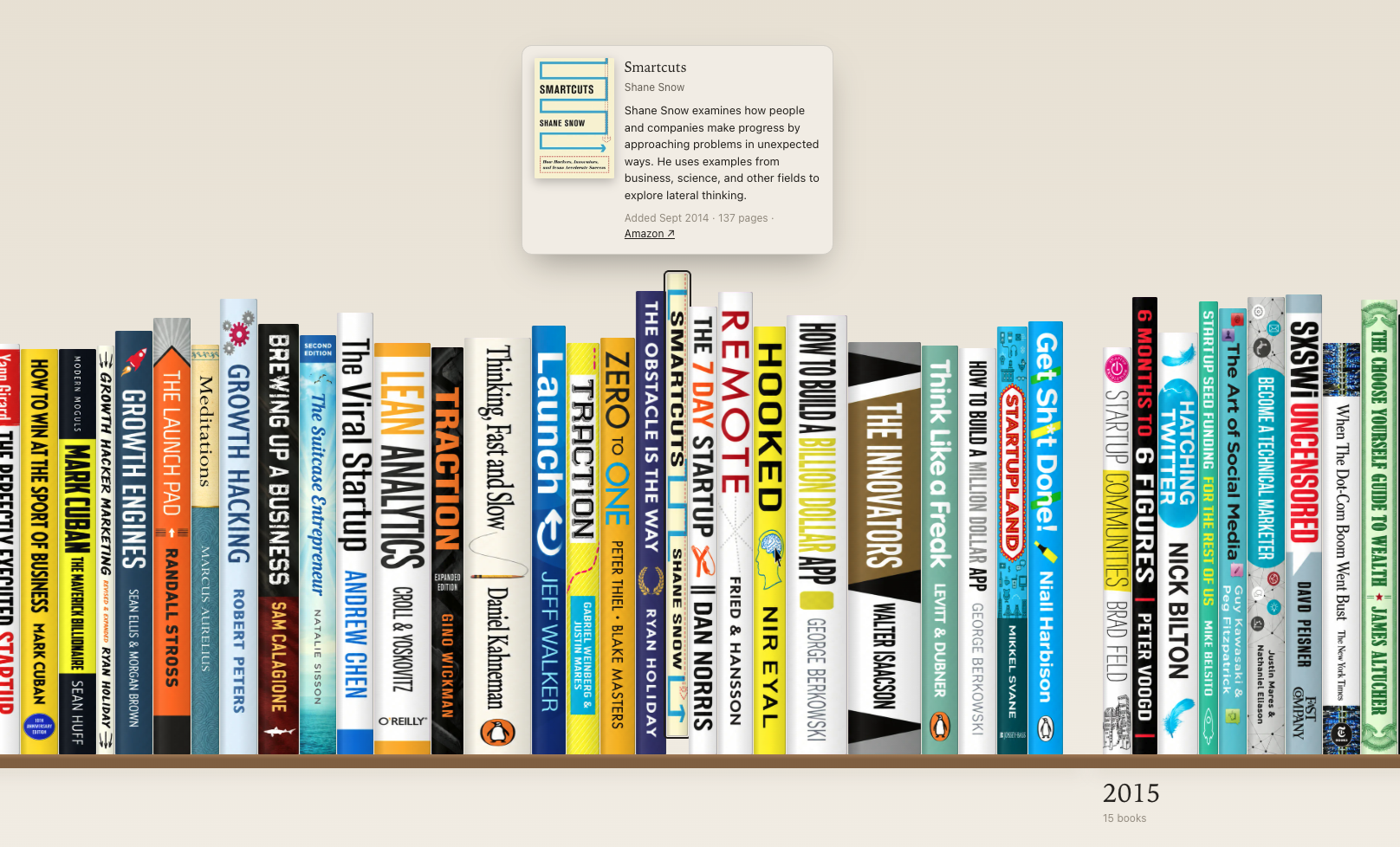
The data choice matters to the conclusion. He treated books and podcasts as the strongest signal because he has paid for them or spent hours inside them. YouTube history and Readwise articles were pulled too, but he set them aside: 885 videos of The Wiggles, he writes, say nothing about him beyond the fact that he is a parent. Books became the focus. That is a reasonable methodological instinct — paid and time-intensive consumption is harder to fake than a click — though it also means the analysis only sees the part of his attention that leaves a purchase or a long session behind.
What the models surfaced, in his telling, was not simply an appetite for business books or founder biographies. It is the mechanics: how a person or company pulled something off, why some people made choices others avoided, which alternative path was taken and still worked. He cites a recent run of listening to David Senra, who reads founders' autobiographies and builds a podcast around them, and singles out one idea from that material — that stories sell products.
He extends the argument to purchasing decisions. He uses Granola, the AI meeting-notes app, and says he chose it over many competitors because he likes the founders, the company's values and the care in the craft, not only the product itself. He contrasts that with a video he characterizes as the founder of Wispr Flow presenting himself as a "$2b startup CEO," which he calls icky despite acknowledging the attention economy behind it. He also buys from Kith, citing familiarity with the founder's thinking about the brand and a longstanding interest in streetwear. The common thread he draws is authenticity rather than category.
From there he states the plan: to look into those stories and build interactive sites, some with video and some showing behind-the-scenes material from his process. He says monetization is not yet on his mind, reasoning that if he focuses on tasteful builders, companies may want to be part of the narrative — a structure, he notes, that also preserves his ability to judge whether he would want to work with them at all. The model for the format is The Pudding's interactive essays; he offers the example of a piece on women's jean pocket sizes that held him despite no prior interest in the subject, arguing that a compelling enough format can manufacture care about a topic.
As a side artifact, he turned his book history into a scrollable timeline. The post's closing "Quick bites" section lists ChatGPT Images 2.6 as faster and better with GIF support, a reverse-engineering piece on TikTok inferring whether a viewer is lying down, walking or in a car, a note that Notion is "reinventing itself" around context for agents, and the claim that agent experience is the new user experience.
A few things are worth flagging for anyone thinking of running the same exercise. The pipeline described — an agent exporting personal history, a model charting it, then clean-context agents asked to infer interests — is a lightweight form of what people now call personal analytics, and the clean-context step is the interesting part, because it tests whether the pattern is legible without the owner's framing. In practice, the output is only as good as the export: Kindle and Spotify histories capture purchases and plays, not attention, and an LLM summarizing them will tend to return flattering, legible themes. A likely trade-off for the new project is that interactive, craft-heavy storytelling is expensive per piece and resists the volume game that most attention-driven media relies on; the bet is that depth and distinctiveness compound where volume does not.
Why it matters: this is a small, concrete example of using coding agents and frontier models on personal data for self-analysis rather than task automation, a pattern product teams may find more broadly applicable than the specific conclusions. For builders, the essay is also a reminder that founder-led narrative and visible craft are being treated by at least some buyers as product features in their own right. Whether interactive storytelling can convert that preference into a durable business is, by the author's own account, still an open question — and that part is inference, not something the piece resolves.
Based on reporting from the original publisher. Visit the source for full context and later updates.
Publisher excerpt
What does old me think