The new human-crafted Apple Music brand matters in an AI world
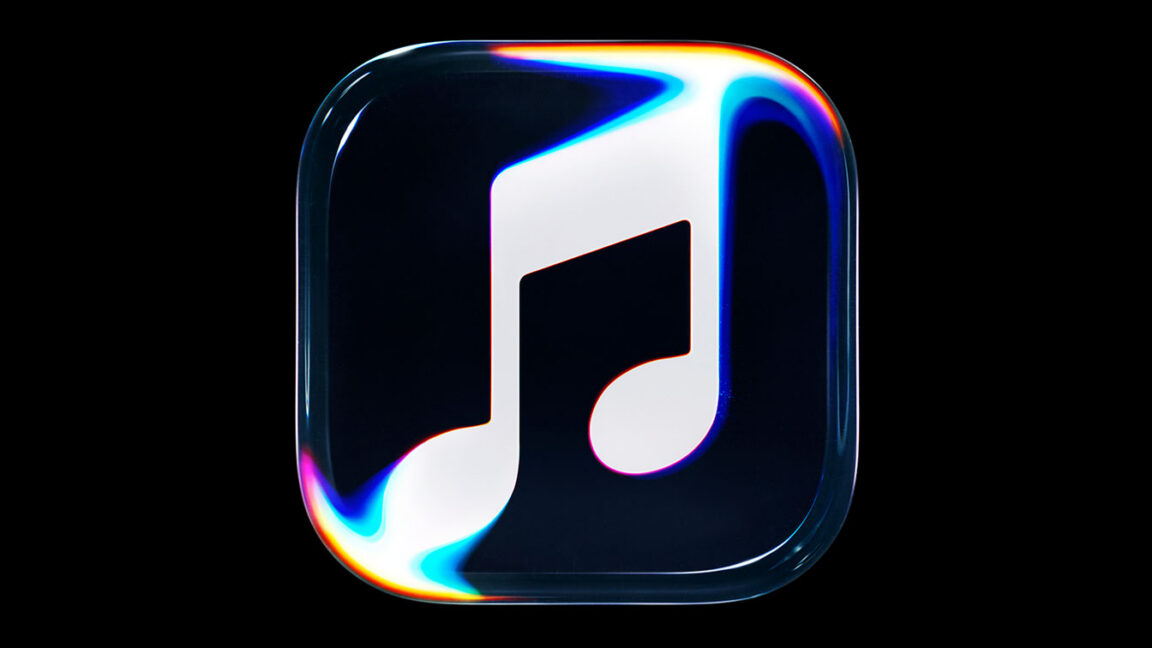
Apple has revealed a new brand identity for Apple Music, one built around the company's Liquid Glass design language, as reported by Ars Technica. The rebrand itself is fairly straightforward, but the publisher's piece focuses on the accompanying behind-the-scenes video, a clip just over a minute long, that documents how the visuals were physically produced.
The production is elaborate. According to the report, the work involved a design agency, TBWA/Media Arts Lab, and the music producer Fred again.., whose name is styled with a lowercase "again" and two trailing periods. The shoot used a crewed set with cameras and lighting, plus a tank of mineral oil fitted with a transducer, a device that converts audio signals into physical movement. The oil was chosen for its higher viscosity, so sound-driven vibrations would ripple visibly through the liquid as it interacted with branding printed on transparent panels. A large volume of footage was captured of that interaction.
The author's take is that the result is unmistakably Apple: on one level pretentious, given the resources available to a company of its scale, but also genuinely lovely in execution and craftsmanship. The narration draws some eye-rolling, yet the care behind the imagery comes through.
That craftsmanship is the real subject of the piece. The author argues that hands-on, human-made work will carry growing value in an era when nearly any image can be generated from a prompt. Generative AI imagery is increasingly hard to avoid in daily life, which the author says breeds suspicion of everything one sees: was a given picture drawn by hand, or prompted into existence using styles borrowed from human artists? The Apple video, in this reading, offers receipts. Real people did real things in the physical world to produce the final images. The output is cleaned up and post-processed, but knowing the process changes how the work lands.
For developers and product teams, the practical point is less about the aesthetics of Liquid Glass than about presentation. A short process film functions as a credibility signal: it shows the labor behind a brand asset at a moment when audiences are primed to doubt whether anything was made by hand. Teams shipping brand or marketing visuals, especially in categories where AI-generated imagery is common, may find that showing the making-of is as valuable as the polished result. That is an inference from the author's argument rather than a stated claim. The trade-off is cost and time; a crewed set, a design agency and a named producer are not cheap, so the approach suits flagship moments rather than routine content. The author's stance is essentially that generative AI is here to stay, but that celebrating and openly documenting human involvement is worth doing anyway.
Why it matters: Design and marketing teams now face an audience that assumes images may be machine-made, so proving human craft through behind-the-scenes material can differentiate a brand. The Apple Music case suggests the process itself has become part of the deliverable, though the budget involved limits how broadly that tactic can be copied.
Based on reporting from the original publisher. Visit the source for full context and later updates.
Publisher excerpt
Opinion: In a world of AI slop, showing the human hands making things helps.