Ukraine’s drones knock out AI data center belonging to "Russia’s Google"
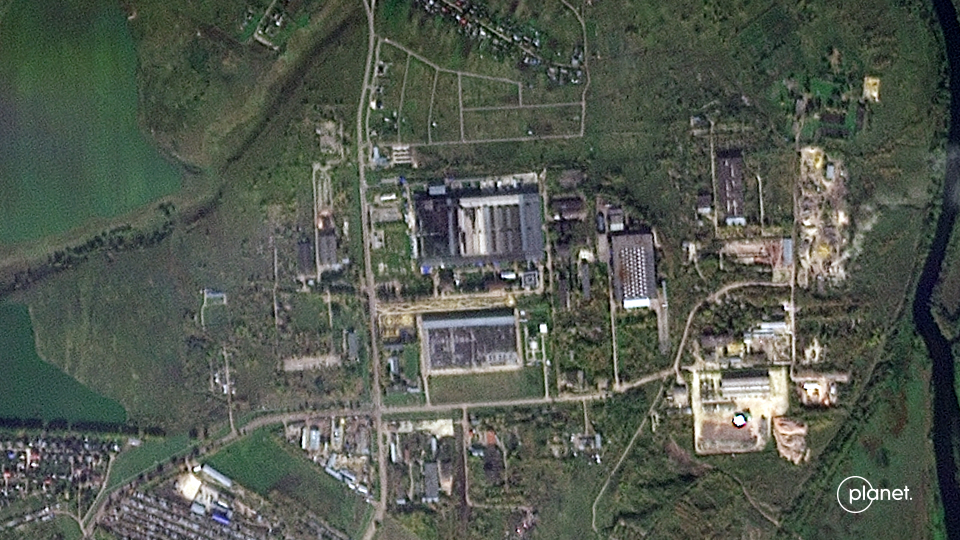
Ukrainian drone strikes destroyed two of the five data centers operated by Yandex, the Russian technology company whose search engine dominates its home market, according to Reuters. The attacks hit facilities in the Sasovo and Kaluga regions of Russia on consecutive days, October 8 and October 9.
The Kaluga facility is Yandex's largest data center. The Ukrainian company Firepoint said its FP-1 one-way attack drones took part in that strike. The earlier attack on Sasovo targeted a site housing two of the three supercomputers Yandex uses to train its YandexGPT model, meaning the strike landed directly on AI training capacity rather than only on serving infrastructure.
Yandex said no employees were injured, but it acknowledged disruption to some services. Russian users reported trouble reaching media websites and apps including the Ivi video streaming platform, the digital banking service T-Bank, and the state-owned Russian Railways, according to the independent Russian news outlet Meduza. Reuters reported additional outages affecting a dating app, a real estate aggregator, a self-publishing book platform, and the website of the most successful club in the Russian Premier League.
Ukrainian President Volodymyr Zelenskyy described the operation in a post on X as a precise and symmetrical response to Russian attacks on Ukrainian data centers. "Another data center was hit as well—our symmetrical response," he wrote.
Russia has run a drone strike campaign against Ukrainian data centers since late September, which has disrupted mobile phone and internet service for thousands of Ukrainians, the source reports. Ukraine has also faced a shortage of interceptor weapons capable of downing Russian missiles and jet-powered drones. In parallel, its military has been expanding a medium- and long-range drone campaign aimed at Russian military bases and supply lines, Russian-linked shipping in the Sea of Azov and Black Sea, and energy infrastructure such as oil refineries. During the summer of 2026, Ukrainian strikes also hit warehouses belonging to Wildberries and Ozon, Russia's counterparts to Amazon.
Data centers have become wartime targets more broadly in 2026. After the United States and Israel attacked Iran in February, Iranian drones knocked out multiple Amazon data centers in Bahrain and the United Arab Emirates. Russia has launched mass missile and drone attacks against Ukrainian cities since its full-scale invasion in February 2022, hitting power grid infrastructure, transport hubs and residential apartment buildings.
In a possible widening of the conflict, coordinated aerial and sea drone strikes sank two commercial vessels in the Black Sea on October 5 and October 6, inside the exclusive economic zones of NATO members Romania and Bulgaria. Zelenskyy attributed those attacks to Russia.
For developers and infrastructure planners, the incident is a reminder that large-scale AI serving and training capacity is physically concentrated and therefore militarily and politically exposed. Yandex's three-supercomputer training setup is a good illustration: losing one site can remove a large share of the hardware available for training runs, and rebuilding a supercomputer cluster is a slow, supply-constrained process even when the operator has money and parts. Failover across regions helps with serving traffic, as Yandex's continued operation of its chatbot suggests, but it does not replace lost training throughput, since distributed training jobs generally cannot simply resume on substitute machines without checkpointing and re-sharding effort.
Why it matters: this is a concrete case of a commercial AI operator losing production and training capacity to a military strike, which affects not only Yandex's users but anyone reasoning about the resilience of centralized compute. For product teams, it underlines that capacity planning for AI services may increasingly need to account for geopolitical and physical risk, not just cost and latency, and that model release schedules tied to specific clusters are vulnerable to events outside the operator's control.
Based on reporting from the original publisher. Visit the source for full context and later updates.
Publisher excerpt
One damaged data center has supercomputers used for training Yandex’s AI model.