Who we become when we talk to machines
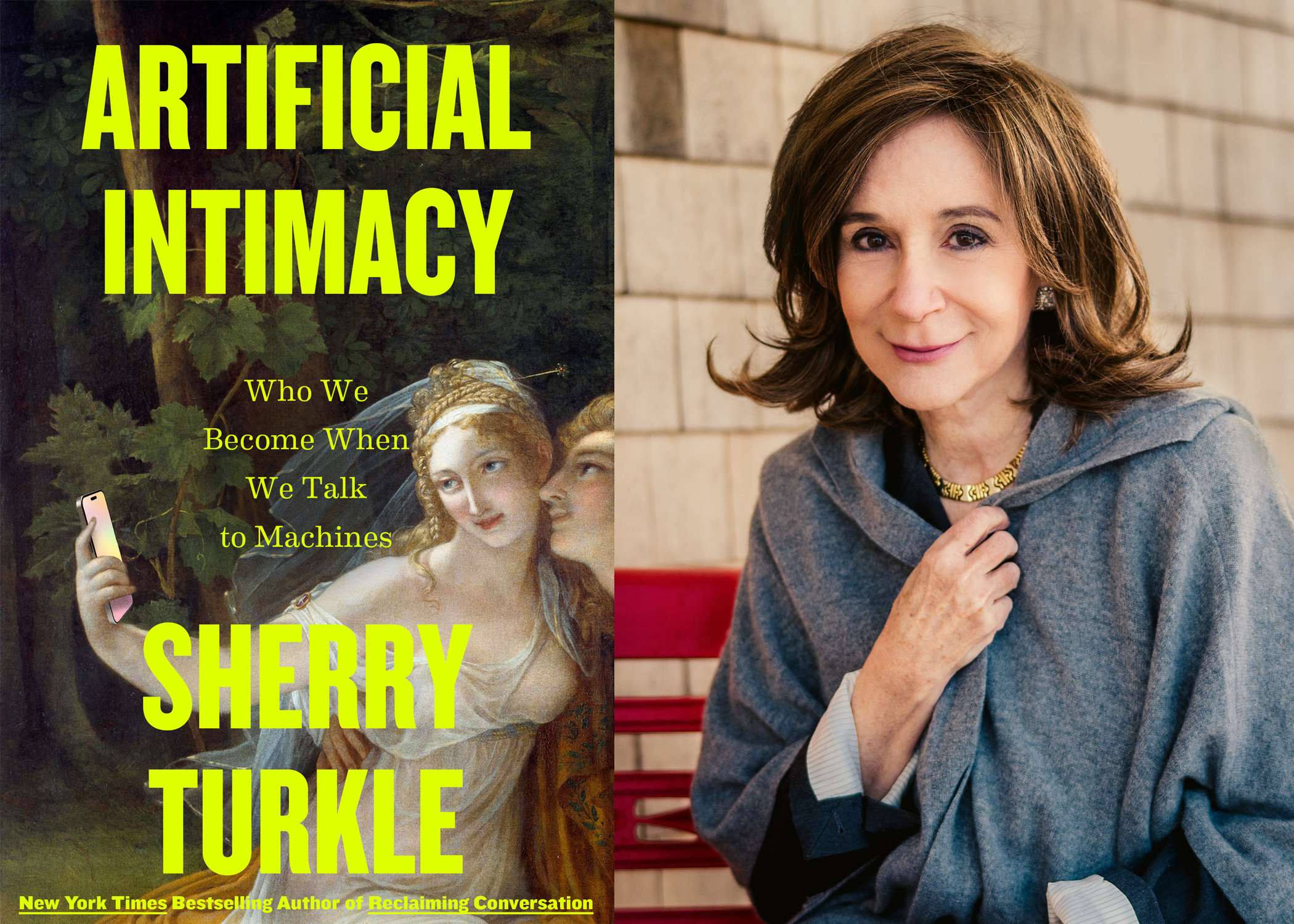
MIT Professor Sherry Turkle has published a new book, "Artificial Intimacy: Who We Become When We Talk to Machines," released by Little, Brown and Company. In it, she concludes that chatbot use, while it may often feel like a short-term salve, is broadly detrimental in terms of human development and social connectivity.
Turkle, the Abby Rockefeller Mauzé Professor of the Social Studies of Science and Technology at MIT and a longtime faculty member in MIT's Program in Science, Technology, and Society, describes chatbots as computer programs predicting the most plausible next string of text based on large amounts of data. "What a chatbot does is offer pretend empathy," she says.
The book is structured around the stages of a human life. Turkle's interviews with children found a persistent blurring of the line between chatbots, people, and other devices; one 8-year-old uses the same phone to talk to their grandparents and to ChatGPT, regarding them as "things you reach on your phone." She writes that children "can't learn trust from a device that not only lies but doesn't know when it lies," and calls the dangers to children's development "existential."
Among adults, the book examines cases of people going through divorces or estrangements, students seeking advice, and workers using ChatGPT for assignments. Turkle says such users can seem less interested in human interaction and less capable of it, describing a process of "de-skilling ourselves as relational beings." She also says chatbots have been associated with high-profile cases of teen suicide, sometimes after teens are drawn into extensive dialogues with chat tools.
Turkle acknowledges the appeal: chatbots "always agree with us and affirm us" and offer undivided attention, while people can be demanding. She cites a federal government study indicating only about half of people in the U.S. have access to mental health care providers, a void chatbots are helping to fill "for better or worse."
She argues that life is not frictionless and that difficulty is essential to development, and says she hopes the book joins a larger movement pushing back against chatbots. Journalist Nicholas Carr and psychologist Jonathan Haidt are cited praising the book.
Based on reporting from the original publisher. Visit the source for full context and later updates.
Publisher excerpt
Professor Sherry Turkle’s new book, “Artificial Intimacy,” offers a withering critique of chatbots and the antisocial dynamics she believes they encourage.