Claude Dispatch and the Power of Interfaces
Anthropic's Claude Cowork with Dispatch combines a desktop workspace with phone-based remote control, according to a briefing on the interface problem in AI. Cowork launched in January as a version of Claude Code aimed at knowledge workers, giving Claude access to local files and applications. Dispatch arrived in the last couple of weeks and adds the ability to message Claude from a phone while it works on a desktop; you scan a QR code and the phone becomes a remote control for an agent sitting at the computer.
Cowork connects to dozens of apps through connectors, and when no connector exists it falls back to directly controlling the mouse and keyboard. The author describes asking Claude from a phone to prepare a morning briefing drawn from calendars, emails and online channels, and separately to check whether a graph in Slide 3 of a presentation was up to date and update it. In that task a site blocked a file download, but Claude opened and viewed the PowerPoint, searched the computer for newer data, downloaded a linked PDF, clipped out the newer graph image and updated the presentation. Cowork is sandboxed compared with OpenClaw, which the piece calls an open-source AI agent, a security nightmare and the fastest-growing open-source project in history; its red-lobster-symbol agent is reached through WhatsApp, Telegram or Slack. Cowork is described as safer but more limited, with a growing but incomplete connector ecosystem.
A separate strand is interfaces generated on demand. Over recent weeks Claude gained the ability to generate visualizations directly in a conversation that are interactive, adjustable and modifiable through follow-up questions, rather than static images. The piece contrasts this with specialized interfaces: Claude Code, OpenAI's Codex and Google's Antigravity for programming; Google's Stitch for AI-native design on an infinite canvas; Pomelli for generating on-brand social campaigns from a website URL; and NotebookLM for researching and working with diverse sources.
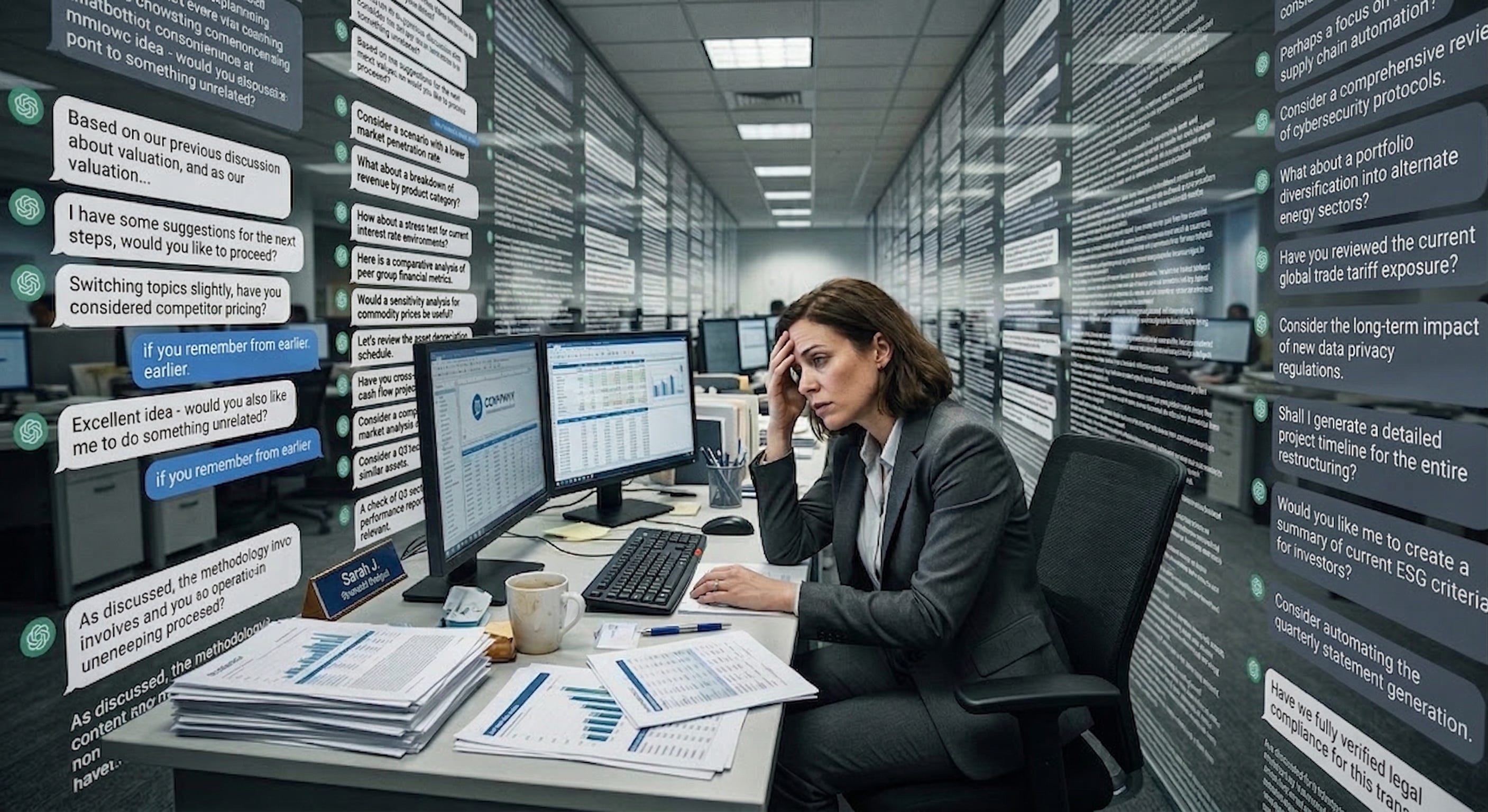
It cites a paper in which a small group of financial professionals did a complex valuation task with GPT-4o while cognitive load was measured from transcripts turn by turn. Productivity gains appeared partly offset by overwhelming presentation of information, and less experienced workers were hurt most. The author notes caution about papers based on older models.
Why it matters: developers and product teams building for non-programmers now have a concrete pattern to copy, an agent on existing messaging apps plus a desktop workspace, with the tradeoff between sandboxed safety and OpenClaw-style flexibility stated plainly. It also suggests interfaces can be generated per task rather than chosen in advance.
Based on reporting from the original publisher. Visit the source for full context and later updates.
Publisher excerpt
We often lack the tools for the job, even if the AI is capable enough